



Learn Analog Technology in a Simple Engineering Way (2026)
Analog technology is the foundation of physical signal acquisition and real-world information representation. Unlike digital systems that process discrete numerical data, analog systems operate on continuous variations of voltage, current, or physical quantities.
From an engineering perspective, analog technology focuses on signal fidelity, natural waveform preservation, and real-time response characteristics. Although digital electronics dominate modern computing, analog circuits remain essential in sensing, communication front-ends, and signal conditioning modules.
This article explains analog technology from a practical engineering viewpoint, covering signal theory, circuit behavior, applications, and system limitations.
Table of Contents
- 1. What Is Analog Technology?
- 2. Engineering History of Analog Technology
- 3. Characteristics of Analog Signals
- 4. Signal Formation and Mathematical Basis
- 5. Types of Analog Signals
- 6. Analog Components and Circuit Architecture
- 7. Analog Signal Processing Techniques
- 8. Industrial Applications of Analog Technology
- 9. Analog vs Digital System Design Philosophy
- 10. Advantages and Engineering Limitations
- 11. Why Analog Technology Still Matters
- FAQ
1. What Is Analog Technology?
Analog technology represents information using continuous physical signals.
In engineering systems, analog circuits directly map physical variables into electrical quantities. For example:
-
Sound pressure → microphone voltage output
-
Temperature → resistance or voltage variation
-
Light intensity → photocurrent change
Unlike digital representation, analog signals preserve infinitesimal variations inside the measurement range.
2. Engineering History of Analog Technology
Early Mechanical Analog Computation
Before electronics, analog computation was mechanical.
Devices such as water clocks measured time using constant fluid flow. Ancient astronomical instruments used gear ratios to model planetary motion.
Modern analog electronics evolved during communication technology development.
Key milestones include:
-
1877 – Phonograph introduced mechanical audio storage.
-
1887 – Gramophone improved disk recording.
-
1904 – Vacuum tube diode enabled early radio detection.
-
1906 – Triode amplifier enabled electronic signal gain.
-
1947 – Transistor replaced vacuum tubes and enabled miniaturization.
These innovations established modern signal amplification and modulation frameworks.
3. Characteristics of Analog Signals
Analog systems operate under physical continuity constraints.
Continuous signals can be modeled as:
V(t)=Asin(2πft+ϕ)V(t) = A \sin(2\pi ft + \phi)V(t)=Asin(2πft+ϕ)
Where:
-
A = amplitude
-
f = frequency
-
φ = phase shift
Real-world signals rarely follow perfect sinusoidal models but can be analyzed using Fourier decomposition.
Key characteristics include:
-
Continuous waveform variation
-
Natural signal representation
-
High temporal resolution
-
Noise susceptibility
-
Bandwidth limitation
Noise sources include thermal electronic noise, electromagnetic interference, and circuit coupling effects.
4. Signal Formation and Mathematical Basis
Signal transmission often manipulates three parameters:
-
Amplitude modulation (AM)
-
Frequency modulation (FM)
-
Phase modulation (PM)
These modulation methods allow low-frequency information to be transmitted using high-frequency carrier waves.
5. Types of Analog Signals
Voltage Signals
Voltage is the most common analog carrier in electronic circuits.
Typical ranges include:
-
0–5V instrumentation interface
-
0–10V control interface
Current Loop Signals
Industrial systems widely adopt current transmission.
The 4–20 mA loop is popular because:
-
Transmission noise is reduced
-
Cable resistance has less influence
-
System failure detection is easier (4 mA baseline)
Physical Sensor Signals
Sensors convert environmental information into electrical signals.
Common transducers include microphones, thermistors, photodiodes, and pressure sensors.
6. Analog Components and Circuit Architecture
Analog circuits are constructed from fundamental electronic components.
Resistors
Resistors control current flow and voltage division.
They are widely used in bias networks and protection structures.
Capacitors
Capacitors perform:
-
Energy storage
-
Timing control
-
Frequency filtering
The time constant relationship:
τ=RC\tau = RCτ=RC
is critical in transient circuit response.
Inductors
Inductors oppose current change and are commonly used in RF filtering and resonance circuits.
Amplifiers
Amplifiers are core analog processing units.
Important performance metrics include:
-
Gain bandwidth product
-
Input offset voltage
-
Slew rate
-
Signal-to-noise ratio (SNR)
7. Analog Signal Processing Techniques
Analog signal processing occurs before digital conversion in many systems.
Main functions include:
-
Signal conditioning
-
Filtering noise components
-
Mixing signals
-
Dynamic range compression
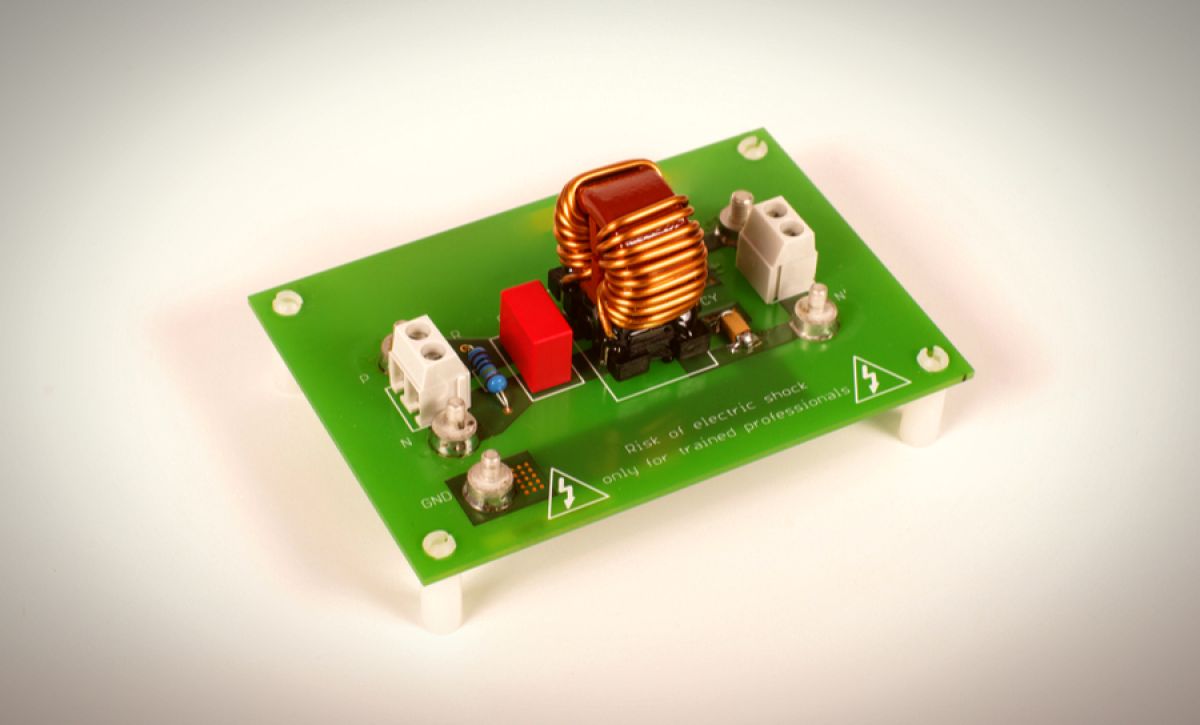
Filtering is essential for suppressing unwanted spectral components.
8. Industrial Applications of Analog Technology
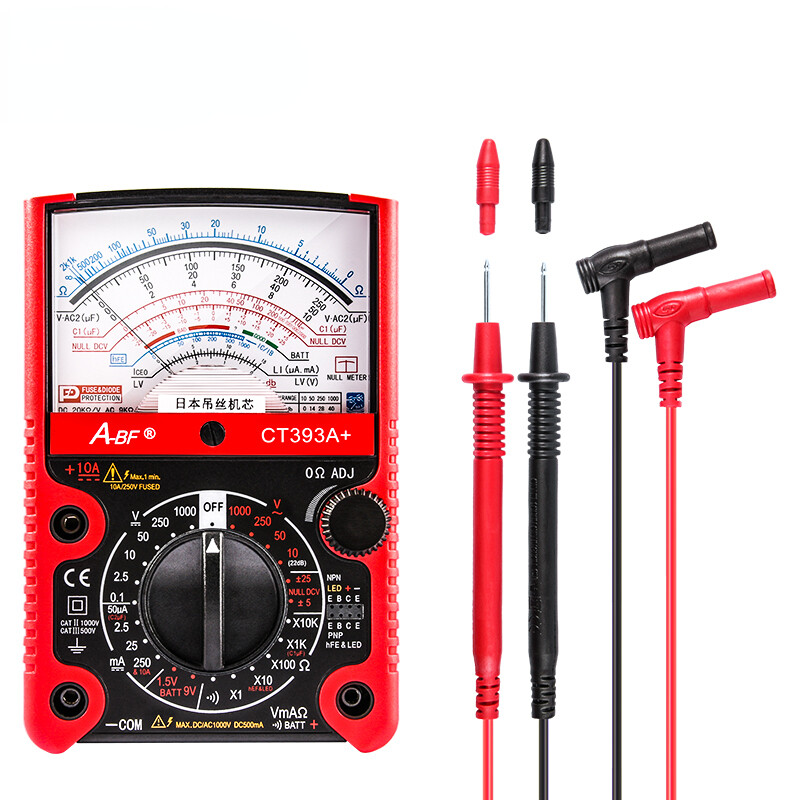
Analog systems are widely used in sensing and communication front-end design.
Typical applications include:
-
Audio recording systems
-
Medical measurement devices
-
Industrial automation sensors
-
Radio receivers
-
Environmental monitoring instruments
Microphones and acoustic sensors convert pressure waves into electrical signals prior to digital encoding.
9. Analog vs Digital System Design Philosophy
| Feature | Analog System | Digital System |
|---|---|---|
| Signal Type | Continuous waveform | Discrete binary |
| Noise Handling | Sensitive to interference | Strong error immunity |
| Storage Method | Physical waveform storage | Numerical data storage |
| Real-time Response | Very fast | Depends on processing latency |
| Hardware Complexity | Usually simpler | Software dependent |
| Precision Control | Limited | High precision achievable |
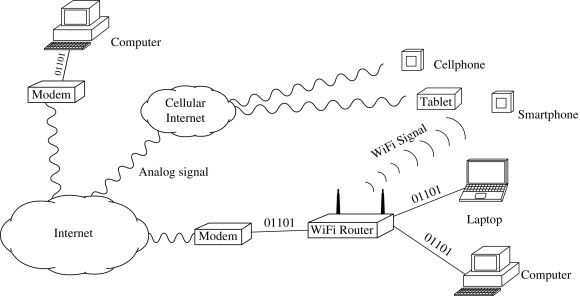
Digital systems provide reproducibility and computational accuracy, while analog systems provide natural signal fidelity.
10. Advantages and Engineering Limitations
Advantages
-
Real-time physical signal response
-
High waveform naturalness
-
Low computational hardware cost
-
Suitable for sensing interfaces
Limitations
-
Noise accumulation during transmission
-
Difficulty in long-term storage
-
Limited error correction capability
-
Component parameter drift over time
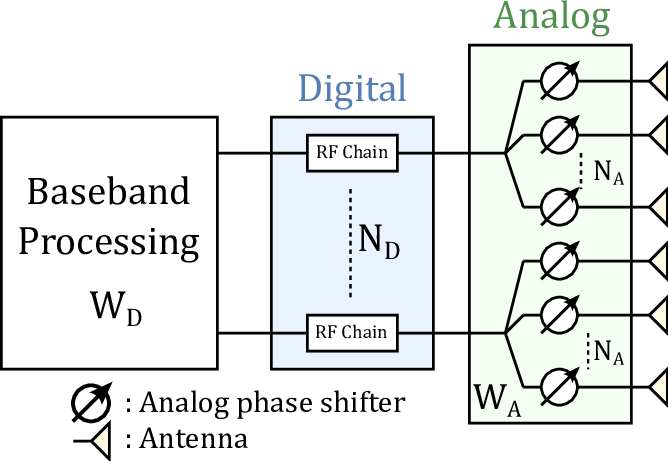
Modern electronic design tends to use hybrid architectures.
11. Why Analog Technology Still Matters
Most physical signals originate as analog signals.
Modern electronic systems generally follow a hybrid workflow:
Physical signal generation
Analog front-end conditioning
Analog-to-digital conversion (ADC)
Digital signal processing
Digital-to-analog output (DAC)
High-speed communication, sensor networks, and low-power IoT devices still rely heavily on analog circuit design.
FAQ
What is the main difference between analog and digital technology?
Analog technology uses continuous signals, while digital technology represents data using discrete binary states.
Why is analog technology still important?
Because physical phenomena are naturally continuous, sensors and communication hardware require analog signal processing.
Is analog technology more accurate than digital technology?
Not necessarily. Analog systems provide natural waveform representation, but digital systems offer better noise immunity and repeatability.
What is the biggest challenge in analog circuit design?
Noise suppression, component tolerance variation, and signal distortion control are major challenges.
Will analog technology disappear?
No. Analog circuits are fundamental components of sensing, communication interfaces, and high-speed electronic systems.
Conclusion
Analog technology is the physical foundation of signal acquisition and real-world interface engineering.
Although digital technology dominates computation and storage, analog circuits remain essential in sensing, transmission front-end design, and waveform reconstruction.
Future electronic systems will continue integrating analog sensing hardware with digital intelligence processing to achieve higher efficiency and reliability.