



Infrared Heating: Engineering Principles, System Design, and Industrial Applications
Infrared (IR) heating is a radiative heat transfer technology that delivers energy directly to materials without relying on convective air heating. This article explains infrared heating from an engineering perspective, including spectral physics, heat transfer mechanisms, emitter materials, system design, and industrial integration. Compared with conventional heating, infrared systems provide faster response, higher energy efficiency, and better process control.
Table of Contents
- 1. Fundamentals of Infrared Heating
- 2. Infrared Spectrum and Material Interaction
- 3. Heat Transfer Mechanism and Energy Balance
- 4. Core Components and Engineering Design
- 5. Infrared Heater Technologies
- 6. Power Consumption and Thermal Efficiency
- 7. Industrial Applications and Process Integration
- 8. Indoor vs Outdoor Engineering Considerations
- 9. Infrared vs Convective Heating Systems
- 10. Automation and Control Systems Integration
- 11. Conclusion
- 12. FAQ
1. Fundamentals of Infrared Heating
Infrared heating is based on radiative heat transfer, where energy is transferred via electromagnetic waves instead of heated air. Unlike convection systems, infrared heaters directly warm objects and surfaces.
Key engineering characteristics:
- Line-of-sight heat transfer
- Minimal dependence on airflow
- Rapid thermal response
- Reduced heat loss
2. Infrared Spectrum and Material Interaction
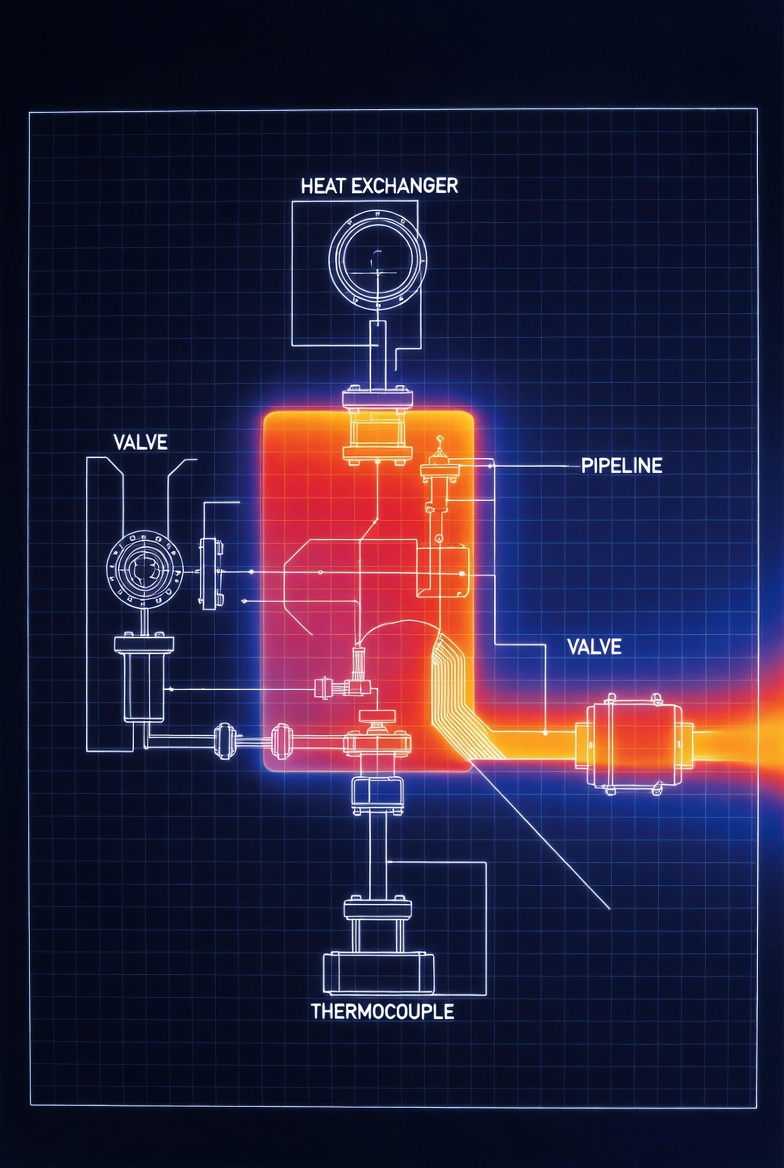
Infrared radiation spans wavelengths from 0.7 µm to 1000 µm, divided into:
| Band | Wavelength Range | Characteristics |
|---|---|---|
| Near IR (NIR) | 0.7–1.4 µm | High intensity, deep penetration |
| Mid IR (MIR) | 1.4–3 µm | Balanced heating |
| Far IR (FIR) | 3–1000 µm | Surface heating, gentle warmth |
Material interaction:
- Metals reflect most IR energy
- Plastics absorb mid-to-far IR effectively
- Water strongly absorbs far IR
Engineering implication: match wavelength to material absorption.
3. Heat Transfer Mechanism and Energy Balance
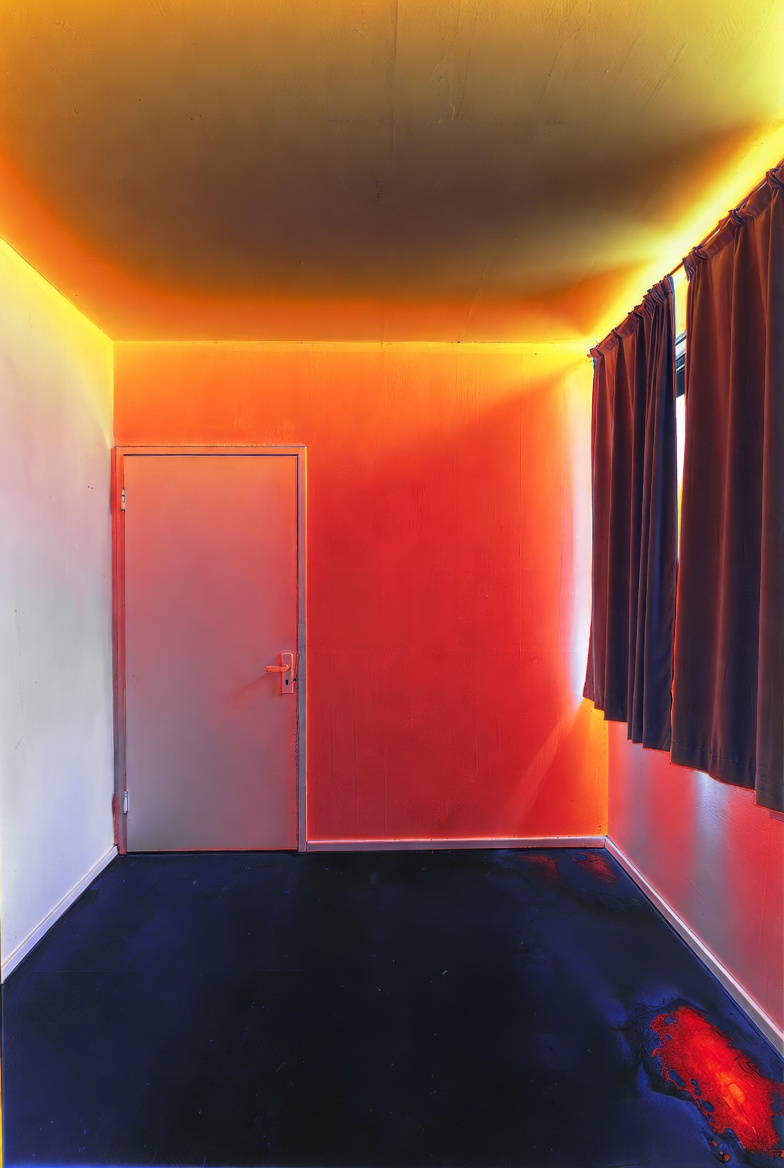
Infrared heating process:
- Energy input heats emitter
- Emitter radiates infrared waves
- Objects absorb radiation
- Heat spreads via conduction and re-radiation
Radiation equation:
Q = εσA(T⁴ - Ts⁴)
Where:
- ε = emissivity
- σ = Stefan–Boltzmann constant
- T = emitter temperature
- Ts = surroundings
4. Core Components and Engineering Design
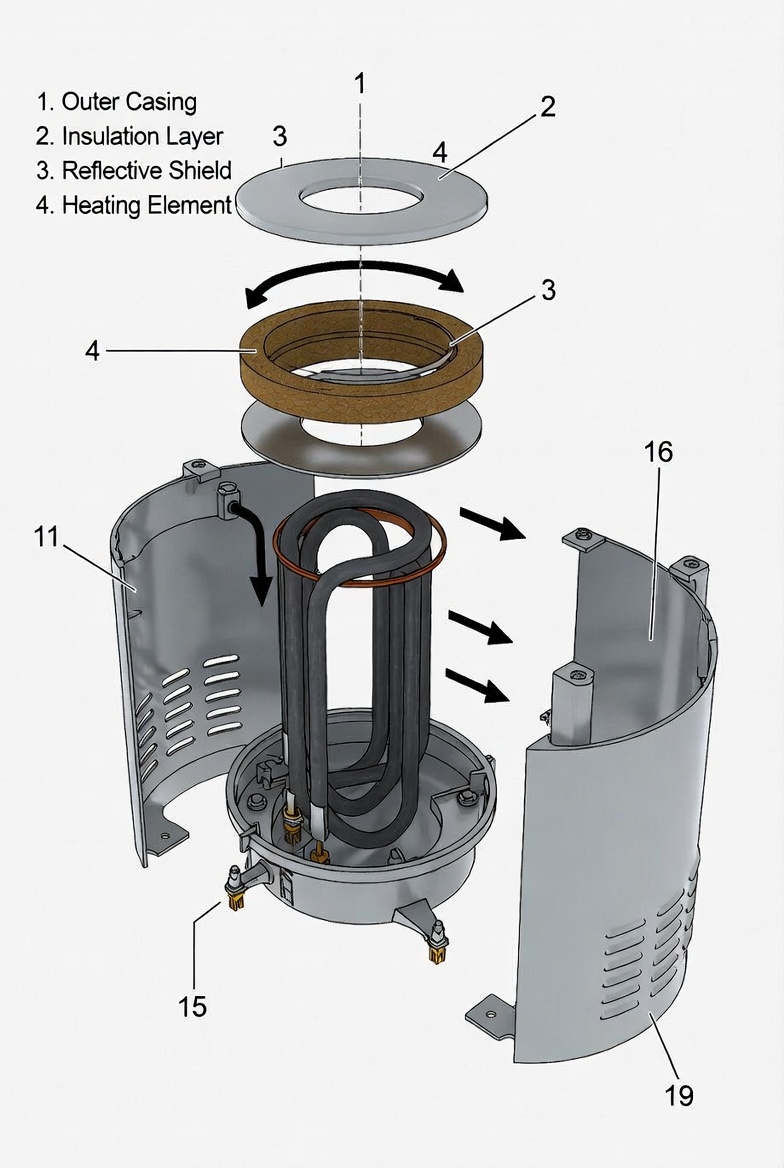
Key Components
- Heating Element: Quartz, ceramic, or carbon fiber
- Reflector: Directs radiation efficiently
- Housing: Structural and thermal protection
- Control System: Thermostat or PID controller
- Safety Devices: Sensors and thermal cutoffs
Design focus:
- Radiation direction control
- Thermal stability
- Safety compliance
5. Infrared Heater Technologies
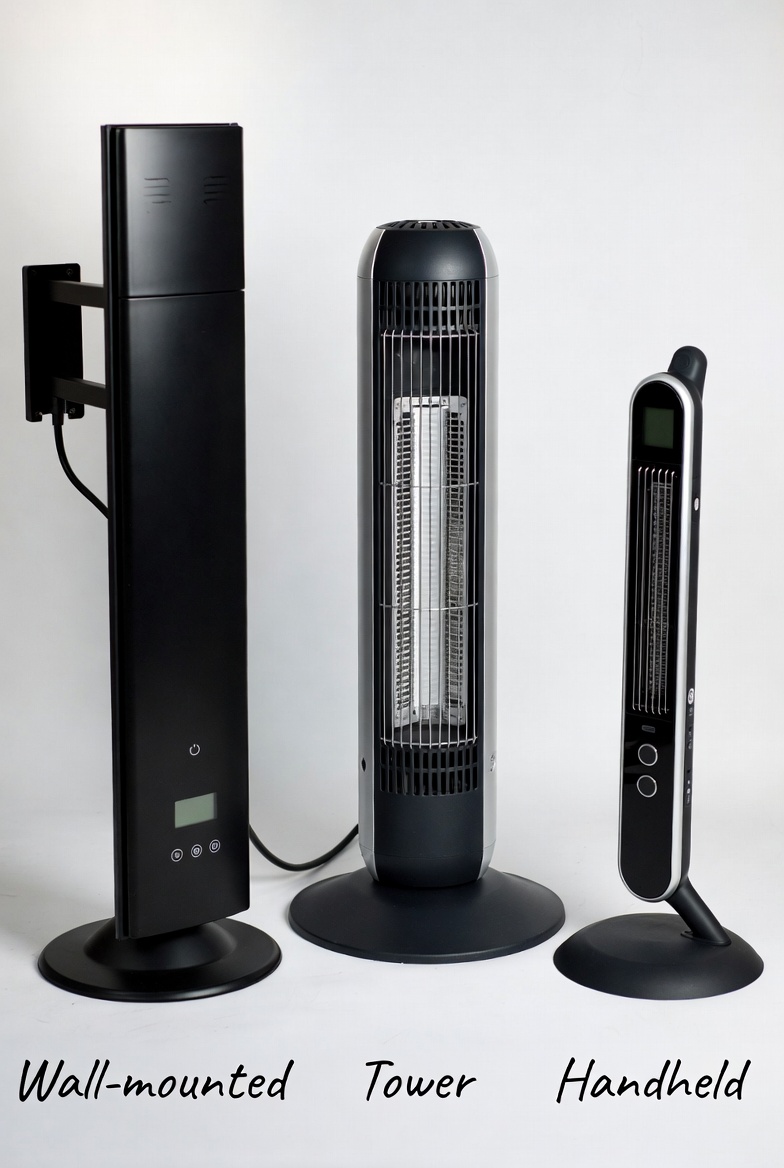
| Type | Response Time | Efficiency | Application |
|---|---|---|---|
| Quartz | Very fast | Medium | Spot heating |
| Ceramic | Medium | High | Indoor heating |
| Halogen | Instant | Medium | Outdoor use |
| Carbon Fiber | Fast | Very high | Energy-saving systems |
| Gas IR | Medium | High | Industrial heating |
6. Power Consumption and Thermal Efficiency
Energy calculation:
E = P × t
Example:
- 1000W heater × 2 hours = 2 kWh
Engineering insights:
- Direct heating reduces energy waste
- Efficiency depends on targeting accuracy
- Lower runtime needed for same comfort
7. Industrial Applications and Process Integration
Infrared heating is widely used in:
- Drying (textiles, paper)
- Paint curing
- Plastic forming
- Food processing
- Metal preheating
- Electronics manufacturing
Advantages:
- Fast processing
- Uniform heating
- Continuous operation capability
8. Indoor vs Outdoor Engineering Considerations
| Parameter | Indoor | Outdoor |
|---|---|---|
| Power Level | Low–Moderate | High |
| Heat Loss | Low | High |
| Environment | Controlled | Wind exposure |
| Installation | Portable | Fixed |
9. Infrared vs Convective Heating Systems
| Feature | Infrared Heating | Fan Heating |
|---|---|---|
| Mechanism | Radiation | Convection |
| Speed | Instant | Delayed |
| Efficiency | High | Lower |
| Noise | Silent | Noisy |
| Air Quality | Clean | Dust circulation |
10. Automation and Control Systems Integration
Infrared heating in automation includes:
- PLC-based control
- Conveyor-based heating
- Real-time temperature feedback
- Zone heating systems
Benefits:
- Improved production efficiency
- Consistent product quality
- Reduced energy usage
11. Conclusion
Infrared heating is a high-efficiency thermal solution that provides direct, fast, and controllable heat transfer. Its advantages in energy saving and precision make it suitable for both consumer and industrial applications. Proper system design requires alignment between wavelength, material properties, and control strategy.
12. FAQ
Q1: Why is infrared heating efficient?
It directly heats objects instead of air, reducing energy loss.
Q2: Can infrared heaters be used outdoors?
Yes, especially short-wave or gas-powered models.
Q3: Is infrared heating safe?
Yes, with proper safety controls and design.
Q4: What industries use infrared heating?
Manufacturing, food processing, electronics, and automotive.
Q5: What is the limitation of infrared heating?
It requires direct exposure and may not evenly heat large enclosed spaces.