



LiDAR Technology Explained: Solid-State LiDAR vs Mechanical LiDAR
LiDAR (Light Detection and Ranging) is a sensing technology that measures distance using laser light and generates precise 3D representations of the surrounding environment. It is widely used in autonomous vehicles, robotics, drones, industrial automation, and mapping systems.
Modern LiDAR systems fall into two major categories: mechanical LiDAR and solid-state LiDAR. Mechanical LiDAR relies on rotating optical assemblies to scan the environment, while solid-state LiDAR uses semiconductor-based electronic scanning without moving parts.
This article explains the engineering principles, architecture, and performance characteristics of LiDAR sensors and provides a technical comparison between solid-state and mechanical LiDAR technologies. It also explores real-world applications and selection considerations for engineers and system designers.
Table of Contents
- What Is LiDAR
- Core Architecture of LiDAR Systems
- Solid-State LiDAR
- Mechanical LiDAR
- Solid-State LiDAR vs Mechanical LiDAR
- Major Applications of LiDAR
- How to Choose the Right LiDAR Technology
- FAQ
- Conclusion
What Is LiDAR
LiDAR stands for Light Detection and Ranging, a remote sensing method that measures distances by emitting laser pulses and measuring the time required for the reflected light to return to the sensor.
The basic measurement principle is Time of Flight (ToF):
- The LiDAR emitter sends a laser pulse toward an object.
- The pulse reflects off the object surface.
- The receiver detects the reflected signal.
- The system calculates the round-trip time of the light.
Because light travels at a constant speed, the distance can be calculated precisely.
Distance equation:
Distance = (c × t) / 2
Where:
- c = speed of light
- t = time between emission and detection
By repeating this process thousands or millions of times per second across multiple directions, the LiDAR system generates a point cloud, which is a 3D spatial representation of the environment.
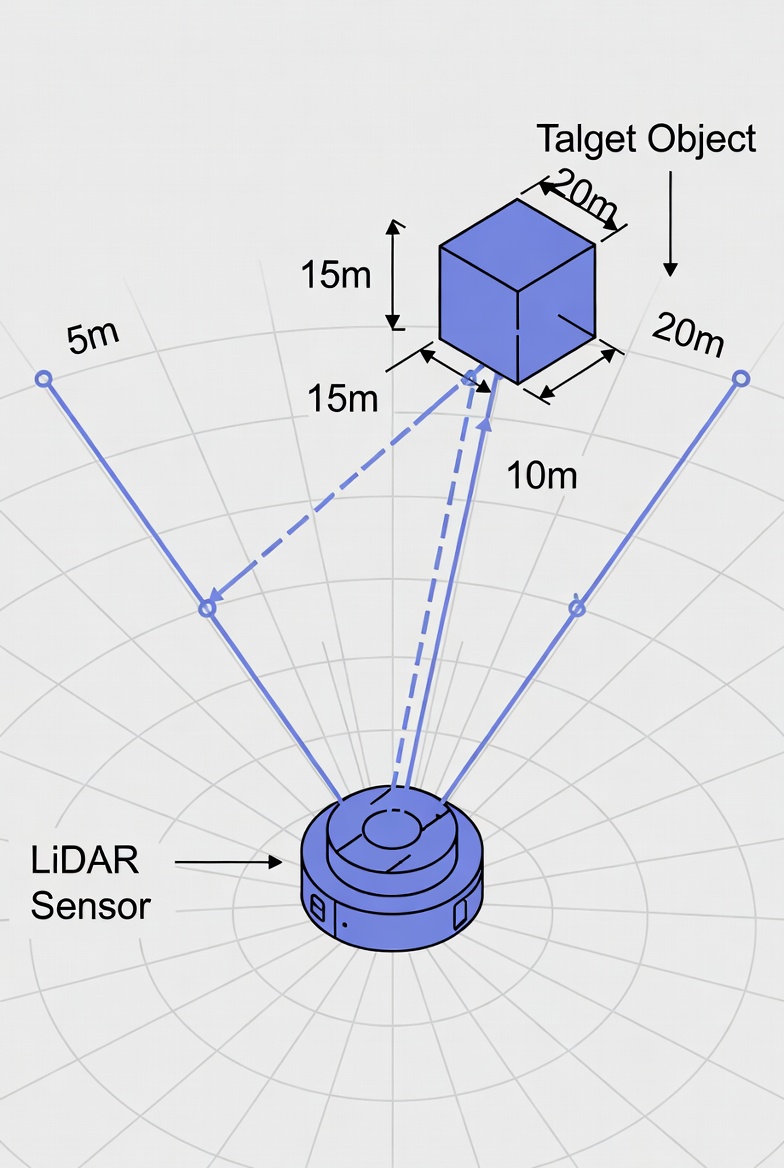
Figure 1. LiDAR Distance Measurement and 3D Point Cloud Generation
Core Architecture of LiDAR Systems
A typical LiDAR sensor includes several major subsystems.
Laser Emitter
The emitter produces short pulses of coherent laser light.
Common wavelengths include:
- 850 nm
- 905 nm
- 1550 nm
The wavelength choice affects range, eye safety, and atmospheric absorption.
Optical Scanning System
This subsystem directs the laser beam toward different directions in space.
Two main approaches exist:
- Mechanical scanning
- Electronic (solid-state) scanning
Photodetector Receiver
The receiver detects the reflected laser signal. Typical detectors include:
- APD (Avalanche Photodiodes)
- SPAD (Single Photon Avalanche Diodes)
These detectors are extremely sensitive and can detect very weak reflected signals.
Signal Processing Unit
The signal processor performs:
- Time-of-flight measurement
- Distance calculation
- Noise filtering
- Point cloud generation
Modern LiDAR systems often integrate FPGA or ASIC processors for high-speed data processing.
Solid-State LiDAR
Solid-state LiDAR is a LiDAR architecture that eliminates mechanical rotation and relies on semiconductor-based scanning technologies.
This approach significantly improves reliability, size, and manufacturability, making it suitable for high-volume automotive production.
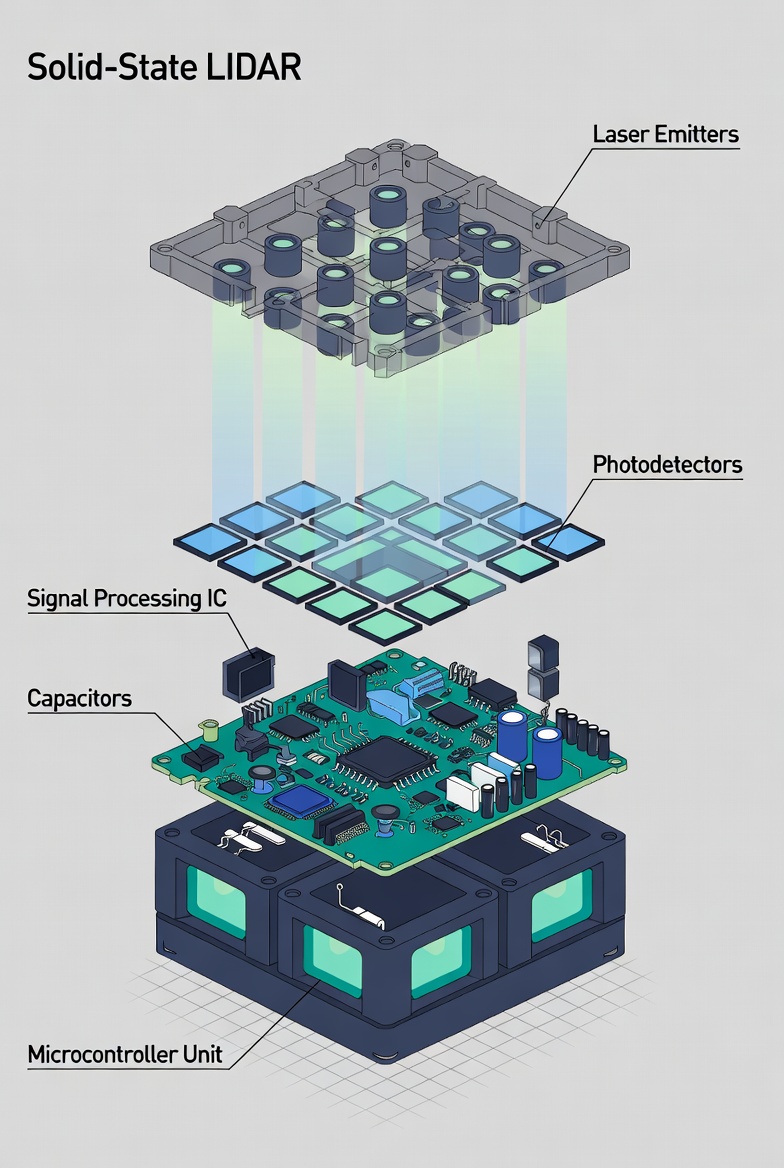
Figure 2. Solid-State LiDAR Internal Structure
Working Principle of Solid-State LiDAR
Instead of rotating optics, solid-state LiDAR uses electronic beam steering technologies such as:
- MEMS mirrors
- Optical phased arrays
- Flash LiDAR arrays
MEMS LiDAR
Uses micro-electromechanical mirrors to steer the laser beam.
Advantages:
- Compact size
- Moderate cost
- Good scanning resolution
Flash LiDAR
Emits a wide laser pulse that illuminates an entire scene at once.
Advantages:
- No scanning mechanism
- Very fast frame rate
Optical Phased Array LiDAR
Uses semiconductor phase control to steer the laser beam electronically.
Advantages:
- Fully solid-state
- Extremely compact
Example: Linear Array Short-Range LiDAR
A typical short-range solid-state LiDAR is used for obstacle detection in robotics and industrial automation.
Example Performance Characteristics
| Parameter | Typical Value |
|---|---|
| Operating Voltage | 5.1 V |
| Current Consumption | 0.136 A |
| Power Consumption | ~0.7 W |
| Detection Range | 25 mm – 300 mm |
| Field of View | ~109° |
| Angular Resolution | ~0.7° |
| Indoor Accuracy | 1–3 mm |
Such sensors are commonly integrated into:
- warehouse robots
- smart appliances
- industrial automation equipment
- obstacle detection systems
Mechanical LiDAR
Mechanical LiDAR is the traditional LiDAR architecture used in early robotics and autonomous vehicle prototypes.
These sensors use rotating optical assemblies to scan the environment.
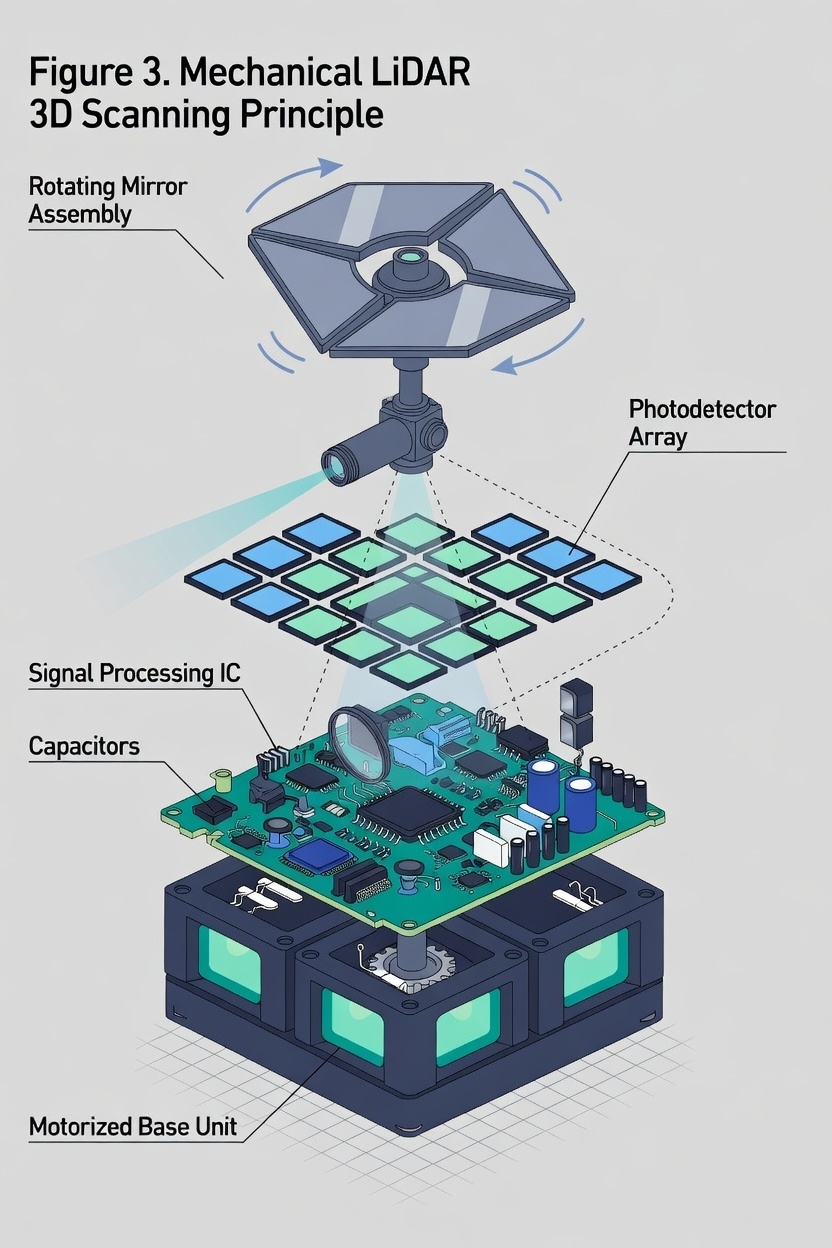
Figure 3. Mechanical LiDAR 3D Scanning Principle
Working Principle of Mechanical LiDAR
Mechanical LiDAR sensors use a motor-driven rotating mechanism.
The scanning process works as follows:
- A laser emitter generates pulses.
- The scanning assembly rotates.
- Laser pulses sweep across the environment.
- Reflected signals are detected by the receiver.
- Distance data is recorded for each angle.
Because the sensor rotates continuously, it can achieve 360° environmental scanning.
This design produces extremely dense and accurate 3D point clouds.
Example: RPLIDAR A3 360° Sensor
The RPLIDAR A3 is widely used in robotics navigation systems.
Electrical Characteristics
| Parameter | Value |
|---|---|
| Operating Voltage | 5.1 V |
| Operating Current | 0.3736 A |
| Power Consumption | ~1.9 W |
Measurement Performance
| Feature | Value |
|---|---|
| Measurement Range | 5 cm – 18 m |
| Scanning Coverage | 360° |
| Angular Resolution | ~0.225° |
| Blind Zone | ~0.2 m |
Mechanical LiDAR sensors are commonly used in:
- SLAM robotics
- indoor navigation
- mapping equipment
- research platforms
Solid-State LiDAR vs Mechanical LiDAR
| Feature | Solid-State LiDAR | Mechanical LiDAR |
|---|---|---|
| Scanning Method | Electronic beam steering | Motor-driven rotation |
| Moving Parts | None | Rotating components |
| Size | Compact | Larger |
| Reliability | High | Mechanical wear possible |
| Scanning Coverage | Typically limited | Full 360° possible |
| Power Consumption | Lower | Higher |
| Cost (mass production) | Lower | Higher |
In recent years, automotive manufacturers are rapidly shifting toward solid-state LiDAR due to reliability and scalability advantages.
Major Applications of LiDAR
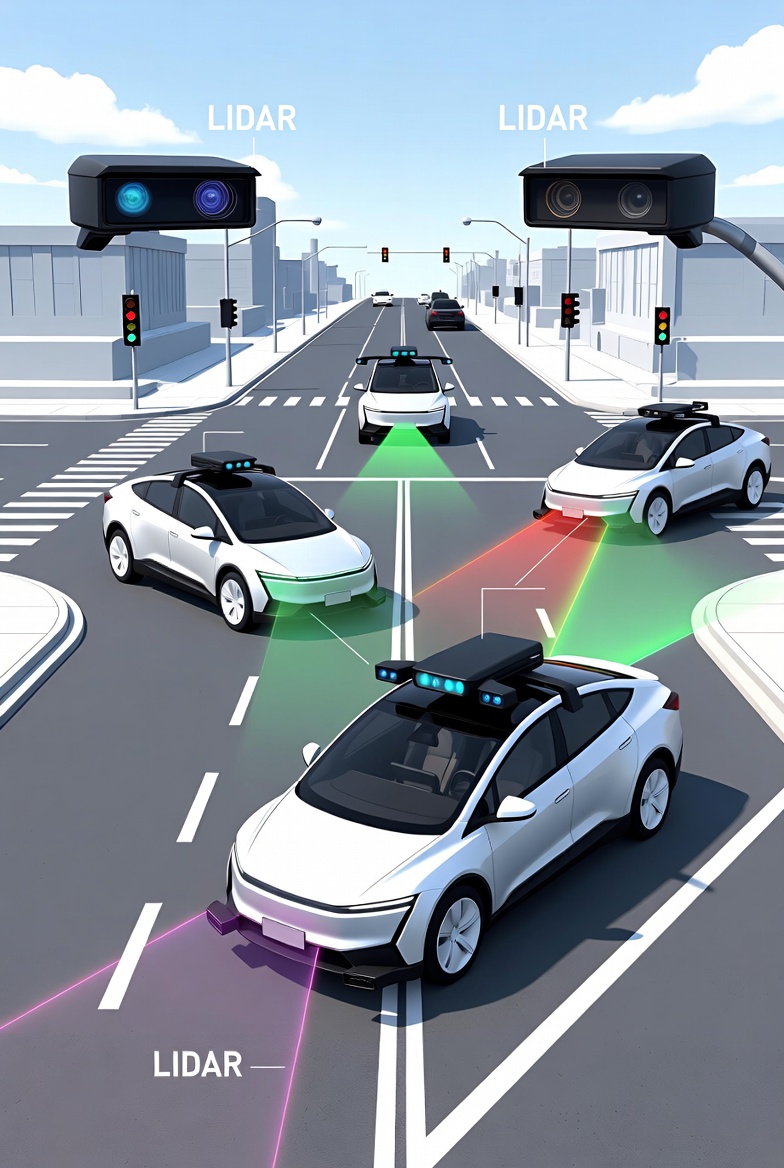
Figure 4. LiDAR Applications in Autonomous Vehicles
Autonomous Vehicles
LiDAR provides high-resolution 3D perception for:
- obstacle detection
- lane detection
- pedestrian recognition
Robotics and SLAM
Robots use LiDAR to build maps and navigate environments using Simultaneous Localization and Mapping (SLAM) algorithms.
Aerial Mapping and Surveying
LiDAR mounted on drones can create highly accurate topographic maps and terrain models.
Smart Cities
LiDAR sensors help monitor:
- traffic flow
- infrastructure conditions
- urban planning data
Industrial Automation
Factories use LiDAR for:
- object detection
- warehouse navigation
- automated safety systems
How to Choose the Right LiDAR Technology
Engineers typically evaluate several factors when selecting a LiDAR sensor.
Scanning Coverage
Applications requiring full environmental awareness (e.g., mapping robots) often require 360° scanning, favoring mechanical LiDAR.
System Size
Embedded systems or compact devices benefit from solid-state LiDAR due to smaller form factors.
Reliability
Solid-state sensors offer improved reliability because they eliminate mechanical wear.
Power Consumption
Battery-powered systems typically prefer solid-state LiDAR.
Cost in Mass Production
Automotive applications demand low-cost scalable sensors, making solid-state LiDAR the preferred solution.
FAQ
What is the main advantage of solid-state LiDAR?
Solid-state LiDAR has no moving parts, which improves durability, reduces size, and enables large-scale semiconductor manufacturing.
Why does mechanical LiDAR achieve 360° scanning?
Mechanical LiDAR uses rotating optical assemblies driven by motors, allowing the laser beam to sweep across the entire environment.
Which LiDAR is better for autonomous vehicles?
Most next-generation autonomous vehicle platforms prefer solid-state LiDAR because it offers higher reliability, smaller size, and lower cost for mass production.
What limits LiDAR performance?
Major limiting factors include:
- atmospheric conditions
- surface reflectivity
- sunlight interference
- sensor resolution
Conclusion
LiDAR is a critical sensing technology for modern intelligent systems. By using laser-based distance measurement, LiDAR enables machines to perceive and map the surrounding environment with high precision.
Mechanical LiDAR offers wide-angle scanning and mature performance, while solid-state LiDAR provides compact size, improved reliability, and scalable manufacturing.
As semiconductor and photonics technologies continue to evolve, solid-state LiDAR is expected to become the dominant architecture for future applications in autonomous driving, robotics, and smart infrastructure.