



Simulation Engineering Guide: Principles, Methods, Workflow, and Real-World Applications
Simulation is a fundamental engineering methodology used to analyze complex systems without performing expensive or risky physical experiments. By constructing mathematical and computational models that approximate real-world behavior, engineers can evaluate performance, predict outcomes, and optimize designs before implementation.
Modern simulation technologies integrate physics-based modeling, numerical methods, high-performance computing, and data-driven techniques to reproduce system behavior with increasing accuracy. These tools are widely applied in aerospace engineering, semiconductor design, manufacturing systems, logistics optimization, and healthcare training.
This article explains the engineering principles behind simulation, discusses common modeling techniques and workflows, and explores how simulation improves system design, reliability, and operational efficiency across industries.
Table of Contents
- 1. Understanding Simulation
- 2. Why Simulation Is Critical in Engineering
- 3. When Simulation Should Be Used
- 4. Core Simulation Methods
- 5. Simulation Modeling Approaches
- 6. Simulation Interaction Models
- 7. Simulation Engineering Workflow
- 8. Major Engineering Applications
- 9. Emerging Simulation Technologies
- 10. Improving Simulation Accuracy
- FAQ
- Conclusion
1. Understanding Simulation
Simulation is the process of constructing a mathematical or computational model that reproduces the behavior of a real system over time. Instead of interacting directly with the physical system, engineers experiment with the model to observe how the system responds to different inputs, parameters, and environmental conditions.
A simulation model typically contains three main components.
System Representation
The model must represent the physical structure or logic of the system being studied. This includes system components, relationships between components, and operational constraints.
Governing Equations
Physical systems are described using mathematical equations derived from physics, control theory, or probability.
Typical examples include:
- Newton’s laws of motion
- Heat transfer equations
- Fluid dynamics equations
- Electrical circuit laws
Computational Execution
The model is executed using simulation software that numerically solves equations and updates system states over time.
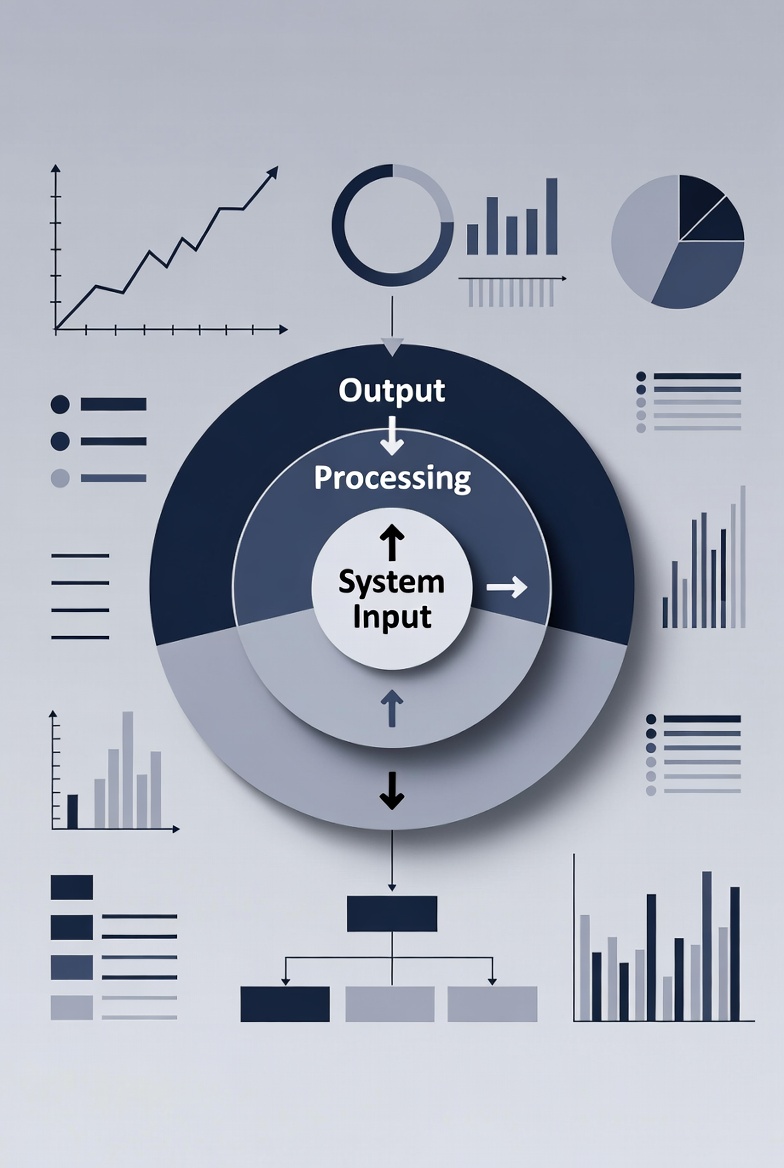
Figure 1. Digital Simulation Model Showing System Behavior and Flow Analysis
Through repeated simulation runs, engineers can observe patterns, test extreme scenarios, and evaluate design alternatives without building physical prototypes.
2. Why Simulation Is Critical in Engineering
Engineering systems often involve high complexity, nonlinear behavior, and multiple interacting variables. Direct experimentation is frequently impractical due to cost, safety risks, or time constraints.
Simulation addresses these limitations by enabling controlled virtual experimentation.
Major Engineering Benefits
| Benefit | Description |
|---|---|
| Reduced Development Cost | Virtual testing significantly reduces the need for expensive prototypes and physical testing facilities. |
| Faster Product Development | Engineers can evaluate multiple design variations quickly through simulation iterations. |
| Better System Understanding | Simulations reveal interactions between variables and help identify performance limitations. |
| Risk Reduction | Dangerous systems such as aircraft or nuclear systems can be tested safely in virtual environments. |
Because of these advantages, simulation has become a core component of modern engineering design processes.
3. When Simulation Should Be Used
Simulation becomes particularly valuable in several situations.
Expensive Physical Experiments
Certain industries require extremely costly testing environments.
Examples include:
- aerospace testing
- semiconductor manufacturing
- automotive crash testing
Dangerous Operating Environments
Training systems often rely on simulation to avoid real-world risks.

Figure 2. Flight Simulator Used for Aviation Training and System Testing
Systems Too Complex for Analytical Solutions
Large interconnected systems, such as power grids or global logistics networks, often cannot be solved using simple equations.
Systems That Must Remain Operational
Manufacturing plants, telecommunications networks, and infrastructure systems cannot easily be stopped for experimentation. Simulation allows engineers to test improvements without interrupting operations.
4. Core Simulation Methods
Different types of simulation are used depending on system characteristics.
| Simulation Type | Description | Typical Applications |
|---|---|---|
| Computer Simulation | Software models represent physical or logical systems. | Engineering, climate modeling, electronics |
| Discrete Event Simulation | Models systems where state changes occur at specific events in time. | Manufacturing lines, logistics, network traffic |
| Stochastic Simulation | Includes randomness and probability in system behavior. | Finance, reliability analysis, demand forecasting |
| Virtual Reality Simulation | Creates immersive environments for training and interaction. | Aviation training, medical simulation |
5. Simulation Modeling Approaches
Simulation models can be constructed using several engineering approaches.
Physical Modeling
Physical modeling uses scaled prototypes or experimental systems to approximate real-world behavior. Wind tunnel experiments used in aircraft design are a classic example.
Mathematical Modeling
Mathematical models represent physical processes using equations.
Common numerical techniques include:
- Finite Element Method (FEM)
- Finite Difference Method (FDM)
- Finite Volume Method (FVM)
These techniques divide a complex system into smaller sections where equations can be solved numerically.
Data-Driven Modeling
Modern simulations increasingly use machine learning and statistical analysis to model system behavior based on historical data.
Applications include:
- predictive maintenance
- traffic prediction
- demand forecasting
System-Level Modeling
Complex systems consist of multiple interacting subsystems.
System-level simulation connects these subsystems so that outputs from one component become inputs for another, enabling full system analysis.
6. Simulation Interaction Models
Simulations can also be classified based on how humans interact with them.
Human-in-the-Loop Simulation
Human-in-the-loop simulation allows users to interact with the simulation environment in real time.
Examples include:
- flight simulators
- driving simulators
- military training systems

Figure 3. Human-in-the-Loop Simulation Environment
Automated Simulation
Automated simulations operate without real-time user interaction. Engineers define parameters and the simulation executes automatically.
Typical uses include:
- parameter optimization
- Monte Carlo simulations
- reliability testing
7. Simulation Engineering Workflow
Successful simulation requires a structured engineering process.

Figure 4. Simulation Modeling and Analysis Workflow
Step 1 — Define the Problem
The first step involves clearly defining:
- system boundaries
- simulation objectives
- input parameters
- performance metrics
Step 2 — Build the Model
Engineers create a mathematical representation of the system including components, interactions, and governing equations.
Step 3 — Execute the Simulation
Simulation software performs numerical computations and predicts system behavior.
Step 4 — Analyze Results
Simulation outputs may include:
- time-series data
- graphs
- statistical analysis
- visual animations
Step 5 — Iterate and Optimize
Simulation parameters are adjusted and the model is re-executed to identify improved designs or system configurations.
8. Major Engineering Applications
Simulation technologies are widely used across many industries.
| Industry | Simulation Application |
|---|---|
| Weather Forecasting | Atmospheric models predict storms and climate behavior. |
| Supply Chain Management | Logistics systems are simulated to improve efficiency and reduce delays. |
| Product Design | Stress analysis, thermal simulation, and fluid dynamics improve product performance. |
| Electronic Circuit Design | Circuit simulation predicts voltage, current, and signal behavior before manufacturing. |
| Pharmaceutical Research | Molecular simulations accelerate drug discovery and biological analysis. |
| Game Development | Game engines simulate physics, movement, and environmental interaction. |
9. Emerging Simulation Technologies
Simulation technology is evolving rapidly due to improvements in computing and artificial intelligence.
Digital Twin Systems
Digital twins create real-time digital replicas of physical systems using live sensor data.
AI-Driven Simulation
Artificial intelligence enhances simulations by learning system patterns from large datasets.
High-Performance Computing
Large-scale simulations require massive computational power. HPC clusters enable complex modeling in fields such as climate science and semiconductor manufacturing.
10. Improving Simulation Accuracy
Simulation reliability depends on several factors.
| Factor | Impact on Simulation Accuracy |
|---|---|
| Model Quality | Accurate physical models ensure realistic system behavior. |
| Numerical Resolution | Higher mesh resolution increases accuracy but requires more computing power. |
| Model Validation | Simulation results must be compared with experimental data. |
| Data Integration | Combining sensor data with simulations improves predictive capability. |
FAQ
What is the main purpose of simulation?
Simulation allows engineers to analyze system behavior and evaluate design alternatives without performing expensive physical experiments.
Which industries rely most on simulation?
Simulation is heavily used in aerospace, automotive engineering, semiconductor manufacturing, energy systems, logistics, and healthcare.
What software tools are used for engineering simulation?
Different simulation domains use specialized software for circuit analysis, mechanical systems, fluid dynamics, and system modeling.
How accurate are simulations?
Accuracy depends on model assumptions, numerical methods, input data quality, and validation against real-world measurements.
Conclusion
Simulation has become a critical engineering tool for analyzing complex systems and improving design decisions. By combining mathematical modeling, numerical methods, and modern computing technologies, simulation enables engineers to explore system behavior under a wide range of conditions.
As computing power, artificial intelligence, and digital twin technologies continue to advance, simulation will play an even greater role in system optimization, predictive analysis, and technological innovation across industries.