



What Is NVRAM? Architecture, Technologies, and Engineering Applications
Non-Volatile Random Access Memory (NVRAM) is a class of memory technologies capable of retaining stored information even when electrical power is removed. Unlike conventional volatile memories such as SRAM or DRAM, NVRAM preserves system state, configuration data, and persistent information without requiring continuous power. Modern computing systems—from embedded controllers to enterprise servers—depend on NVRAM to ensure data integrity, rapid recovery after power failure, and reliable configuration storage.
This article examines NVRAM from an engineering perspective, including its operating principles, internal architecture, major technology variants, performance characteristics, and real-world applications across computing, networking, automotive electronics, and industrial systems.
Table of Contents
- What Is NVRAM
- Key Characteristics of NVRAM
- Major NVRAM Technologies
- Internal Working Principle of NVRAM
- Internal Architecture of NVRAM Devices
- NVRAM vs SRAM
- NVRAM vs Flash Memory
- Advantages and Engineering Trade-Offs
- Applications of NVRAM
- FAQ
- Conclusion
What Is NVRAM
Non-Volatile Random Access Memory (NVRAM) refers to memory technologies that support random data access while retaining stored information without external power.
In traditional computing systems:
- SRAM / DRAM store data using electrical charge or transistor states that disappear when power is removed.
- Non-volatile storage such as NAND flash preserves data but operates with slower block-based access.
NVRAM bridges this gap by combining two essential properties:
- Random access capability similar to RAM
- Persistent data retention similar to storage
Because of this combination, NVRAM is widely used to store:
- firmware configuration
- boot parameters
- system logs
- hardware calibration data
- critical runtime states
In modern computing architecture, NVRAM often serves as persistent system memory or configuration storage.
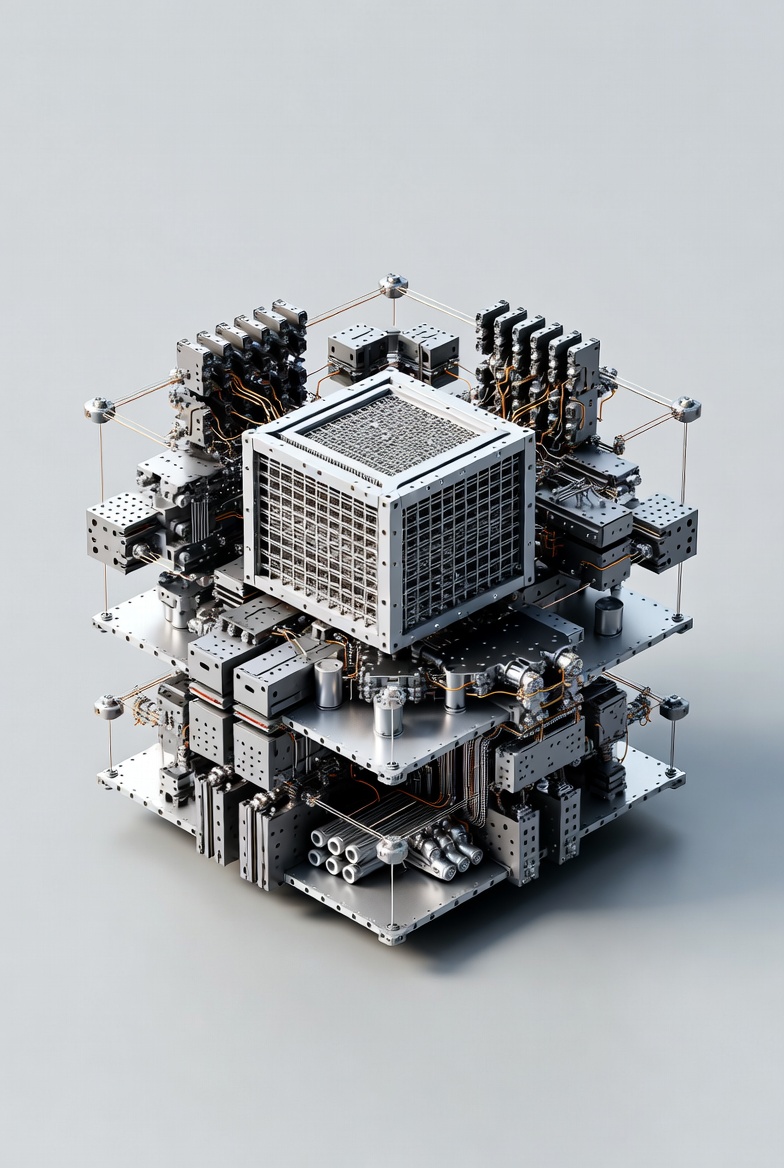
Key Characteristics of NVRAM
Non-Volatile Data Retention
The defining property of NVRAM is its ability to retain stored data after power removal. Depending on the technology, retention time can range from several years to decades.
Random Access Capability
Unlike block-based storage systems, NVRAM allows direct addressing of memory cells, enabling faster data operations.
Fast Read Latency
Many NVRAM technologies achieve read latencies closer to SRAM than flash memory.
Low Standby Power
Because stored data does not require continuous power to maintain its state, NVRAM devices generally consume minimal standby energy.
High Write Endurance
Certain technologies such as MRAM and FRAM can support extremely high write endurance, sometimes exceeding trillions of cycles.
Reliable Data Storage
NVRAM protects critical information such as system parameters, calibration data, and operational logs.
Major NVRAM Technologies
Different NVRAM implementations rely on different physical mechanisms for storing binary data.
Flash Memory
Flash memory is the most widely deployed form of non-volatile memory. It stores information using floating-gate MOSFET transistors that trap electrical charge.
Key characteristics include:
- block erase architecture
- high storage density
- relatively low cost
- limited write endurance
Flash memory is commonly used in:
- USB drives
- SSDs
- smartphones
- memory cards
EEPROM
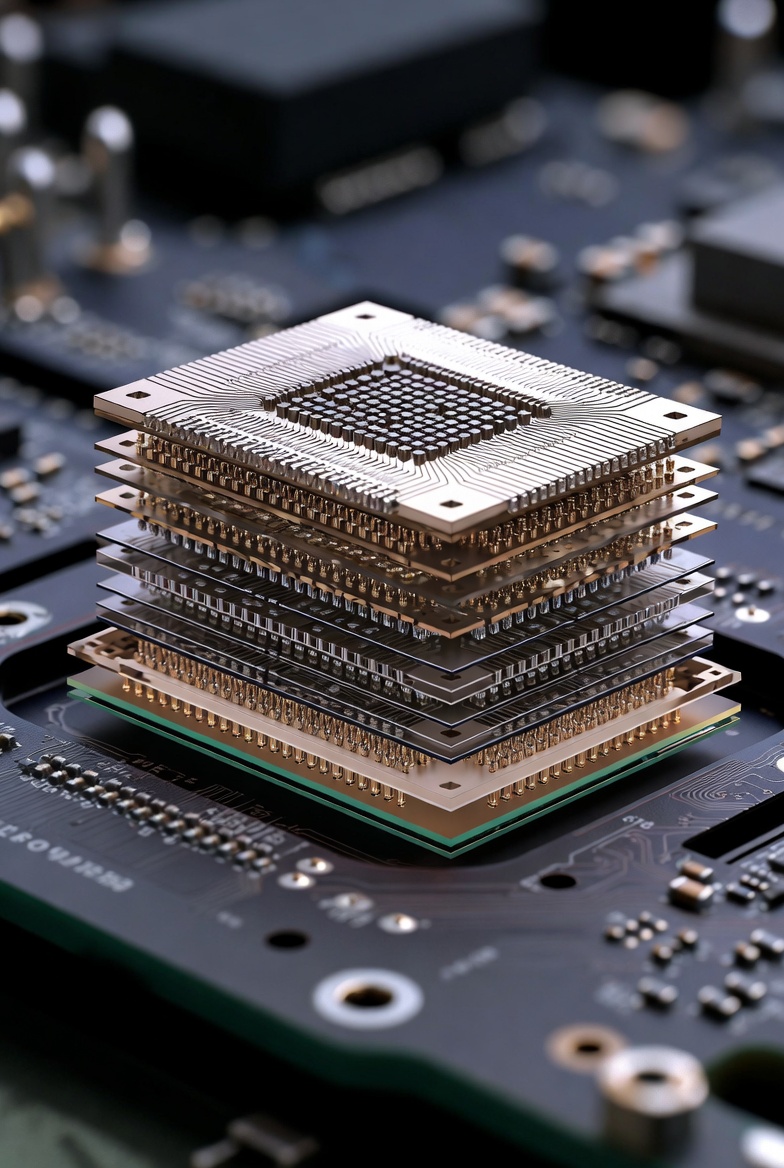
EEPROM (Electrically Erasable Programmable Read-Only Memory) works similarly to flash memory but allows byte-level data updates.
Advantages include:
- precise data modification
- reliable storage for small datasets
- flexible update capability
Typical applications include:
- BIOS configuration
- calibration parameters
- embedded system settings
FRAM
FRAM (Ferroelectric RAM) stores data using ferroelectric polarization states rather than trapped electrical charge.
Important features:
- extremely low write power
- very high endurance
- fast write speed
FRAM is widely used in:
- industrial automation
- smart metering systems
- data logging devices
MRAM
MRAM (Magnetoresistive RAM) stores data using magnetic tunnel junctions (MTJs).
Binary states are determined by the relative orientation of magnetic layers.
Advantages include:
- near-SRAM speed
- high durability
- radiation resistance
MRAM is increasingly considered a promising next-generation universal memory technology.
PCM
PCM (Phase Change Memory) stores information by switching a material between amorphous and crystalline states.
Benefits include:
- higher endurance than flash
- faster switching speeds
- good scalability for future devices
Internal Working Principle of NVRAM
Although each technology uses different physics, the basic principle of NVRAM is similar: data is stored by modifying a persistent physical state within a memory cell.
Write Operation
During writing, electrical signals change the physical state of the memory element.
Examples include:
- trapping electrons in floating gates
- switching magnetic orientation
- modifying crystal structure
- altering ferroelectric polarization
Storage State
Once the physical state is changed, it remains stable without power.
Read Operation
During reading, sensing circuits detect the stored state by measuring electrical properties such as voltage, resistance, or magnetic response.
Internal Architecture of NVRAM Devices
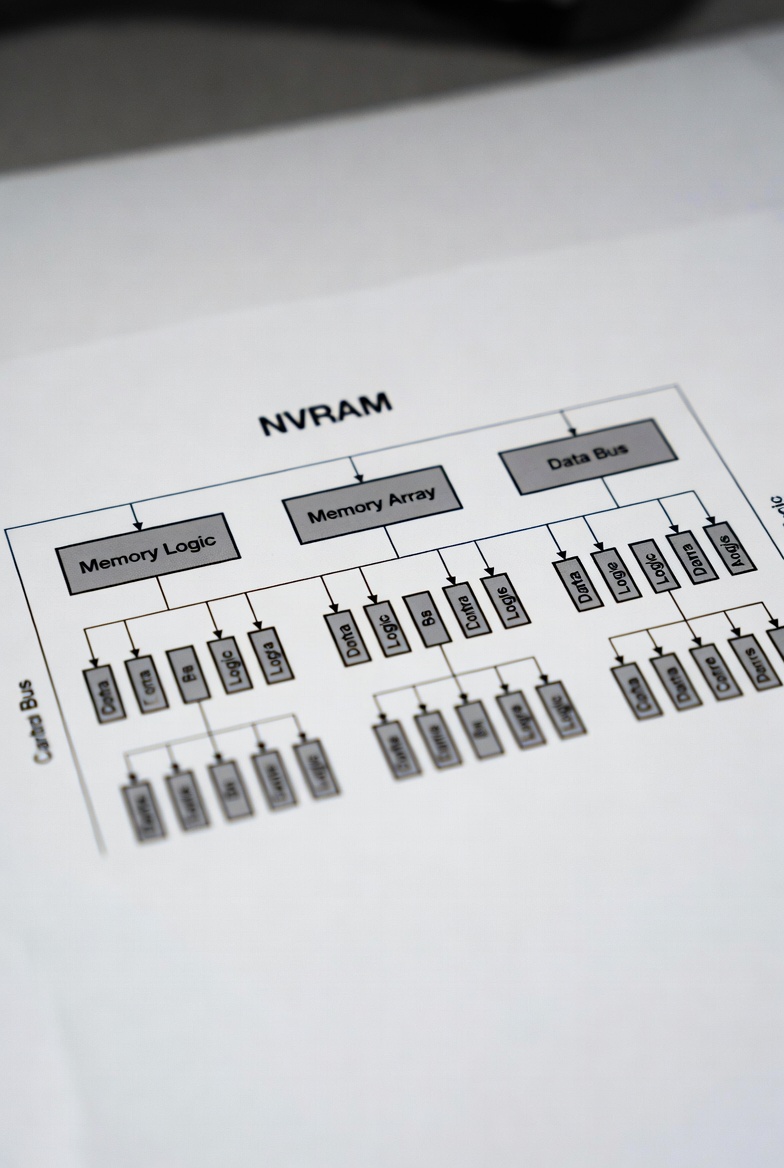
At the chip level, NVRAM devices are organized similarly to other semiconductor memory technologies.
Memory Cell Array
The core storage region consists of millions of memory cells arranged in rows and columns.
Each cell stores a single binary bit.
Word Lines and Bit Lines
Memory addressing relies on an intersecting grid:
- Word lines select rows
- Bit lines select columns
Sense Amplifiers
Sense amplifiers detect very small electrical differences to determine stored bit values.
Control Logic
Control circuits manage:
- read operations
- write operations
- address decoding
- error correction mechanisms
NVRAM vs SRAM
| Feature | NVRAM | SRAM |
|---|---|---|
| Data Retention | Persistent without power | Lost when power is removed |
| Memory Type | Non-volatile | Volatile |
| Speed | Fast but typically slower than SRAM | Extremely fast |
| Power Requirement | Low standby power | Requires continuous power |
| Typical Usage | Firmware and configuration storage | CPU cache and high-speed buffers |
NVRAM vs Flash Memory
| Feature | NVRAM | Flash Memory |
|---|---|---|
| Access Method | Random access | Block-based access |
| Write Endurance | Often higher | Limited cycles |
| Latency | Lower latency | Higher latency |
| Density | Lower density | High density |
| Typical Usage | Configuration and persistent system memory | Mass data storage |
Advantages and Engineering Trade-Offs
Advantages
Persistent Data Protection
Systems can preserve critical information even during sudden power failures.
Faster Access Than Storage
Many NVRAM technologies operate significantly faster than traditional storage devices.
High Reliability
System configuration, firmware settings, and operational logs remain safe.
Low Energy Consumption
Data retention without continuous power significantly reduces standby energy.
Engineering Limitations
Higher Manufacturing Cost
Complex fabrication processes often increase the cost of NVRAM technologies.
Lower Storage Density
Compared with NAND flash memory, NVRAM typically offers smaller capacity.
Technology Diversity
Different NVRAM technologies have varying performance characteristics and design trade-offs.
Applications of NVRAM
BIOS and Firmware Storage
NVRAM stores system boot parameters and firmware configuration settings.
Enterprise Servers
Persistent memory modules improve data protection and system recovery speed.
Embedded Systems
Industrial controllers use NVRAM for calibration data and operational logs.
Networking Equipment
Routers and switches store configuration files in NVRAM.
Automotive Electronics
Electronic control units retain critical parameters and diagnostic information.
IoT Devices
Smart sensors and connected devices store configuration data locally using NVRAM.
FAQ
What does NVRAM stand for?
NVRAM stands for Non-Volatile Random Access Memory, a memory technology capable of retaining stored data without electrical power.
Is flash memory a type of NVRAM?
Flash memory is non-volatile, but it typically uses block-based storage, while many NVRAM technologies support true random access.
Why is NVRAM important in computers?
NVRAM stores critical data such as BIOS settings, firmware parameters, and system configuration, ensuring reliable system startup.
What is the difference between RAM and NVRAM?
RAM loses stored data when power is removed, whereas NVRAM preserves stored information even without power.
Which technologies may replace flash memory in the future?
Emerging technologies such as MRAM, PCM, and ReRAM are being developed as potential next-generation non-volatile memory solutions.
Conclusion
NVRAM represents a critical class of semiconductor memory technologies that combine random access capability with persistent data storage. By maintaining stored information without external power, NVRAM enhances system reliability, supports fast recovery from power interruptions, and provides secure storage for configuration and firmware data.
Although current NVRAM solutions often involve trade-offs in cost and storage density compared with NAND flash memory, emerging technologies such as MRAM and PCM are steadily improving scalability and performance. As computing systems continue to demand faster and more reliable persistent memory solutions, NVRAM will remain a key component in modern computing infrastructure, embedded electronics, and future data-centric architectures.