



DIN Rail vs Traditional Mounting: Engineering Comparison, Design Trade-offs, and Best Practices
DIN rail and traditional mounting represent two fundamentally different approaches to installing electrical components in control panels and enclosures. DIN rail systems emphasize modularity, scalability, and installation efficiency, while traditional mounting focuses on mechanical strength and flexibility for non-standard or heavy equipment. This article provides an engineering-level comparison of both methods, including structural design, installation workflow, thermal considerations, scalability, and real-world applications, enabling optimal mounting decisions for industrial and commercial systems.
Table of Contents
- 1. What Is DIN Rail Mounting?
- 2. What Is Traditional Mounting?
- 3. Structural and Mechanical Differences
- 4. DIN Rail vs Traditional Mounting Comparison
- 5. Selection Criteria: When to Use Each Method
- 6. Typical Applications
- 7. Hybrid Mounting Strategy
- 8. Installation Best Practices
- 9. Common Engineering Mistakes
- 10. FAQ
- 11. Conclusion
1. What Is DIN Rail Mounting?
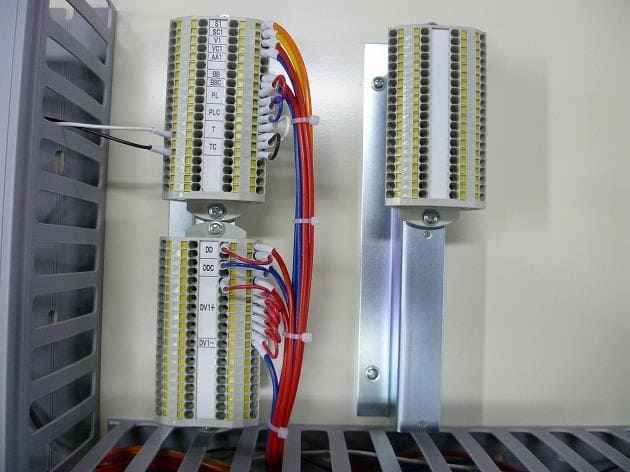
DIN rail mounting is a standardized modular installation method used to mount electrical components onto a metal rail inside enclosures.
Key Engineering Characteristics
- Standard profile: 35 mm (TS35)
- Materials: galvanized steel, aluminum, stainless steel
- Mounting method: snap-fit or clip-on
Typical Devices
- Circuit breakers
- Relays
- Terminal blocks
- PLC modules
- Power supplies
Engineering Advantage
DIN rail systems enable fast installation, easy replacement, and highly organized panel layouts.
2. What Is Traditional Mounting?
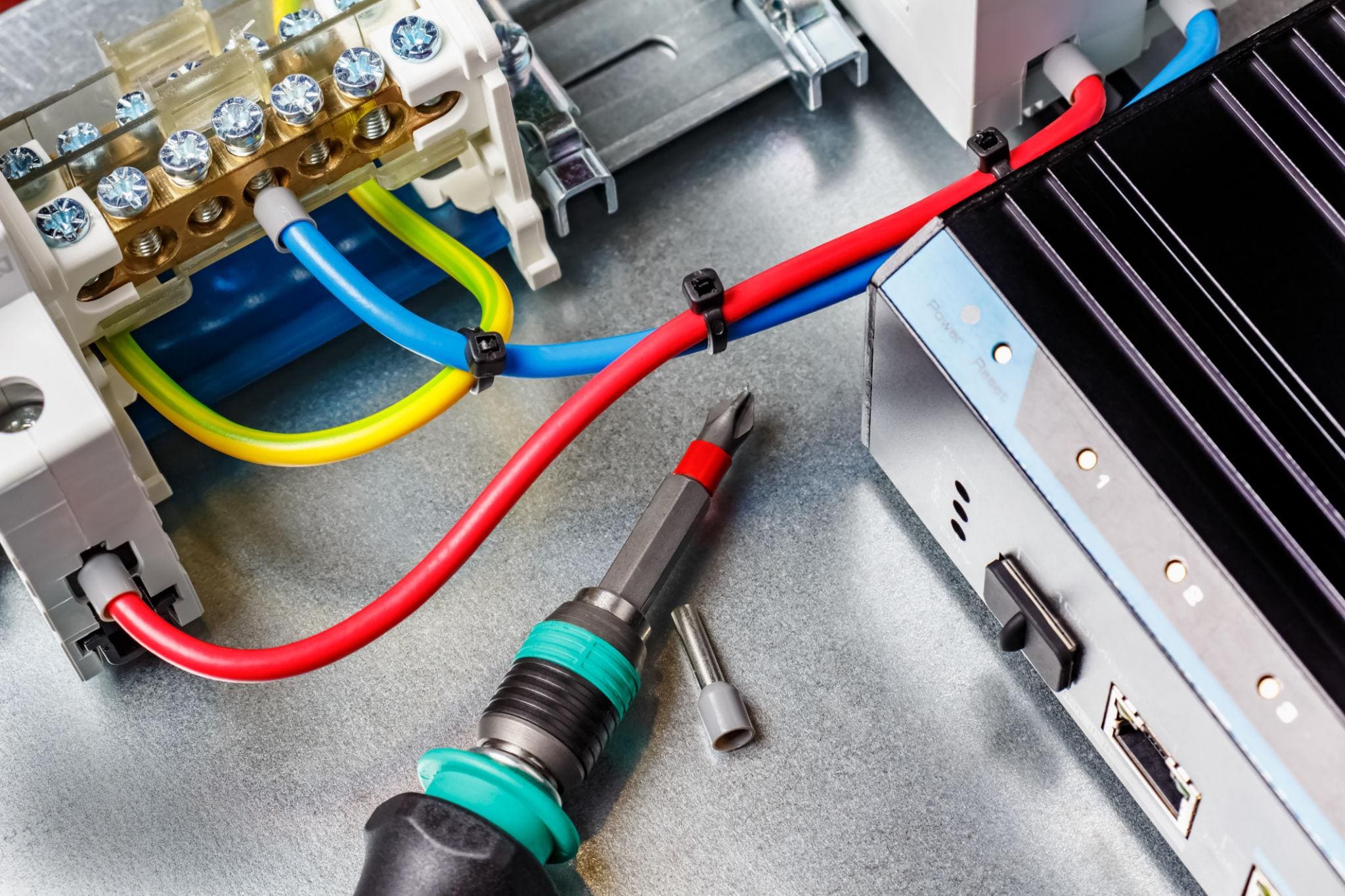
Traditional mounting refers to direct mechanical fastening of components onto panels or backplates using screws, bolts, or brackets.
Key Engineering Characteristics
- Requires drilling and alignment
- Flexible positioning
- High mechanical strength
Typical Use Cases
- Transformers
- Large power supplies
- Heavy industrial equipment
- Non-standard devices
Engineering Insight
Traditional mounting is preferred when mechanical stability and custom placement are required.
3. Structural and Mechanical Differences
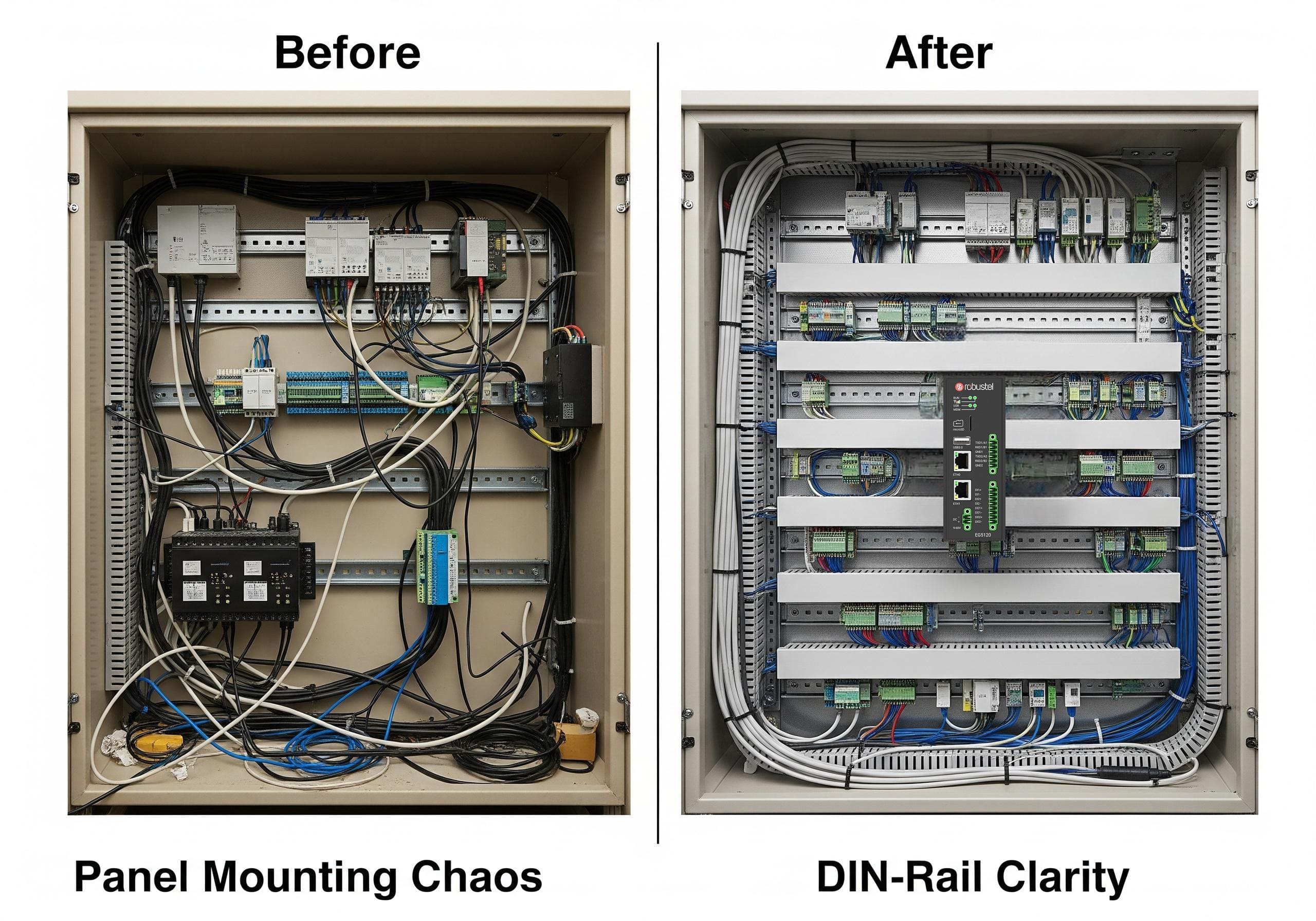
3.1 Load Distribution
- DIN rail: distributed along the rail
- Traditional: concentrated at mounting points
3.2 Mechanical Strength
- DIN rail: moderate strength
- Traditional: high strength for heavy loads
3.3 Modularity
- DIN rail: highly modular
- Traditional: fixed configuration
4. DIN Rail vs Traditional Mounting Comparison
| Parameter | DIN Rail Mounting | Traditional Mounting |
|---|---|---|
| Installation Time | Fast (snap-on) | Slow (manual installation) |
| Scalability | High | Low |
| Mechanical Strength | Moderate | High |
| Space Efficiency | Compact and organized | Less efficient |
| Maintenance | Easy replacement | Time-consuming |
| Flexibility | Modular layout | Custom positioning |
| Initial Cost | Moderate | Low |
| Lifecycle Cost | Lower | Higher |
5. Selection Criteria: When to Use Each Method
Use DIN Rail Mounting When:
- Using modular electrical components
- Future expansion is expected
- Space optimization is required
- Fast installation is important
Use Traditional Mounting When:
- Equipment is heavy or large
- Custom positioning is required
- System rarely changes
- High mechanical stability is needed
6. Typical Applications
DIN Rail Applications
- Industrial control panels
- Automation and PLC systems
- Power distribution boards
- Smart building systems
- Renewable energy control systems
Traditional Mounting Applications
- Heavy machinery
- Transformers
- HVAC systems
- Custom-built panels
- Large power equipment
7. Hybrid Mounting Strategy
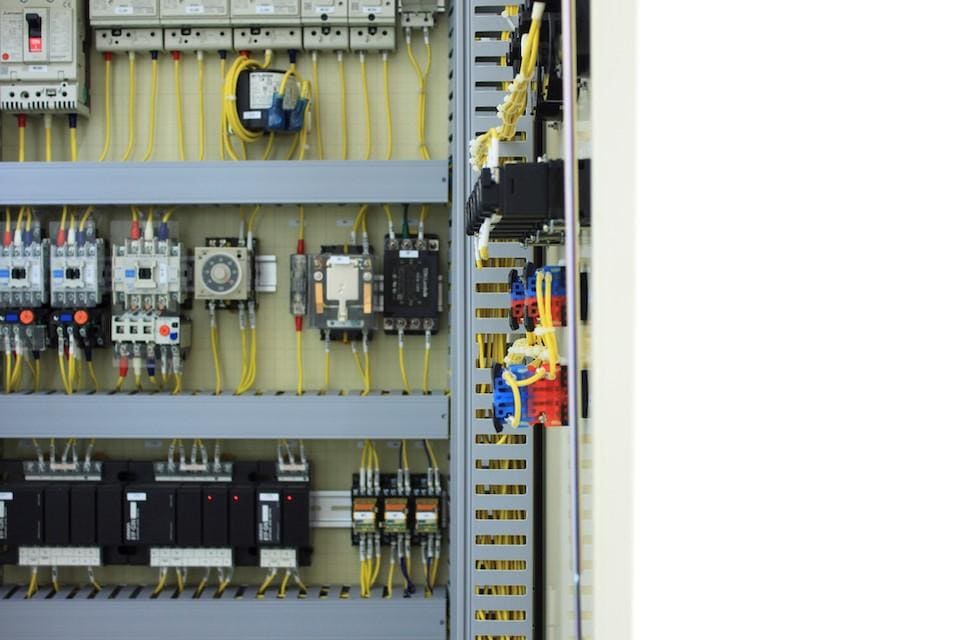
In modern electrical systems, DIN rail and traditional mounting are often combined to optimize performance.
Implementation Approach
- DIN rail for control and signal components
- Traditional mounting for heavy or non-standard equipment
Benefits
- Improved space utilization
- Better system organization
- Enhanced mechanical reliability
8. Installation Best Practices
DIN Rail Systems
- Secure the rail firmly
- Maintain spacing for airflow
- Use cable ducts for wiring
- Avoid exceeding load capacity
Traditional Mounting
- Plan layout before drilling
- Use appropriate fasteners
- Ensure alignment accuracy
- Maintain proper grounding
9. Common Engineering Mistakes
- Poor layout planning
- Overcrowded panel design
- Inadequate airflow
- Loose mounting
- Incorrect drilling positions
- Poor cable management
- Lack of labeling
- No allowance for future expansion
10. FAQ
Q1: What is the standard DIN rail size?
The most common size is 35 mm (TS35).
Q2: Can DIN rail support heavy equipment?
No, heavy equipment should use traditional mounting.
Q3: Which method is better for maintenance?
DIN rail mounting is easier for maintenance and replacement.
Q4: Is traditional mounting still widely used?
Yes, especially for heavy-duty and custom installations.
Q5: Can both methods be used together?
Yes, combining both methods is common in modern systems.
11. Conclusion
DIN rail and traditional mounting serve different engineering purposes. DIN rail systems provide modularity, scalability, and efficiency, while traditional mounting offers strong mechanical support and flexibility for specialized applications. Selecting the right method depends on system requirements, and in many cases, combining both approaches provides the most effective and reliable solution.