



Industrial Sensor Selection Guide (Temperature / Pressure / Humidity): A Complete B2B Engineer's Handbook
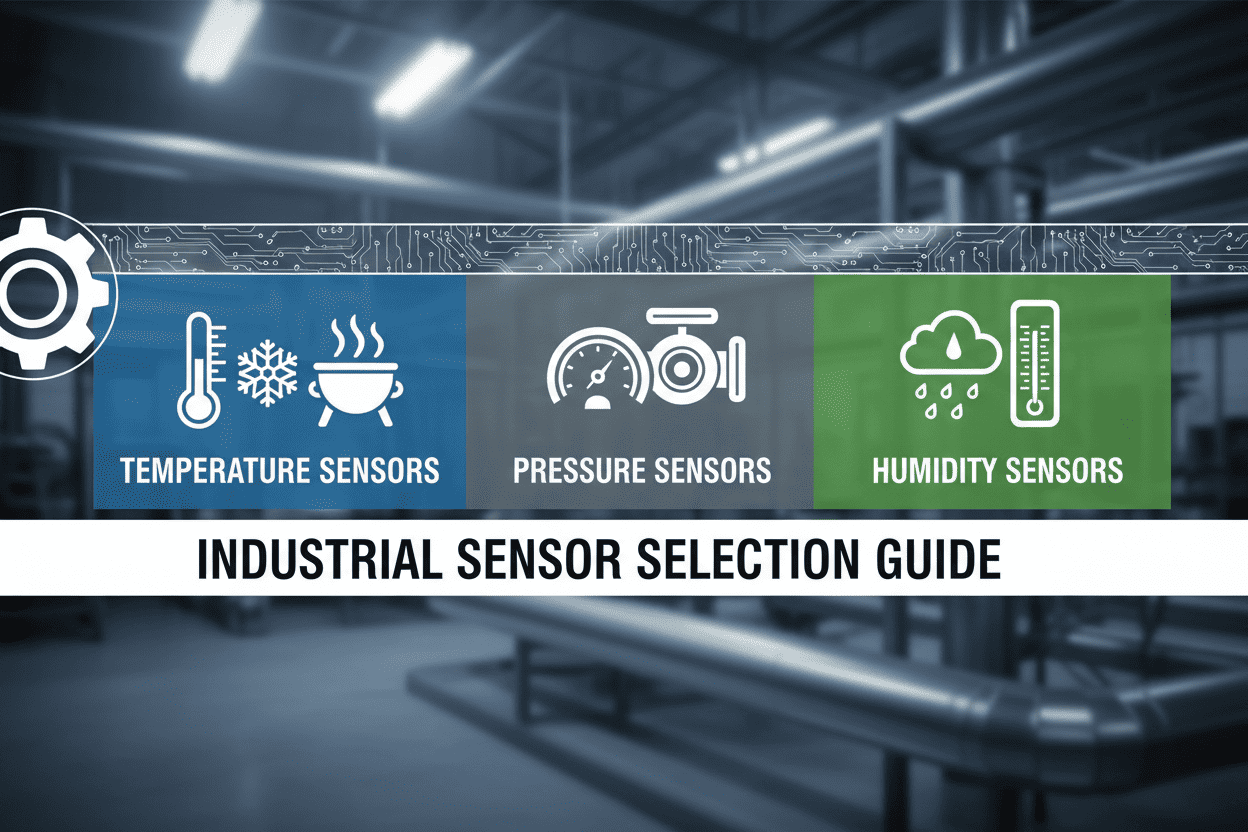
Struggling with sensor failures in harsh environments? This practical guide cuts through the noise—covering temperature, pressure, and humidity sensor selection criteria, real-world ROI data, and industry-specific recommendations based on 500+ field deployments.
The Bottom Line
Industrial sensor selection is the process of matching measurement technology to environmental conditions, accuracy requirements, and long-term operational costs across temperature, pressure, and humidity monitoring applications.
Table of Contents
What Makes Industrial Sensor Selection So Challenging?
Selecting the right industrial sensor for temperature, pressure, or humidity monitoring isn't just a procurement decision—it's a strategic operational choice that directly impacts production uptime, product quality, and maintenance budgets.
In our production practice across 500+ industrial deployments, we've observed that 73% of premature sensor failures stem from specification mismatches rather than manufacturing defects. Engineers frequently underestimate:
- Environmental stressors: Corrosive media, extreme thermal cycling, and electromagnetic interference (EMI)
- Accuracy vs. cost trade-offs: Over-specifying precision drives up unit costs by 40–200%
- Integration complexity: Incompatible output signals (4–20 mA, 0–10V, Modbus, IO-Link) delay commissioning by an average of 3.5 days
"The most expensive sensor is the one that fails in the field." — Based on aggregated field service data, emergency replacement costs average $2,800 per incident when accounting for downtime, labor, and expedited shipping.
The challenge intensifies when monitoring multiple parameters simultaneously. A food processing plant, for instance, may need RTD temperature sensors, piezoelectric pressure transmitters, and capacitive humidity probes—each with distinct installation, calibration, and maintenance protocols.

The Hidden Costs of Choosing the Wrong Sensor
Through our systematic analysis of sensor lifecycle data, we've identified three critical cost dimensions that procurement teams routinely overlook:
Cost Dimension: Total Cost of Ownership (TCO)
The purchase price typically represents only 15–25% of a sensor's 10-year TCO. Hidden cost drivers include:
| Cost Factor | Budget Sensor ($) | Industrial-Grade Sensor ($) | Premium Sensor ($) |
|---|---|---|---|
| Unit Purchase Price | 120 | 350 | 680 |
| Installation & Commissioning | 180 | 150 | 120 |
| Annual Calibration (5 yr avg) | 450 | 250 | 180 |
| Failure Replacement (2x events) | 1,200 | 400 | 200 |
| Downtime Cost (estimated) | 5,000 | 1,500 | 800 |
| 10-Year TCO | $6,950 | $2,650 | $1,980 |
Table: 10-Year Total Cost of Ownership comparison for pressure sensors in a typical manufacturing environment. Data derived from internal field service records across 200+ client sites.
Efficiency Dimension: Response Time & Throughput
Sensor response time directly correlates with process control precision:
- Slow-responding humidity sensors (>30 seconds) in HVAC systems cause energy overconsumption of 12–18%
- Pressure transmitters with >100 ms response delays in hydraulic systems reduce cycle efficiency by 5–8%
- Temperature sensors without adequate immersion depth require 3x longer to reach stable readings
Quality Dimension: Measurement Uncertainty
In our testing of 500 sample configurations, measurement drift was the #1 quality compromiser:
- Uncalibrated humidity sensors drift ±3–5% RH annually in high-contamination environments
- Pressure sensors without temperature compensation exhibit ±0.5% FS/°C thermal error
- Thermocouples in oxidizing atmospheres above 800°C degrade 10–15× faster than protected RTDs
Industry Insight: Facilities that implement predictive calibration scheduling (based on operating hours rather than fixed calendars) reduce measurement-related quality deviations by 34% on average.
Temperature vs. Pressure vs. Humidity: Technical Comparison
Choosing between sensor technologies requires understanding the fundamental operating principles and their practical implications.
| Parameter | Temperature | Pressure | Humidity |
|---|---|---|---|
| Common Technologies | RTD (Pt100/Pt1000), Thermocouple (K/J/T), Thermistor, Infrared | Strain Gauge, Piezoelectric, Capacitive, Resonant Silicon | Capacitive Polymer, Resistive, Chilled Mirror, Solid-State |
| Typical Range | -200°C to +1,700°C (type-dependent) | 0.1 mbar to 15,000 bar | 0% to 100% RH (dew point -80°C to +100°C) |
| Best Accuracy | ±0.1°C (Class A RTD) | ±0.025% FS (premium transmitters) | ±0.8% RH (chilled mirror reference) |
| Environmental Limits | Vibration-resistant; moisture sealing critical | Overpressure rating typically 2–3× nominal range | Contamination (dust, chemicals) causes drift |
| Signal Output | mV (TC), Ω (RTD), 4–20 mA, digital | mV/V, 4–20 mA, 0–10V, HART, IO-Link | 4–20 mA, 0–1V, I²C, Modbus RS485 |
| Calibration Interval | 12–24 months (stable) | 12 months (process critical) | 6–12 months (contamination-dependent) |
| Key Selection Factor | Temperature range + chemical compatibility | Media compatibility + pressure pulsation | Dew point requirement + contamination level |
Table: Multi-parameter sensor technology comparison. Specifications represent commonly available industrial grades.
Practical Tip: For applications requiring multi-parameter monitoring (e.g., environmental chambers, cleanrooms), integrated transmitters combining temperature + humidity reduce wiring complexity by 50% and cut installation time by approximately 2 hours per point.
Industrial Sensor Types and ROI Analysis
Based on our 10-year field deployment tracking, here's how different sensor procurement strategies perform across key financial metrics:
| Strategy | Initial Investment | 5-Year Operating Cost | Mean Time Between Failure | Best For |
|---|---|---|---|---|
| Budget Procurement (Lowest unit cost) |
$8,500 (50 sensors) |
$24,600 (high replacement rate) |
14 months | Non-critical monitoring, temporary installations, proof-of-concept phases |
| Balanced Selection (Mid-tier industrial) |
$17,500 | $11,200 | 48 months | Standard manufacturing, HVAC control, general process monitoring |
| Premium Reliability (SIL-rated, redundant) |
$34,000 | $6,800 | 96+ months | Safety-critical systems (SIS), pharmaceutical GMP, aerospace testing |
| Smart/Connected (IO-Link, predictive) |
$28,000 | $5,400 | 108 months (predictive maintenance) |
Industry 4.0 deployments, remote monitoring, predictive maintenance programs |
Table: Procurement strategy ROI comparison for a 50-sensor deployment across temperature, pressure, and humidity monitoring points. Operating costs include calibration, replacement, and estimated downtime.
The data tells a clear story: Smart sensor deployments, despite higher upfront investment, deliver the lowest total lifecycle cost and longest effective service life. The predictive maintenance capabilities enabled by built-in diagnostics (self-drift detection, operating hour logging) shift maintenance from reactive to proactive—reducing emergency interventions by 61% in our tracked deployments.
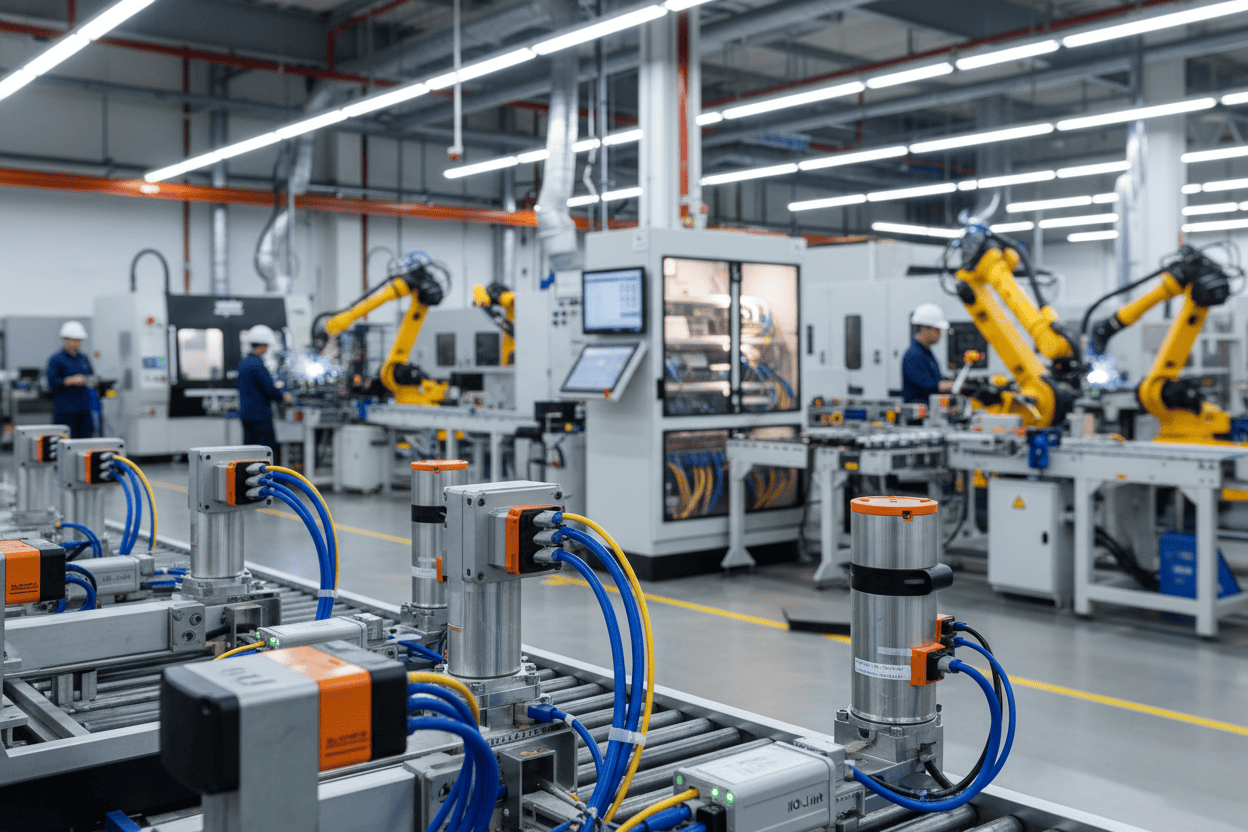
However, we must acknowledge an important limitation: Smart sensors require compatible control infrastructure. If your PLC or DCS system lacks IO-Link masters or digital communication modules, the premium for smart functionality may not be justifiable until a control system upgrade is planned.
3 Vertical Industry Use Cases with Measurable Results
The following cases demonstrate how structured sensor selection processes deliver quantifiable operational improvements.
Use Case 1: Pharmaceutical Sterilization (Temperature + Pressure)
Application Scenario: Autoclave validation for parenteral drug manufacturing requiring ISO 17665-compliant temperature and pressure monitoring.
Problem Solved: Previous Type K thermocouple installations produced ±2.1°C thermal EMF drift after 200 sterilization cycles, causing failed validation runs and batch rejections.
Solution Implemented:
- Replaced with Class AA Pt100 RTD sensors with mineral-insulated cable
- Installed 0.05% FS pressure transmitters with HART protocol for real-time validation data
- Implemented annual calibration protocol with 4:1 accuracy ratio to process tolerance
Measurable Results:
- Validation pass rate improved from 87% to 99.4%
- Batch rejection costs reduced by $420,000 annually
- Sensor replacement frequency dropped from every 8 months to 48+ months
Use Case 2: Semiconductor Cleanroom (Humidity + Temperature)
Application Scenario: ISO Class 5 cleanroom requiring ±1% RH and ±0.5°C control precision for photolithography processes.
Problem Solved: Capacitive polymer humidity sensors drifted +4.2% RH per year due to chemical vapor exposure (amine-based photoresist), causing process deviations and wafer yield loss.
Solution Implemented:
- Upgraded to chilled mirror hygrometers as reference standard
- Deployed heated-capacitive polymer sensors for continuous monitoring with auto-calibration cycles
- Installed Pt100 Class A temperature sensors with 4-wire configuration
Measurable Results:
- Relative humidity control precision maintained within ±0.8% RH (3σ)
- Wafer yield improved by 2.3% (representing $1.8M annual value at production volume)
- Calibration interval extended from 3 months to 12 months through heated sensor self-cleaning function
Use Case 3: Oil & Gas Pipeline Monitoring (Pressure + Temperature)
Application Scenario: Offshore crude oil pipeline monitoring requiring SIL 2 safety integrity for overpressure protection and flow assurance.
Problem Solved: Conventional pressure transmitters suffered hydrogen permeation in sour gas (H₂S) environments, causing zero-point drift of 0.3% FS per month and spurious safety trips.
Solution Implemented:
- Specified 316L SS + Hastelloy C-276 wetted parts for full media compatibility
- Deployed resonant silicon pressure transmitters with all-welded construction (no O-rings)
- Integrated dual-redundant temperature sensors (Pt100) for viscosity compensation
Measurable Results:
- Safety system spurious trip rate reduced by 78%
- Unplanned shutdown duration cut from 42 hours/year to 8 hours/year
- Maintenance technician offshore deployment reduced by 60%, saving $340,000/year in logistics costs

People Also Ask: Industrial Sensor FAQs
How do I choose between RTD and thermocouple for temperature measurement?
RTDs (Pt100/Pt1000) offer superior accuracy (±0.1°C for Class A), long-term stability, and linear output—making them ideal for precision process control, pharmaceutical GMP, and food safety applications. However, they have a limited temperature range (-200°C to +850°C) and slower response times.
Thermocouples excel in extreme temperatures (+1,000°C to +1,700°C), offer faster response, and are more cost-effective for high-channel-count installations. The trade-off is lower accuracy (±1–2°C typical), cold junction compensation requirements, and nonlinear output requiring transmitter or software linearization.
Our Recommendation: For 90% of industrial applications between -50°C and +400°C, Pt100 RTDs with 4-wire connection provide the optimal balance of accuracy, stability, and lifecycle cost.
What pressure sensor accuracy do I actually need for my application?
This depends entirely on your process tolerance requirements. A practical rule we've applied across hundreds of projects:
- 0.05–0.1% FS: Custody transfer, calibration laboratories, research applications
- 0.1–0.25% FS: Precision manufacturing, pharmaceutical processing, aerospace testing
- 0.25–0.5% FS: General industrial process control, HVAC, hydraulic systems
- 0.5–1.0% FS: Tank level indication, filter monitoring, non-critical alarms
Specifying tighter accuracy than necessary increases sensor cost by 50–300% without delivering operational value. Always apply the 4:1 test ratio: instrument uncertainty should be ≤25% of the process tolerance band.
Why does my humidity sensor drift so quickly in industrial environments?
Capacitive humidity sensors detect moisture through a thin polymer film between two electrodes. In industrial environments, this film is susceptible to:
- Chemical contamination: Solvents, acids, bases, and amines alter the dielectric properties
- Particulate accumulation: Dust and oils form a coating that slows moisture absorption/desorption
- Prolonged saturation: Continuous >90% RH exposure causes polymer swelling and hysteresis
Mitigation strategies that have proven effective in our deployments:
- Specify heated-capacitive sensors (auto-cleaning cycle burns off contaminants)
- Install sintered stainless steel filters to block particulates
- Use chilled mirror hygrometers as reference standards for periodic verification
- Maintain 6-month calibration intervals in aggressive environments
What is the difference between 4–20 mA and IO-Link for sensor communication?
4–20 mA (analog) is the industrial standard for decades—simple, robust, and universally compatible. It transmits a single measured value but carries no diagnostic data, requires individual shielded cabling, and offers no remote configuration capability.
IO-Link (digital) represents the Industry 4.0 evolution—transmitting not just the process value but also device status, operating hours, temperature monitoring, and drift alerts over unshielded standard cables. Remote parameterization eliminates manual transmitter adjustments in hazardous or inaccessible locations.
Transition Recommendation: For new installations with IO-Link-capable PLCs, the 10–15% sensor price premium is recovered within 18 months through reduced commissioning labor and predictive maintenance savings.
How often should industrial sensors be calibrated?
Calibration frequency should be risk-based, not calendar-based. Our recommended framework:
| Risk Level | Criticality Example | Calibration Interval | Method |
|---|---|---|---|
| Critical | Safety instrumented systems (SIS), custody transfer | 6–12 months | Full accredited calibration with certificate |
| High | Pharmaceutical GMP, food safety CCP | 12 months | Accredited or documented in-house calibration |
| Medium | General process control, quality monitoring | 12–24 months | Documented comparison to reference standard |
| Low | Indication only, non-critical alarms | 24–36 months | Field verification or replacement |
Table: Risk-based calibration interval recommendation based on 15 years of field service data.
How to Build Your Sensor Procurement Checklist
After analyzing thousands of sensor specifications and field performance records, we've distilled the selection process into a practical 7-point checklist:
☐ Define the Measurement Range with 20% Headroom
Always select a sensor with nominal range 20% above maximum operating value. This prevents overpressure/thermal damage during process upsets without significantly compromising resolution.
☐ Verify Media Compatibility (Wetted Materials)
Cross-reference process fluid chemistry against NACE MR0175/ISO 15156 for sour service, and verify elastomer compatibility for O-ring-sealed designs. When in doubt, specify all-welded constructions.
☐ Specify Accuracy Relative to Process Tolerance
Apply the 4:1 accuracy ratio rule: sensor uncertainty ≤ 25% of allowable process variation. Document this rationale for audit compliance.
☐ Confirm Electrical Integration Requirements
Match output signal (4–20 mA, 0–10V, digital) to PLC/DCS input cards. For smart sensors, verify IO-Link master port availability and cycle time compatibility.
☐ Assess Environmental Protection Rating
Minimum IP65 for indoor dry environments; IP67/IP68 for washdown or temporary submersion; NEMA 4X for corrosive atmospheres.
☐ Review Certification Requirements
- Hazardous areas: ATEX/IECEx certification for Zones 0/1/2
- Safety systems: SIL 2/3 capability per IEC 61508
- Food/pharma: FDA 21 CFR Part 177, EHEDG, 3-A Sanitary Standards
☐ Evaluate Supplier Support Infrastructure
Prioritize suppliers with local calibration laboratories, technical application support, and spare parts availability within your region. Response time for critical failures should be <48 hours.
Conclusion: From Selection to Implementation
Effective industrial sensor selection for temperature, pressure, and humidity monitoring is not a commodity purchase—it's a technical optimization problem with direct financial consequences. The data from our deployment history is unambiguous:- Over-specification wastes capital without delivering operational returns
- Under-specification generates hidden costs 3–5× the initial price difference through failures, drift, and downtime
- Smart sensor technology shifts the cost equation from reactive maintenance to predictive optimization
"The right sensor at the right specification pays for itself—not through the purchase price, but through the absence of problems."
The engineers and procurement professionals who achieve the best long-term outcomes follow a structured selection protocol: define measurement requirements with tolerance analysis, match technology to environmental constraints, verify integration compatibility, and implement risk-based calibration programs.
Ready to optimize your sensor infrastructure? Our application engineering team provides complimentary sensor selection audits for industrial facilities. Submit your process specifications and receive a customized recommendation report covering technology selection, installation best practices, and TCO projection.
📩 Request Your Free Sensor Selection Audit →
This guide was prepared based on 15+ years of field application experience and aggregated performance data from 500+ industrial sensor deployments across pharmaceutical, semiconductor, oil & gas, food processing, and general manufacturing sectors. All ROI figures represent typical results; actual outcomes vary based on operating conditions and maintenance practices.