



AC vs DC Fuses: Engineering Differences, Arc Behavior, and Selection Guide
Fuses are critical overcurrent protection devices used across electrical and electronic systems. While AC and DC fuses serve the same fundamental purpose—interrupting excessive current—their design, arc extinction behavior, and application constraints differ significantly. These differences stem from the nature of alternating and direct current, particularly in how arcs are formed and extinguished. This article provides a detailed engineering-level comparison of AC and DC fuses, including structure, ratings, application environments, standards, and selection criteria for safe and reliable system design.
Table of Contents
- 1. Fundamentals of Fuse Operation
- 2. AC vs DC Fuse: Core Physical Differences
- 3. Internal Structure and Arc Suppression Design
- 4. Voltage and Current Ratings Explained
- 5. Why AC and DC Fuses Are Not Interchangeable
- 6. Application-Specific Design Considerations
- 7. Fuse vs Circuit Breaker: Engineering Trade-offs
- 8. Standards and Compliance
- 9. Emerging Trends in Fuse Technology
- 10. FAQ
- 11. Conclusion
1. Fundamentals of Fuse Operation
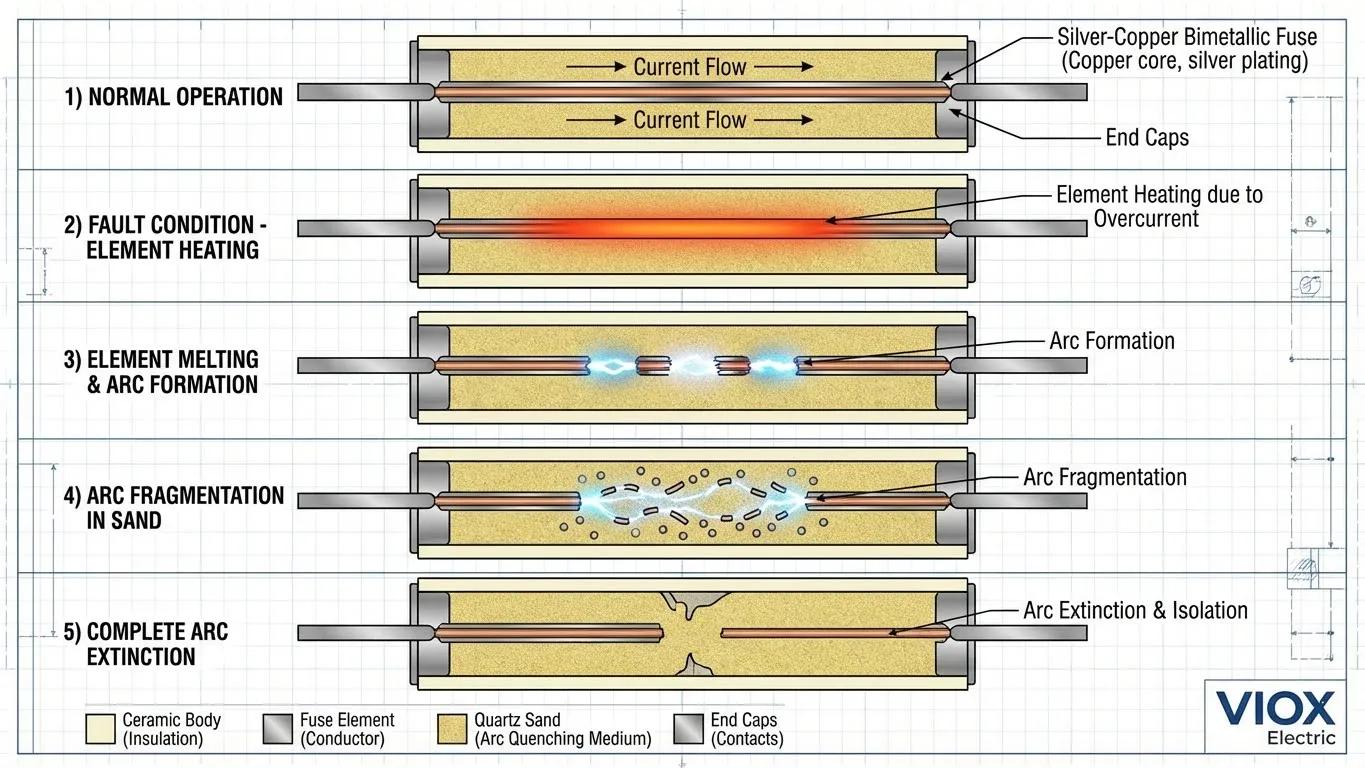
A fuse is a sacrificial protection device designed to interrupt current when it exceeds a predefined threshold.
Key Operating Principle
- Current flows through a calibrated fuse element
- Overcurrent generates heat due to I²R losses
- The fuse element melts and opens the circuit
Arc Formation
When the fuse element melts, an electrical arc forms between the separated ends. The ability of a fuse to safely interrupt current depends on how effectively this arc is extinguished.
2. AC vs DC Fuse: Core Physical Differences
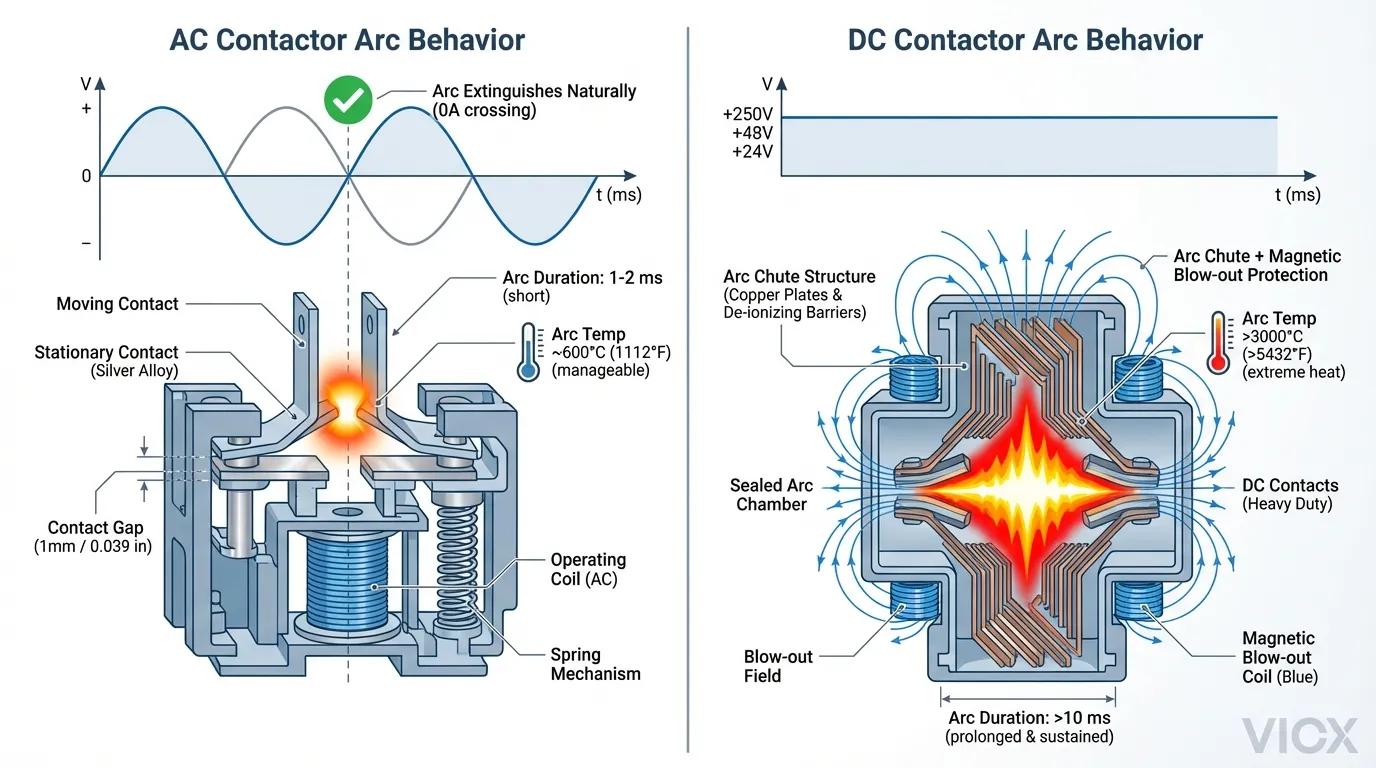
AC Fuse Behavior
- Current alternates direction
- Passes through zero multiple times per cycle (50/60 Hz)
- Arc extinguishes naturally at zero crossing
DC Fuse Behavior
- Current flows continuously in one direction
- No natural zero crossing
- Arc persists unless actively suppressed
Engineering Implication
DC circuits are more difficult to interrupt, requiring stronger arc suppression design compared to AC systems.
3. Internal Structure and Arc Suppression Design
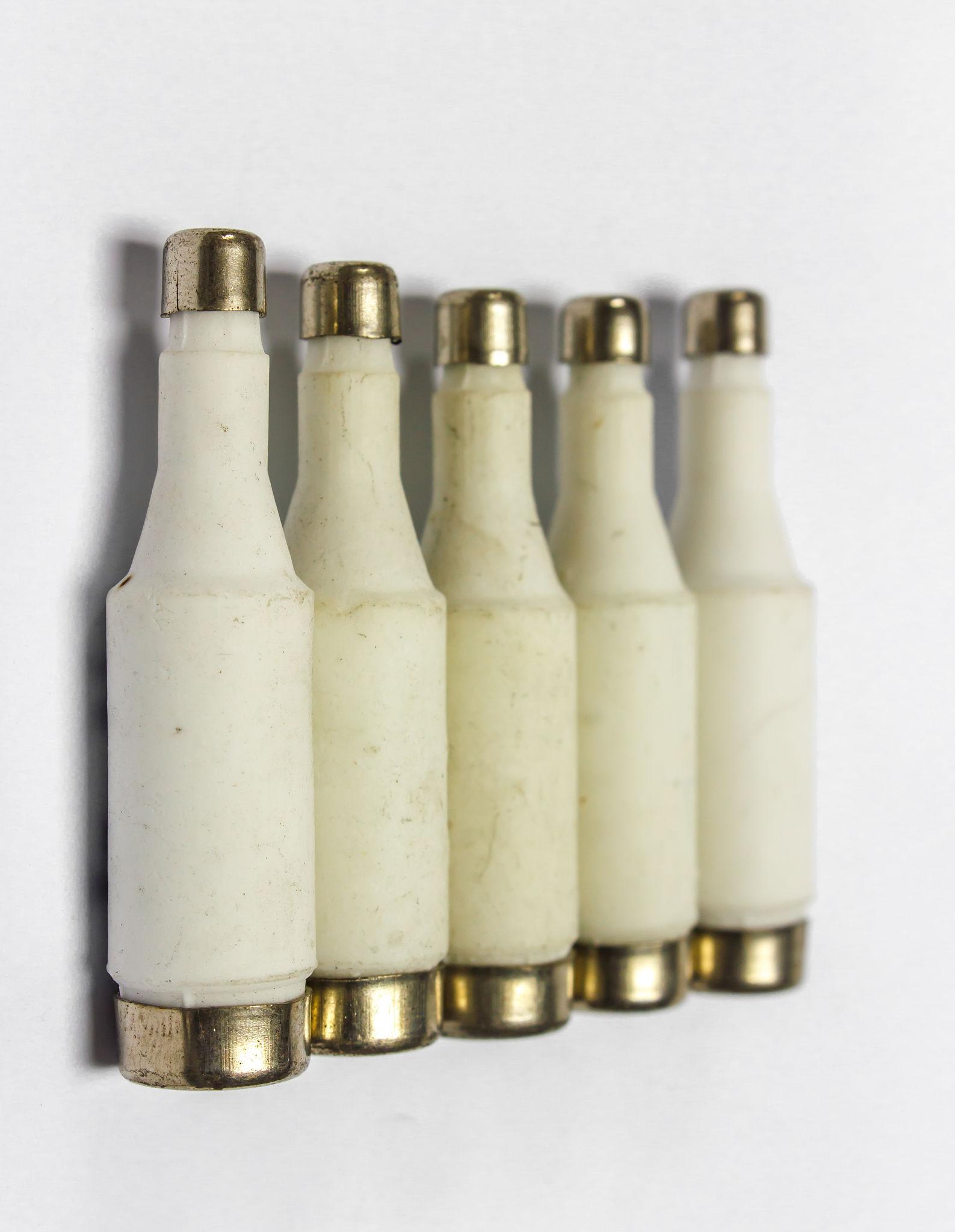
AC Fuse Construction
- Fuse element (metal wire or strip)
- Glass or ceramic housing
- Basic filler material (optional)
DC Fuse Construction
- Reinforced fuse element
- Quartz sand or arc-quenching filler
- Longer body to increase arc path
Arc Suppression Mechanism
In DC fuses:
- Sand absorbs heat and ionized particles
- Arc is divided into smaller segments
- Rapid cooling helps extinguish the arc safely
4. Voltage and Current Ratings Explained
| Parameter | AC Fuse | DC Fuse |
|---|---|---|
| Current Rating | Based on RMS current | Based on continuous current |
| Voltage Rating | Higher ratings easier to achieve | Requires special design for high voltage |
| Arc Interruption | Assisted by zero crossing | Requires forced arc suppression |
| Breaking Capacity | Moderate | Higher requirement |
| Physical Size | Compact | Larger for safety |
Engineering Insight
Voltage rating defines the fuse’s ability to safely interrupt fault current without sustaining an arc.
5. Why AC and DC Fuses Are Not Interchangeable
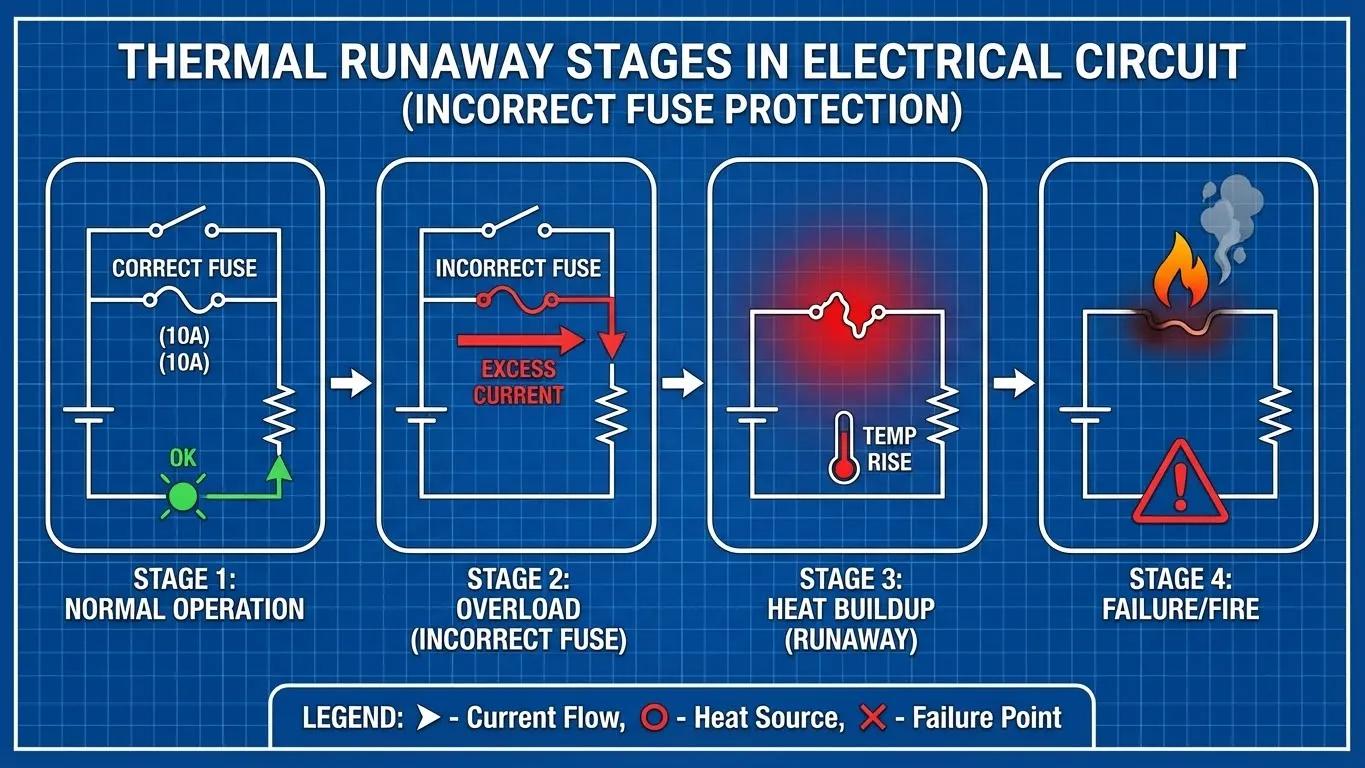
AC and DC fuses cannot be used interchangeably due to differences in arc behavior.
Key Reason
- AC current naturally drops to zero
- DC current does not stop, sustaining the arc
Risk Scenario
Using an AC fuse in a DC system can result in:
- Continuous arc discharge
- Failure to interrupt current
- Overheating and fire hazards
Engineering Rule
Always match fuse type (AC or DC) with the system characteristics and voltage rating.
6. Application-Specific Design Considerations
AC Fuse Applications
- Residential wiring systems
- Household appliances
- Lighting circuits
- Industrial AC panels
DC Fuse Applications
- Solar photovoltaic systems
- Battery storage systems
- Electric vehicles
- DC power supplies
Solar System Considerations
- High DC voltage levels (up to 1500V)
- Continuous current flow
- Requires high-performance DC-rated fuses
Typical installation points:
- String protection
- Combiner boxes
- Battery protection circuits
7. Fuse vs Circuit Breaker: Engineering Trade-offs
| Parameter | Fuse | Circuit Breaker |
|---|---|---|
| Operation | Melts to interrupt current | Trips via mechanical mechanism |
| Reusability | Single-use | Reusable |
| Response Speed | Very fast | Moderate |
| Maintenance | Requires replacement | Minimal maintenance |
| Cost | Low | Higher |
| Protection Level | Basic | Advanced and adjustable |
Engineering Insight
Fuses provide rapid fault interruption, while circuit breakers offer flexibility and reset capability.
8. Standards and Compliance
Important safety standards include:
- IEC 60269 – Low-voltage fuse standards
- UL 248 – Fuse standards in North America
Importance of Certification
- Ensures safe fault interruption
- Verifies electrical ratings
- Required for regulatory compliance
9. Emerging Trends in Fuse Technology
- Smart fuses with monitoring and signaling capabilities
- High-voltage DC fuses for EV and renewable systems
- Compact designs for modern electronics
- Advanced materials for improved breaking capacity
10. FAQ
Q1: What is the main difference between AC and DC fuses?
AC fuses rely on natural zero crossing, while DC fuses require engineered arc suppression.
Q2: Can a DC fuse be used in an AC circuit?
It is sometimes possible if properly rated, but generally not recommended unless specified.
Q3: Why are DC fuses larger?
They require longer arc paths and arc-quenching materials to safely interrupt current.
Q4: What is breaking capacity?
The maximum fault current a fuse can safely interrupt.
Q5: Where are DC fuses most commonly used?
In solar systems, battery storage, and electric vehicles.
11. Conclusion
AC and DC fuses serve the same protective purpose but differ significantly in design due to the nature of current flow and arc behavior. AC systems benefit from natural current zero crossing, while DC systems require enhanced arc suppression.
Correct fuse selection is essential for ensuring safety, system reliability, and compliance with electrical standards. Using the appropriate fuse type helps prevent equipment damage and ensures stable operation across modern electrical systems.