



10 Best NXP Alternatives: A Guide to Navigating Supply Chain Disruptions and High Costs
For hardware engineers and procurement managers across North America and Europe, the name "NXP" has historically been synonymous with reliability—until the global supply chain crisis rewrote the rules. Whether you are dealing with the 52-week lead times of the i.MX series or the skyrocketing costs of Kinetis MCUs, the "NXP-only" strategy is no longer sustainable.
In this comprehensive guide, we will analyze the top NXP chip alternatives, focusing on pin-to-pin compatibility, software porting ease, and long-term supply chain management strategies. By the end of this article, you will have a clear roadmap for migrating your design without compromising on performance or lifecycle longevity.
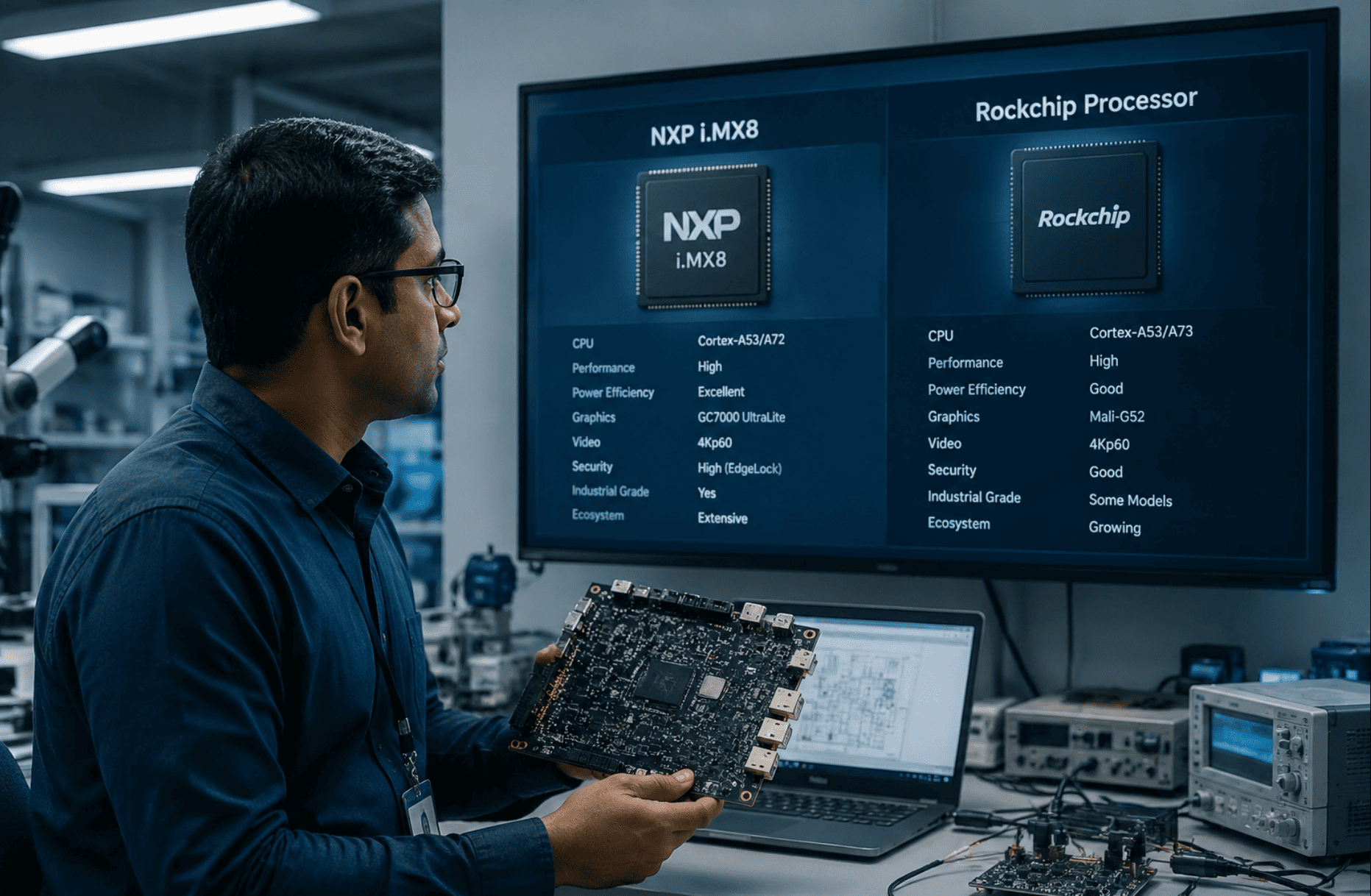
Table of Contents
- 1. Understanding the Shift: Why Move Away from NXP?
- 2. Core Concepts: Pin-to-Pin vs. Functional Equivalence
- 3. Top NXP Alternatives by Series
- 4. The Software Migration: Don't Fear the Code
- 5. Expert Tips & Common Pitfalls to Avoid
- 6. Strategic Sourcing: How to Secure Your Supply
- 7. Conclusion: Making the Move
1. Understanding the Shift: Why Move Away from NXP?
For years, NXP’s i.MX and Kinetis portfolios dominated the industrial and automotive sectors. However, the market landscape has shifted. Western buyers are increasingly looking for alternatives not just to save a few cents, but to ensure business continuity.
The primary drivers for this migration include:
- Lead Time Volatility: While NXP has made strides in recovery, certain legacy and high-end chips still suffer from unpredictable delivery windows.
- Cost Efficiency: For high-volume IoT projects, NXP’s premium pricing can eat into margins, especially when competitors offer 90% of the functionality at 60% of the cost.
- Geopolitical Resilience: Diversifying the electronic components sourcing strategy helps firms mitigate risks associated with regional manufacturing bottlenecks.
In the current market, "Functional Equivalence" is becoming more important than brand loyalty. If a chip runs the same Linux kernel and fits the same thermal profile, the logo on the silicon matters less than the arrival date at your warehouse.
2. Core Concepts: Pin-to-Pin vs. Functional Equivalence
Before choosing a replacement, it is vital to understand the "depth" of the change required. Not all alternatives are created equal.
Pin-to-Pin Replacement (The "Drop-in" Holy Grail)
A Pin-to-Pin (P2P) replacement is a chip that shares the exact physical footprint (BGA, QFP, etc.) and electrical pinout as the original NXP part.
- Pros: Zero PCB redesign; minimal testing.
- Cons: Extremely rare across different manufacturers. Usually only found in specific memory or simple logic chips, rarely in complex SoCs.
Functional Equivalence (The "Brain" Swap)
This is the most common path. You select a chip—such as an STMicroelectronics STM32 or a Rockchip RK series—that matches the peripheral set (UART, I2C, CAN Bus) and processing power of the NXP part.
- Pros: Better availability and pricing.
- Cons: Requires a "re-spin" of the PCB and software driver adjustments.
| Feature | NXP Original | Pin-to-Pin Alternative | Functional Equivalent |
|---|---|---|---|
| PCB Redesign | None | None | Required |
| Software Effort | Baseline | Low (Driver tweaks) | Moderate (Kernel/SDK porting) |
| Availability | Low/Variable | Moderate | High |
| Unit Cost | High | Medium | Low to Medium |
3. Top NXP Alternatives by Series
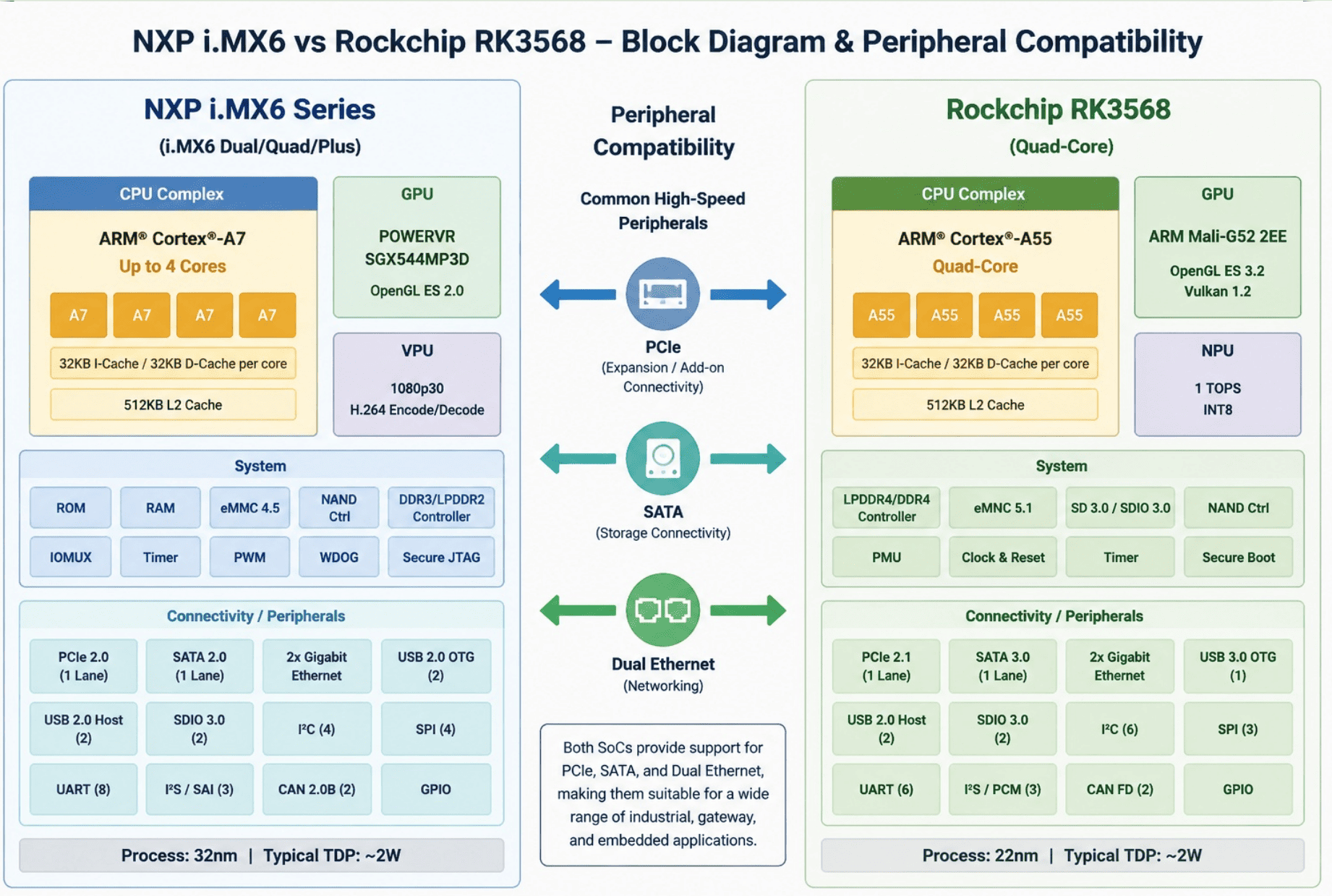
3.1 Replacing the NXP i.MX6 & i.MX8 Series
The i.MX series is the backbone of industrial HMI and IoT gateways. When these go out of stock, production halts.
The Top Contender: Rockchip (RK3399, RK3568, RK3588) Rockchip has moved from consumer tablets into the industrial space with aggressive pricing and impressive performance.
- Scenario: If you are using an i.MX6ULL for a simple IoT gateway, the Rockchip RK3326 offers a more modern architecture with better video processing capabilities.
- Software Tip: Both support Mainline Linux, making the transition of your Yocto or Debian builds smoother than expected.
3.2 Replacing NXP Kinetis (K Series & L Series)
Kinetis MCUs are beloved for their FlexBus and low-power modes. However, the STMicroelectronics STM32 family is the most logical migration path.
- STM32H7 vs. Kinetis K64: The STM32H7 offers higher clock speeds and a massive ecosystem of community support.
- GigaDevice GD32: For those focused purely on BOM optimization, GigaDevice offers "near-clone" alternatives to many STM32 parts, which in turn can replace Kinetis functions at a fraction of the price.
4. The Software Migration: Don't Fear the Code
The biggest "fear factor" in switching from NXP is the software ecosystem. NXP’s MCUXpresso and SDKs are deeply integrated into many workflows.
Easing the Transition
- Hardware Abstraction Layers (HAL): If your original code used a clean HAL, porting to a new vendor's HAL (like STM32Cube or Rockchip's Linux SDK) is a matter of mapping registers.
- RTOS Consistency: If you use FreeRTOS or Zephyr OS, the transition is significantly easier because the OS handles the task scheduling, leaving you only with driver-level changes.
- Linux Mainlining: For SoCs, choose an alternative with strong "Mainline" support. This ensures that you aren't stuck with a vendor-specific, buggy kernel version.
5. Expert Tips & Common Pitfalls to Avoid
Drawing from discussions on Reddit’s r/Embedded and industry forums, here are the "gotchas" that can ruin a migration:
- The "Hidden" Peripherals: You might find a chip with the same number of UARTs, but does it have the specific DMA (Direct Memory Access) channels required for your high-speed data logging? Always verify the DMA request mapping.
- Errata Sheets are King: NXP documentation is excellent. Some lower-cost alternatives have "brief" data sheets. Always request the full Errata Sheet to see what hardware bugs are known before you commit to a 10,000-unit order.
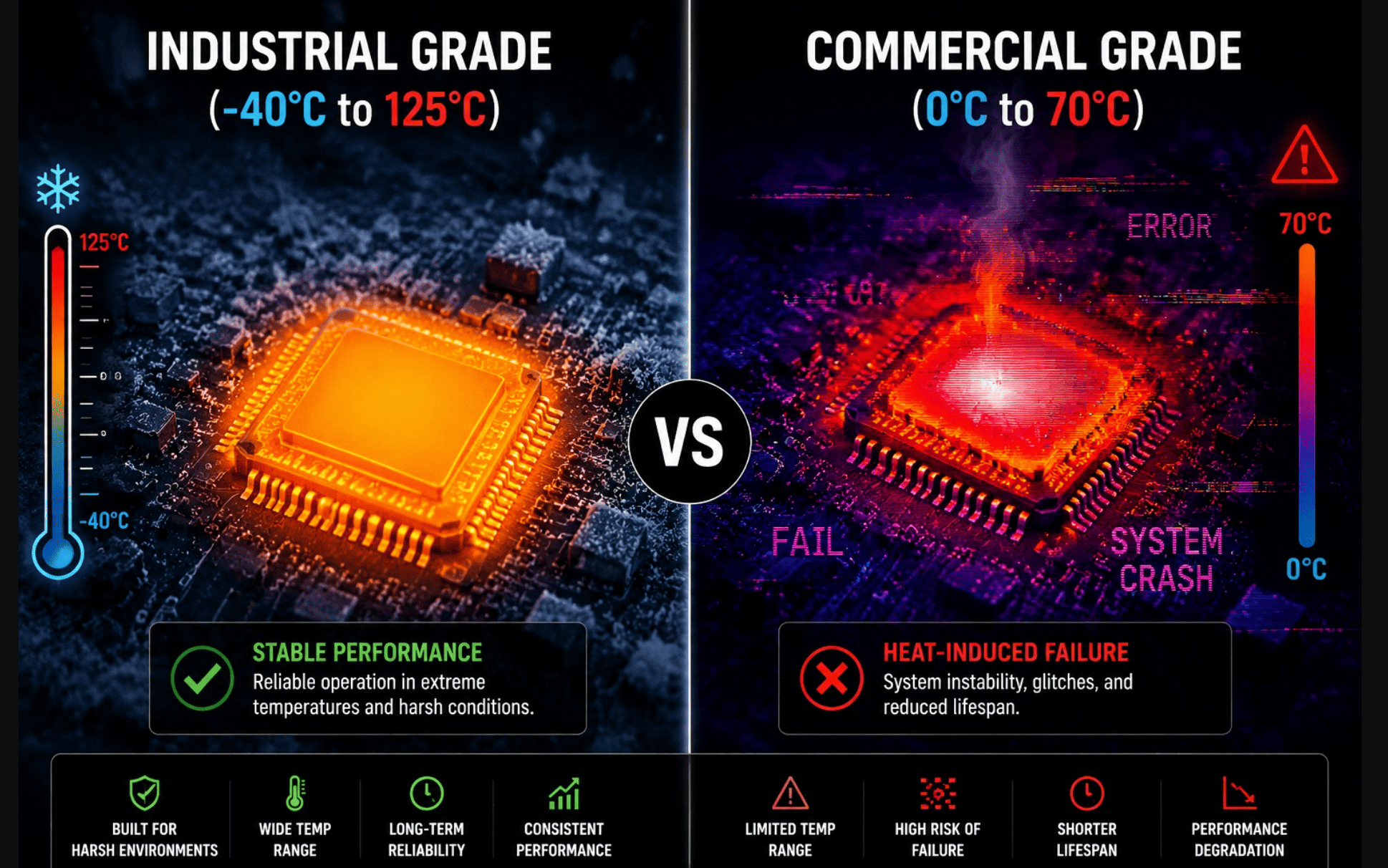
- Temperature Grades: Many NXP chips are "Automotive Grade" (-40°C to +125°C). Ensure your alternative isn't just "Commercial Grade" (0°C to 70°C) if your product sits in an outdoor enclosure.
6. Strategic Sourcing: How to Secure Your Supply
Moving to an alternative is only half the battle. You must ensure that your new source is more stable than the old one.
- Multi-Sourcing by Design: Even when choosing an alternative, try to design your PCB to be "Dual-Footprint" if possible. This allows you to solder either the NXP chip or the alternative depending on what is in stock.
- Partner with Agile Distributors: Avoid relying solely on "Big Box" distributors. Work with specialists in electronic components sourcing who have boots on the ground in manufacturing hubs like Shenzhen or Taiwan.
- Verify Lifecycle: Ask for a formal "Longevity Statement." Most industrial-focused manufacturers (like ST or TI) will guarantee 10+ years of availability.
Quick Summary: NXP vs. Top Alternatives
| NXP Series | Recommended Alternative | Primary Benefit | Migration Difficulty |
|---|---|---|---|
| i.MX6 / i.MX8 | Rockchip RK3568 | Cost & Video Performance | Moderate (Linux) |
| Kinetis K/L | STM32F4 / GD32F4 | Ecosystem & Availability | Low to Moderate |
| LPC Series | Renesas RA Series | Power Efficiency | Moderate |
| S32K (Auto) | TI Sitara / Infineon Aurix | Safety Compliance | High |
7. Conclusion: Making the Move
The era of being "locked in" to a single silicon provider is ending. While NXP continues to produce world-class hardware, the risks of long lead times and high costs necessitate a diversified approach.
Your Next Steps:
- Audit your BOM: Identify which NXP parts are "Single Source" risks.
- Request Samples: Order evaluation boards for the Rockchip or STM32 equivalents mentioned above.
- Consult a Sourcing Expert: Reach out to professionals who specialize in supply chain management to vet the lead times of your chosen alternatives.
By taking a proactive approach to NXP chip replacement, you aren't just solving a current shortage—you are building a more resilient, cost-effective product for the future.