



The Ultimate Guide to Purchasing Electronic Components: How to Avoid Fakes and Supply Chain Disasters
Whether you are a hardware engineer prototyping a new IoT device, a procurement manager scaling up production, or an electronics hobbyist building a weekend project, the reality is the same: purchasing electronic components is fraught with hidden risks.
A single counterfeit micro-controller or an unexpected End-of-Life (EOL) notification can halt your entire production line, costing thousands of dollars and delaying your time-to-market. In this comprehensive guide, we will walk you through the exact strategies used by top-tier supply chain specialists. You will learn how to vet suppliers, manage your Bill of Materials (BOM), and navigate global chip shortages without compromising on quality.
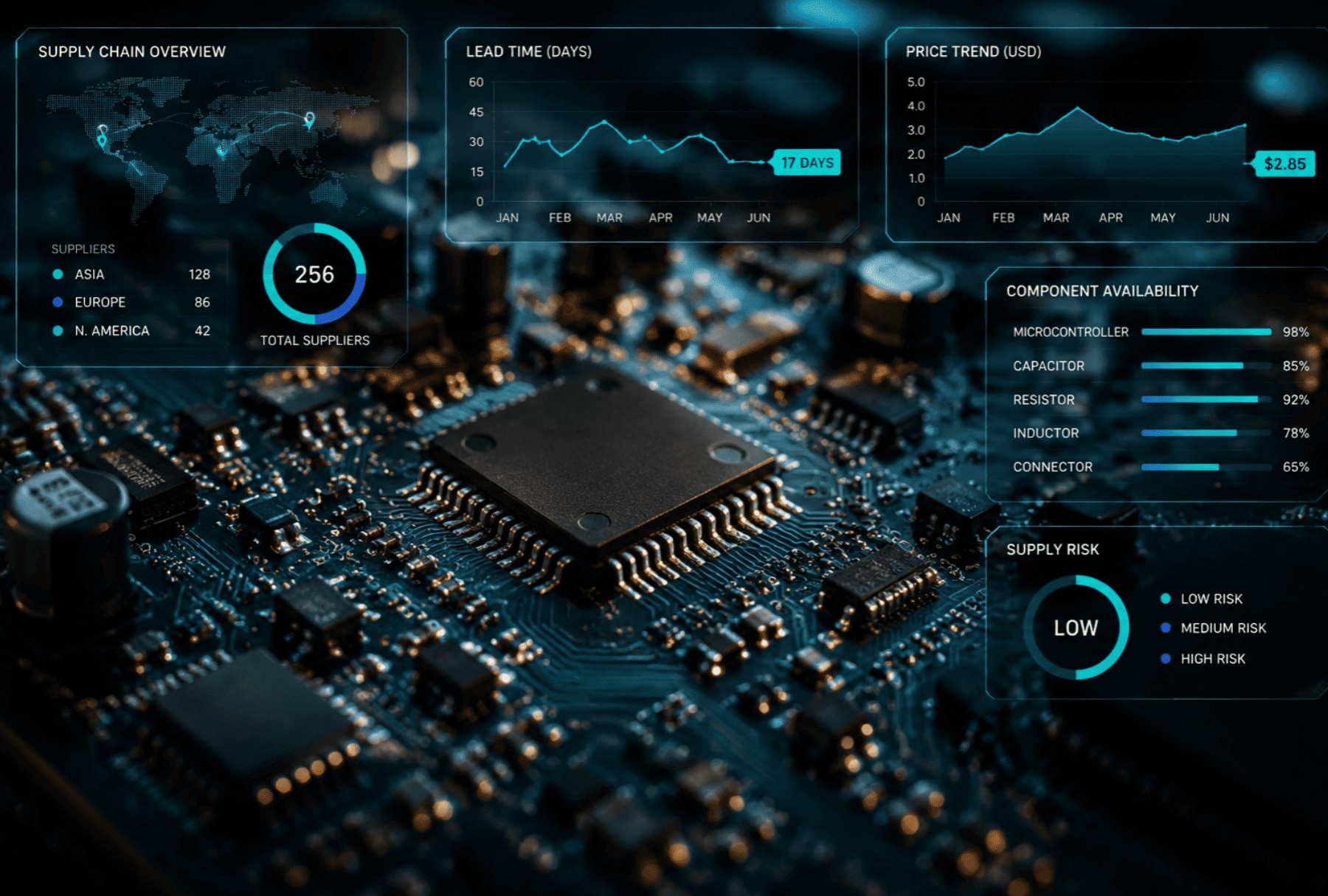
Table of Contents
- Understanding Electronic Component Procurement: The Basics
- Core Concepts Simplified
- Step-by-Step Guide: Sourcing Parts Like a Pro
- Expert Tips & Common Pitfalls to Avoid
- Conclusion & Final Thoughts
1. Understanding Electronic Component Procurement: The Basics
Why is electronic component procurement so critical in today's market? In the post-2020 era, the global supply chain has proven to be incredibly fragile. A factory fire in Japan, a logistics bottleneck in Shenzhen, or a sudden surge in EV manufacturing can wipe out the global stock of a specific voltage regulator overnight.
For hardware teams in the US, UK, Canada, and Europe, the stakes are incredibly high. Pragmatism and risk aversion are paramount. Buying cheap components from unverified sources is a gamble you cannot afford. Think of counterfeit electronic components like fake medicine—they might look identical on the outside, with the same logos and part numbers, but once integrated into your system, they will cause catastrophic failures.
A $0.10 fake capacitor might seem like a bargain until it catches fire and destroys a $1,000 PCB assembly. Therefore, mastering the procurement process is not just about finding the lowest price; it is about establishing transparent supply chain data, ensuring clear traceability, and maintaining strict compliance (such as RoHS and REACH).
2. Core Concepts Simplified
Before diving into advanced sourcing strategies, we need to speak the language of the supply chain. If you are new to hardware manufacturing, the terminology can feel overwhelming. Let’s break down the industry jargon using plain English and relatable analogies.
The "Grocery List": BOM (Bill of Materials)
Your BOM is the ultimate grocery list and recipe combined for manufacturing your electronic project. It tells the assembly house exactly what to buy, how many to buy, and where to place them on the board (reference designators). A sloppy BOM leads to wrong parts being ordered, while a meticulously organized BOM ensures seamless manufacturing.
The "Wholesale Club": MOQ (Minimum Order Quantity)
MOQ is the "wholesale club" rule of electronics. Just like you can't buy a single roll of paper towels at Costco, a supplier won't sell you just one 0402 resistor. You usually have to buy a whole reel of 5,000 or 10,000. Understanding MOQ is crucial for budgeting, especially during the prototyping phase.
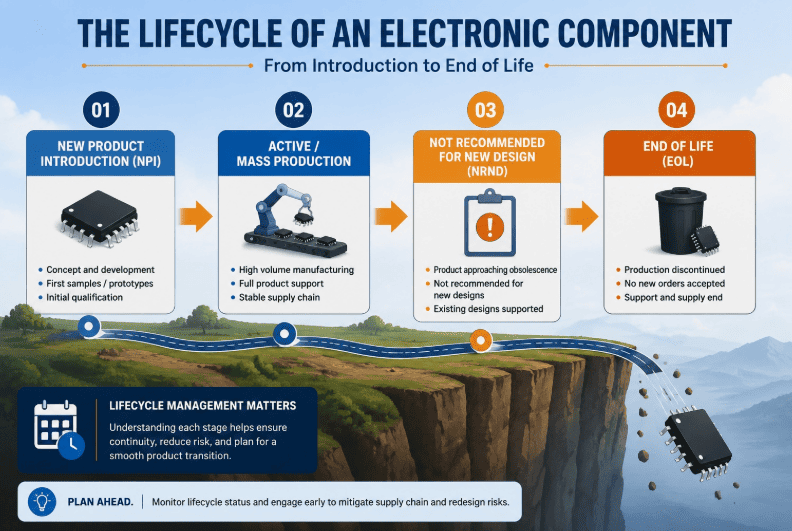
The "Discontinued Car Part": EOL (End of Life)
EOL is the manufacturer's way of saying, "We are retiring this part forever." Imagine designing a custom car around a specific engine, only to find out the manufacturer stopped making that engine. If a part on your BOM goes EOL, you must find a drop-in replacement (cross-reference) immediately, or you will be forced to redesign your entire PCB.
Core Concepts Comparison Table
| Term | What It Stands For | Plain English Analogy | Why It Matters for Procurement |
|---|---|---|---|
| BOM | Bill of Materials | The master recipe & grocery list. | Dictates exactly what to buy; errors here multiply downstream. |
| MOQ | Minimum Order Quantity | The "Costco" wholesale rule. | Impacts your budget; you may overpay for parts you don't need. |
| EOL | End of Life | The discontinued car part. | Forces emergency PCB redesigns if ignored during the design phase. |
| LT | Lead Time | The waiting period for delivery. | Determines your production schedule; can range from 2 days to 52 weeks. |
3. Step-by-Step Guide: Sourcing Parts Like a Pro
Now that we understand the basics, how do you actually buy parts safely and efficiently? The golden rule of electronic component procurement is to prioritize traceability.
Step 1: Choose the Right Supplier (The Apple Store vs. Street Vendor)
The most critical decision you will make is choosing between Authorized (Franchised) Distributors and Independent Brokers.
Think of Authorized Distributors (like Digi-Key, Mouser, Arrow, or Avnet) as the official Apple Store. You have a direct line to the factory, full warranties, and 100% genuine parts. Independent brokers, on the other hand, operate on the gray market. They are like a street vendor selling iPhones. They might have the stock you desperately need during a shortage, but the risk of receiving counterfeit or refurbished goods is exponentially higher.
Supplier Selection Data Table
| Feature | Authorized Distributors (e.g., Mouser) | Independent Brokers (Gray Market) |
|---|---|---|
| Traceability | 100% Direct from Manufacturer | Varies highly; often untraceable |
| Risk of Fakes | Zero | High (Requires strict testing) |
| Pricing | Standard, transparent pricing | Highly volatile; price gouging common during shortages |
| Best Used For | 99% of your standard BOM | Absolute emergencies / Obsolete parts |
| Warranties | Full manufacturer warranty | Limited to none |
Step 2: Check Lifecycle Status Before Finalizing Designs
Never lock in a PCB design without checking the lifecycle status of your core components. Use aggregator platforms like Octopart to search your part numbers. If a part is marked as NRND (Not Recommended for New Designs), find an alternative immediately. Always aim for components labeled "Active" with high inventory levels across multiple distributors.
3.1 Scenario A: Sourcing During a Severe Shortage
What happens when your authorized distributor quotes a 52-week lead time, and your production line is about to stall? You may be forced to use an independent broker. If you must enter the gray market, you must protect yourself with rigorous testing.

When contacting a broker, never just issue a Purchase Order (PO). Demand proof of authenticity. Here is a battle-tested email template you can use to set strict boundaries with independent suppliers:
- Can you provide a Certificate of Conformance (CoC) and full traceability back to the original manufacturer?
- Are these parts new, unused, and in original factory packaging?
- We require third-party testing before shipment. Will you agree to X-ray inspection and decapsulation (decap) testing to verify the die?
- Do you offer a minimum 30-day testing warranty for full refunds if the parts fail our inbound QC?
Please provide your quotation along with the date codes of the available stock.
Best regards, [Your Name] [Your Title/Company]
4. Expert Tips & Common Pitfalls to Avoid
If you spend enough time on hardware engineering forums like Reddit’s r/PrintedCircuitBoard or r/AskElectronics, you will read endless horror stories about supply chain disasters. Here are the most common pitfalls and how to avoid them based on real-world experience.
Pitfall 1: Falling for "Blacktopped" Chips
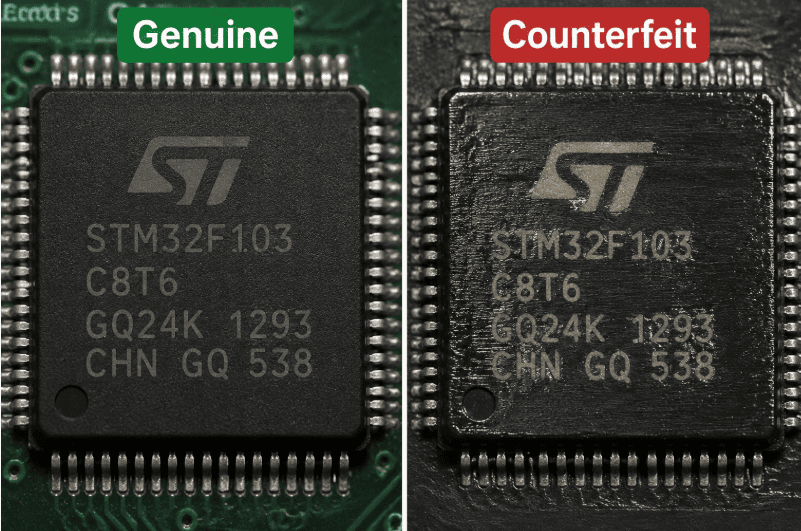
Counterfeiters are incredibly sophisticated. One common technique is "blacktopping," where a cheap, generic chip is sanded down, resurfaced with a black polymer, and laser-etched with the logo and part number of an expensive, high-performance chip. The Fix: Always use acetone to wipe the surface of chips bought from brokers. If the ink smears or the top layer dissolves, it’s a fake.
Pitfall 2: Ignoring Date Codes
Electronic components have a shelf life. Components sitting in a warehouse for 5 years can absorb moisture. When these old parts go through the high heat of a reflow soldering oven, the trapped moisture expands rapidly, causing the chip to crack (known as the "popcorn effect"). The Fix: Always request parts with a date code within the last 2 years. If you must use older parts, ensure they are baked in a specialized oven to remove moisture before assembly.
Pitfall 3: Designing with Single-Source Components
If your product relies on a proprietary chip made by only one company in the world, you are entirely at their mercy. If they raise prices or suffer a factory outage, you are stuck. The Fix: Whenever possible, design your circuits using industry-standard footprints. Ensure you have at least two or three "drop-in replacements" (alternate part numbers that fit exactly the same PCB pads and function identically) listed on your BOM for passive components and standard logic chips.
5. Conclusion & Final Thoughts
Navigating the world of electronic component procurement requires a healthy dose of paranoia and a strict adherence to process. By treating your BOM as a living document, respecting the risks of the gray market, and continuously monitoring component lifecycles, you can protect your company from costly manufacturing delays.
Remember, the cheapest part is the one that actually works the first time. Never compromise on traceability, and always verify before you trust.
Here is a concise 6-question FAQ in English:
FAQ
Q1: What is a BOM and why does it matter? Your Bill of Materials is the master recipe for building your product. Errors in the BOM multiply downstream, causing wrong parts, delays, and budget overruns.
Q2: Authorized Distributor vs. Broker—which should I choose? Stick to Authorized Distributors (Digi-Key, Mouser, Arrow) for 99% of your needs. They offer traceability, warranties, and zero counterfeit risk. Use Independent Brokers only as a last resort during severe shortages.
Q3: What is EOL and how do I avoid production halts? End of Life means the manufacturer stops making the part. Always check lifecycle status before locking your PCB design. If a part is NRND or EOL, find a drop-in replacement immediately.
Q4: How do I safely buy from the gray market? Demand a Certificate of Conformance, full traceability, third-party X-ray and decap testing, and a 30-day warranty. Never pay upfront without proof.
Q5: How do I spot counterfeit chips? Use the acetone test—wipe the chip surface. If the marking smears or dissolves, it is a fake blacktopped chip. Always verify date codes too; avoid parts older than 2 years.
Q6: What is the golden rule of component procurement? Prioritize traceability over price. The cheapest part is the one that works correctly the first time. Verify before you trust.
Quick Summary: Procurement Best Practices
| Action Item | Best Practice | What to Avoid |
|---|---|---|
| Supplier Choice | Stick to Franchised/Authorized Distributors. | Buying from Alibaba/eBay for production runs. |
| BOM Health | Check EOL/NRND status during the design phase. | Designing around obscure, single-source parts. |
| Broker Sourcing | Demand X-ray, decap reports, and escrow payments. | Wiring money without seeing proof of life/testing. |
| Quality Control | Check date codes and bake older components. | Assuming all parts are ready for immediate reflow. |
What is your biggest challenge when sourcing electronic components? Have you ever been burned by counterfeit chips? Let us know your experiences in the comments below, and don't forget to subscribe to our newsletter for more deep dives into hardware manufacturing and supply chain optimization!