



How to Reduce Electronic Component Lead Times for Startups & OEMs: A Data-Driven Guide
Imagine this: Your engineering team has spent eight months perfecting a groundbreaking hardware product. The marketing campaign is live, pre-orders are flooding in, and your contract manufacturer (CM) is ready to spin up the assembly line. Then, reality hits. A single $0.10 microcontroller is out of stock globally, with a 52-week lead time. Your entire $1 million production run grinds to a halt. In the hardware industry, this is known as the "golden screw" syndrome—where the absence of the cheapest, smallest part paralyzes your entire Bill of Materials (BOM).
If you are a supply chain manager, procurement officer, or hardware engineer, you know that supply chain opacity and volatility are your biggest enemies. Relying on hope or manual Excel spreadsheets is a recipe for missed deadlines and lost revenue. In this comprehensive guide, you will learn how to transition from a reactive purchasing model to a proactive, highly resilient supply chain. We will dive deep into actionable, engineering-level strategies, including Design for Availability (DFA), leveraging real-time inventory APIs, and balancing strategic safety stock with lean manufacturing.

Table of Contents
- 1. Understanding BOM Lead Time: Why It Dictates Your Time-to-Market
- 2. Core Concepts Simplified: The Anatomy of a Resilient BOM
- 3. Step-by-Step Guide: Actionable Strategies to Slash Lead Times
- 4. Expert Tips & Common Pitfalls to Avoid
- 5. Conclusion & Final Thoughts
- 6. Frequently Asked Questions (FAQ)
1. Understanding BOM Lead Time: Why It Dictates Your Time-to-Market
In today's interconnected global market, electronic component lead times are no longer just a procurement issue; they are a critical business risk factor. Geopolitical tensions, logistical bottlenecks, and sudden spikes in demand (such as the AI hardware boom) have permanently altered the landscape of electronic manufacturing.
For startups and established OEMs alike, the lead time of your product is not the average delivery time of your components—it is strictly equal to the lead time of your most delayed component.
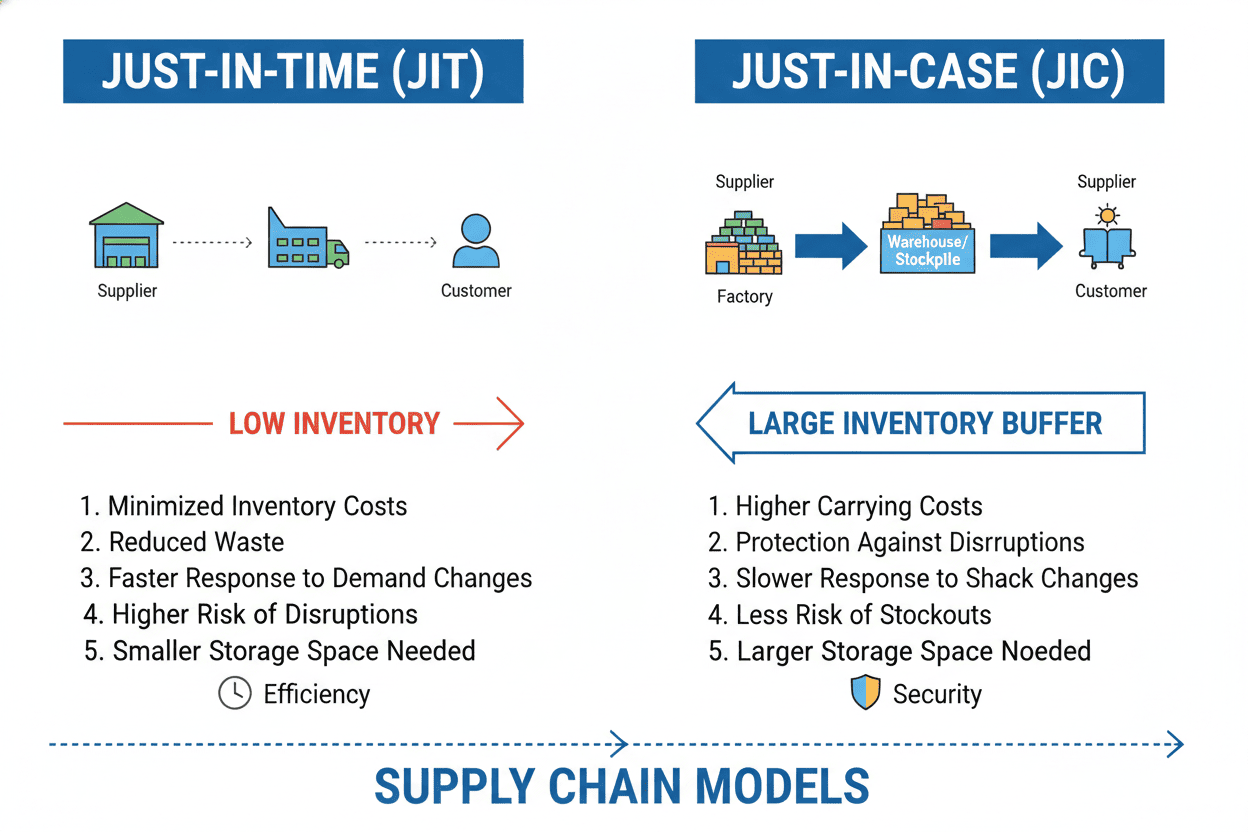
Historically, companies leaned heavily on Just-In-Time (JIT) manufacturing to minimize warehousing costs and improve cash flow. However, recent disruptions have exposed the fragility of this model. When you operate with zero buffer, any disruption—a factory fire, a port strike, or a sudden allocation limit by a chip manufacturer—instantly impacts your bottom line. The industry is now witnessing a massive paradigm shift from JIT (Just-In-Time) to JIC (Just-In-Case).
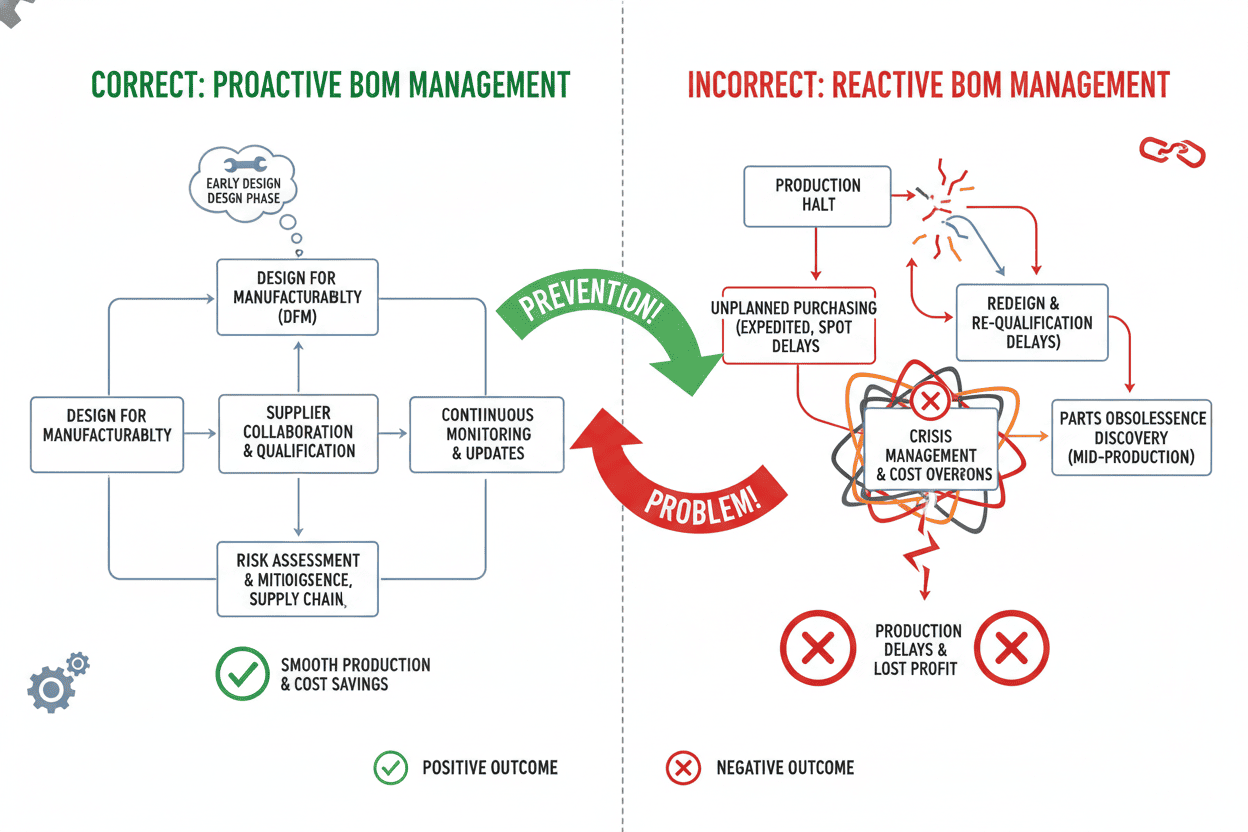
To survive and scale, hardware teams must stop treating the BOM as a static document and start treating it as a dynamic, living ecosystem that requires continuous monitoring and strategic redundancies.
2. Core Concepts Simplified: The Anatomy of a Resilient BOM
Before implementing advanced procurement strategies, it is crucial to align engineering and supply chain teams on the foundational concepts. Let's break down the industry jargon into plain English using relatable analogies.
- Bill of Materials (BOM): Think of this as the ultimate "recipe" or "shopping list" for your hardware product. It contains every single ingredient needed, from the core processing chips down to the exact specifications of a microscopic resistor or a mechanical screw.
- Lead Time: The total waiting period from the exact second you click "Place Order" to the moment that specific component physically arrives at your factory's receiving dock, ready for assembly.
- Drop-in Replacement: The perfect "stunt double." This is an alternative component that matches the original part perfectly in physical size (footprint), pin configuration, and electrical functionality. You can swap it onto the circuit board without needing to redesign the PCB.
- Just-In-Time (JIT): Imagine walking a tightrope without a safety net. It is an inventory strategy where parts arrive exactly on the day they are needed for assembly. It saves warehouse space and money but leaves you highly vulnerable to global supply chain shocks.
Comparison Table: JIT vs. Strategic Safety Stock
| Feature / Strategy | Just-In-Time (JIT) | Strategic Safety Stock (JIC) | Hybrid Approach (Recommended) |
|---|---|---|---|
| Core Philosophy | "Arrive exactly when needed." | "Stockpile to prevent disaster." | "Stockpile the rare, lean the standard." |
| Capital Tied Up | Very Low | High | Medium (Optimized) |
| Risk of Line Down | Extremely High | Low | Low to Moderate |
| Best Suited For | Highly stable markets, local suppliers | Legacy products, highly volatile markets | Modern hardware startups, complex BOMs |
| Warehouse Space | Minimal | Significant | Moderate |
3. Step-by-Step Guide: Actionable Strategies to Slash Lead Times
Reducing your BOM lead time requires a multi-disciplinary approach. It is not just the purchasing department's job; it starts on the engineer's desk. Here is a foolproof, step-by-step guide to bulletproofing your supply chain.
3.1 Implement Design for Availability (DFA) at the Blueprint Phase
The most expensive time to fix a supply chain problem is when the product is already in production. Design for Availability (DFA) means engineering your product with supply chain realities in mind from day one. Do not put all your eggs in one basket.
- Identify Drop-in Replacements Early: During the schematic phase, hardware engineers must identify at least 2 to 3 alternative components (stunt doubles) for every critical IC, MCU, or specialized sensor.
- Design for Multiple Footprints: If a perfect drop-in replacement doesn't exist, engineers should design the PCB with dual footprints (e.g., overlapping pads) so that two differently sized chips can fit in the same spot without requiring a board spin.
- Avoid Single-Sourced Proprietary Chips: Unless absolutely necessary for your core intellectual property, avoid components made by only one manufacturer. Stick to industry-standard protocols and generic architectures (like ARM Cortex) where multiple vendors compete.
3.2 Leverage API Integrations for Real-Time Visibility
Relying on manual emails to distributors or constantly hitting F5 on Digi-Key or Mouser is a waste of human capital. Modern supply chains require a "real-time radar." By integrating component search APIs (such as the Nexar API by Octopart) directly into your ERP or PLM system, you automate stock monitoring.
When you connect via API, your system can constantly scan global distributor inventories. If the global stock of a critical capacitor drops below your predefined safety threshold, the system automatically alerts your purchasing team to buy immediately.
3.3 Adopt a Hybrid Inventory Model (Smart Hoarding)
Not all components are created equal. Applying a blanket JIT or Safety Stock policy to your entire BOM is inefficient. Instead, categorize your BOM and apply specific strategies to each tier.
Spec/Data Table: Component Categorization & Procurement Strategy
| Component Category | Examples | Market Volatility | Recommended Inventory Strategy | Target Lead Time Buffer |
|---|---|---|---|---|
| Tier A: Critical & Custom | MCUs, FPGAs, Custom ASICs, Specialized Sensors | High (Prone to allocation) | Strategic Safety Stock. Buy 6-12 months of inventory upfront. | + 26 Weeks |
| Tier B: Value but Standard | Power ICs, Memory Modules, Connectors | Medium | Kanban / API Monitored. Maintain a 2-month buffer, auto-replenish. | + 8 Weeks |
| Tier C: Commodities | Resistors, Capacitors, Standard LEDs, Screws | Low | Just-In-Time (JIT). Buy on demand from local distributors. | + 2 Weeks |
3.4 Vet and Build Trust with Independent Distributors
When authorized, franchised distributors (the "Plan A") run out of stock, you need a reliable "Plan B army." Independent distributors source components from the open market, excess OEM inventories, and global brokers. They can often find parts with 0-day lead times that franchised distributors say will take 52 weeks.
However, the open market is rife with counterfeit components. To utilize independent distributors safely:
- Demand Traceability: Always ask for the Certificate of Conformance (CoC).
- Mandate Third-Party Testing: Require independent distributors to pass components through certified testing labs. Tests should include X-ray inspection (to verify the internal wire bonding), decapsulation (acid etching to check the silicon die), and solderability testing.
- Build Long-Term Relationships: Don't just use them in emergencies. Give them smaller, non-critical orders regularly to build a trusted partnership.

4. Expert Tips & Common Pitfalls to Avoid
If you spend time in communities like Reddit's r/supplychain or r/hardwarestartups, you will see the same horror stories repeated. Here is the distilled wisdom and the common traps you must avoid.
- Pitfall: Trusting Static Excel BOMs.
- The Trap: Exporting a BOM to Excel and sending it to a CM, assuming the prices and lead times will remain valid a month later.
- The Fix: Use cloud-based PLM (Product Lifecycle Management) tools that sync with live distributor feeds.
- Pitfall: Ignoring Component Lifecycle Status.
- The Trap: Designing in a cheap, readily available component without realizing the manufacturer has marked it as NRND (Not Recommended for New Designs) or EOL (End of Life). By the time you scale to mass production, the part is obsolete.
- The Fix: Always cross-reference your BOM against lifecycle databases before locking the design.
- Expert Tip: Leverage Your CM's Buying Power.
- If you are a startup buying 1,000 units, you are at the back of the line. Your Contract Manufacturer (EMS) might be buying 10 million units of that same capacitor for other clients. Piggyback on their negotiated contracts and priority allocations.
5. Conclusion & Final Thoughts
Reducing BOM lead times is not about finding a magic supplier who can bypass global logistics; it is about engineering resilience into your product from the very beginning. By embracing Design for Availability (DFA), integrating real-time API data into your procurement workflows, and strategically balancing your inventory tiers, you can transform your supply chain from a constant source of anxiety into a competitive advantage.
Stop letting the "golden screw" dictate your time-to-market. Start cross-training your engineering and procurement teams today, and build a BOM that can withstand the shocks of tomorrow's market.
6. Frequently Asked Questions (FAQ)
Q1: What is the "golden screw" syndrome in hardware manufacturing? A: The "golden screw" refers to a cheap, seemingly insignificant component (like a $0.10 microcontroller) that goes out of stock with a long lead time, halting your entire multi-million dollar production run. It highlights how one missing part can paralyze your entire BOM.
Q2: What is Design for Availability (DFA) and why does it matter? A: DFA is an engineering strategy where you design products with supply chain realities in mind from day one. This includes identifying 2-3 drop-in replacements for critical components, designing dual PCB footprints, and avoiding single-sourced proprietary chips. It prevents costly redesigns when parts become unavailable.
Q3: How can I get real-time visibility into component stock levels? A: Integrate component search APIs like Nexar (by Octopart) directly into your ERP or PLM system. This automates global inventory scanning and triggers alerts when critical components drop below safety thresholds, replacing manual distributor checks.
Q4: What is the difference between JIT and JIC inventory strategies? A: JIT (Just-In-Time) minimizes inventory by ordering parts exactly when needed—highly efficient but vulnerable to supply shocks. JIC (Just-In-Case) maintains safety stock as a buffer. The recommended hybrid approach stockpiles rare/custom components while keeping commodity parts lean.
Q5: How do I safely use independent distributors when authorized stock runs out? A: Always demand a Certificate of Conformance (CoC), mandate third-party testing (X-ray inspection, decapsulation, solderability testing), and build long-term relationships through regular small orders before emergencies arise.
Q6: How should I categorize my BOM for optimal inventory strategy? A: Split into three tiers: Tier A (critical ICs/MCUs) = 6-12 month safety stock; Tier B (power ICs/connectors) = 2-month buffer with auto-replenishment; Tier C (resistors/capacitors) = JIT on-demand purchasing. This optimizes cash flow while preventing line-downs.
Quick Summary Table: Your Action Plan
| Phase | Action Item | Tool / Strategy | Expected Outcome |
|---|---|---|---|
| Engineering | Identify drop-in replacements & dual footprints. | Design for Availability (DFA) | Eliminates single-point-of-failure risks. |
| Procurement | Automate inventory tracking and low-stock alerts. | Nexar/Octopart API Integration | Replaces manual checks with real-time radar. |
| Inventory | Stockpile critical ICs; lean out commodities. | Hybrid Safety Stock Matrix | Optimizes cash flow while preventing line-downs. |
| Sourcing | Vet open-market suppliers with anti-counterfeit tests. | Independent Distributors & X-Ray Labs | Secures emergency stock safely. |
Note to User: The following JSON-LD block is not part of the visible article content. It is structured data intended to be placed in the <head> or at the very bottom of the HTML <body> of your webpage to help search engines understand the content and potentially award you Rich Snippets (FAQ schema) in Google Search Results.