



Complete Guide to Sourcing Electronic Components in 2026
Component procurement accounts for nearly 40% of total manufacturing costs in electronics production. In 2026, lead times have extended from 8 weeks to 20+ weeks for critical ICs and passives. This guide covers supplier evaluation, quality verification, and regional sourcing strategies that reduce costs by 20-40% while maintaining quality.
Table of Contents
Understanding Electronic Component Sourcing
Electronic component sourcing is the strategic process of identifying, evaluating, and procuring ICs, passives, connectors, and other parts from authorized distributors. In 2026, successful procurement requires balancing component availability, quality assurance, and total cost of ownership. You cannot optimize for price alone without risking counterfeits or production delays.
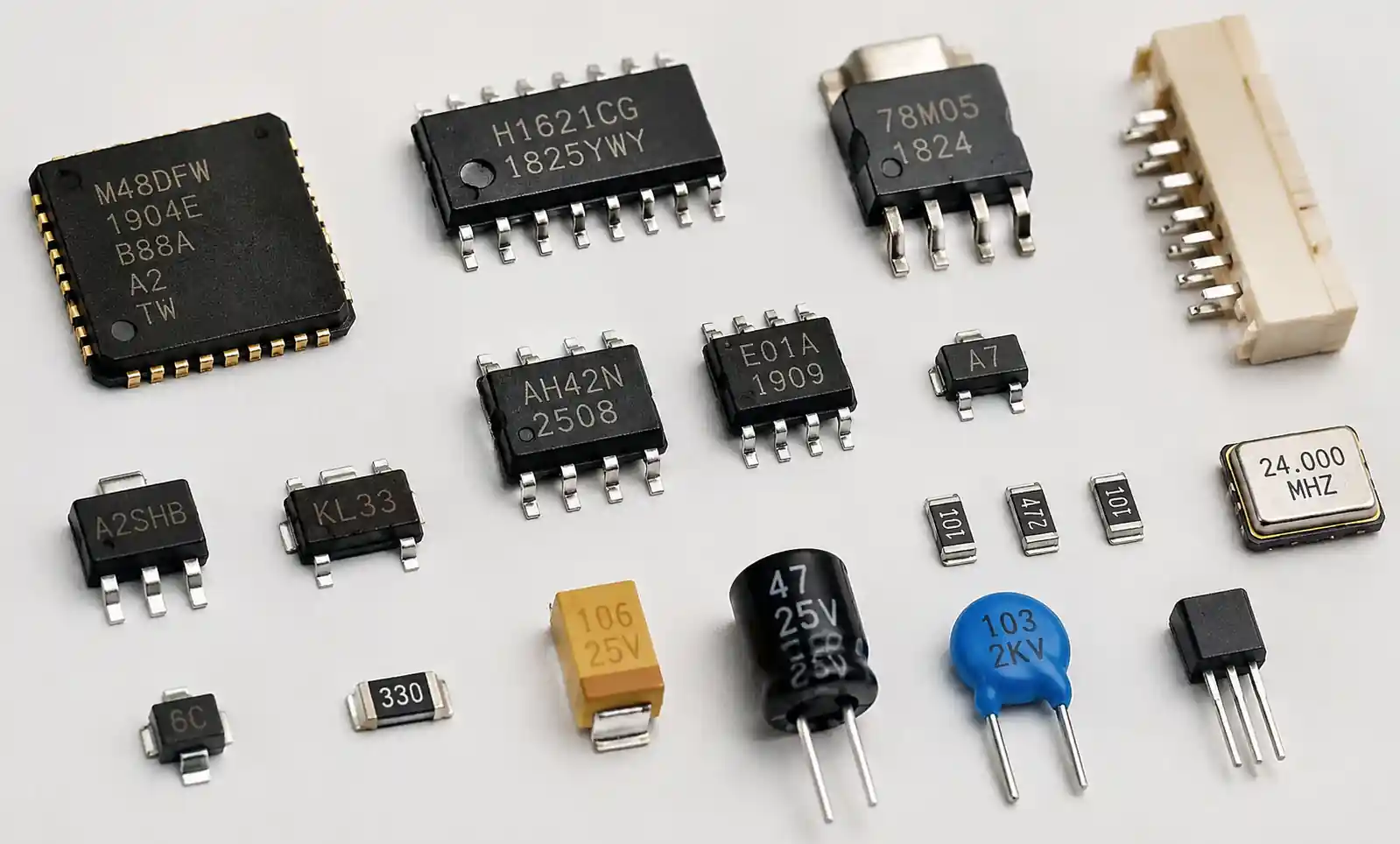 Electronic components including ICs, microcontrollers, and passive components arranged for procurement
Core Sourcing Strategies for 2026
Multi-Source Component Planning: Never rely on a single supplier for critical components. Establish relationships with at least two authorized distributors per component category. This provides supply continuity when one source faces allocation.
Buffer Stock Management: Maintain strategic inventory for long-lead-time components. Calculate buffer stock based on forecast demand, lead time variability, and supplier reliability. For components with 16+ week lead times, hold 8-12 weeks of inventory to protect against disruptions.
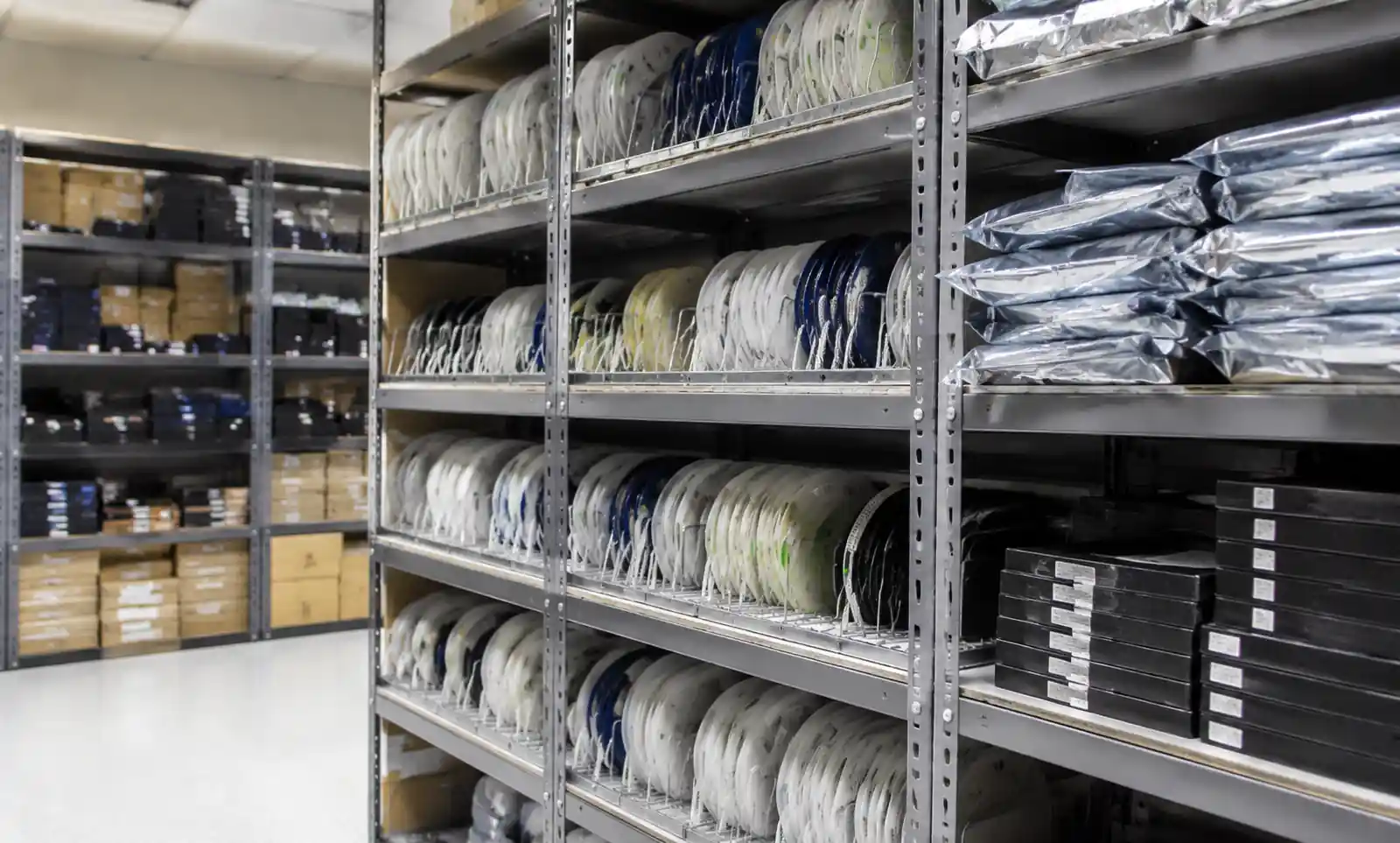 Organized electronic component inventory storage system in warehouse
Design for Availability: Work with engineering to select components with multiple qualified sources. Avoid sole-source parts where possible. Cross-reference alternatives during design and qualify substitutes before production.
Supplier Evaluation Framework
Selecting reliable suppliers determines procurement success. Use a structured evaluation covering five critical dimensions:
| Evaluation Criteria | Weight | Key Metrics | Verification Method |
|---|---|---|---|
| Authorization Status | 30% | Franchised distributor agreements, manufacturer authorization letters | Request manufacturer verification letters |
| Quality Systems | 25% | ISO 9001, AS9100 certification, counterfeit prevention programs | Audit quality documentation |
| Delivery Performance | 20% | On-time delivery rate >95%, lead time accuracy | Review 6-month delivery records |
| Technical Support | 15% | Application engineering, cross-reference services, PCN notifications | Test responsiveness with technical queries |
| Financial Stability | 10% | Payment terms, D&B rating, years in business | Review financial statements, credit reports |
Authorization status matters most because it directly impacts component authenticity. Franchised distributors source directly from manufacturers, eliminating counterfeit risk. Quality certifications indicate process maturity – ISO 9001 for general quality, AS9100 for aerospace, IATF 16949 for automotive. Delivery performance data reveals supplier reliability – target >95% on-time delivery.
 Quality certification documents and supplier evaluation materials
Quality Verification and Counterfeit Prevention
Industry estimates suggest 3-5% of components in global supply chains are counterfeit. Implement verification processes to protect your supply chain.
Visual Inspection: Examine components for inconsistent markings, poor print quality, or package damage. Use 40x magnification to inspect package details and date codes.
Electrical Testing: Verify critical parameters match datasheet specifications. Test voltage ratings, current capacity, and functional performance on sample units from each batch.
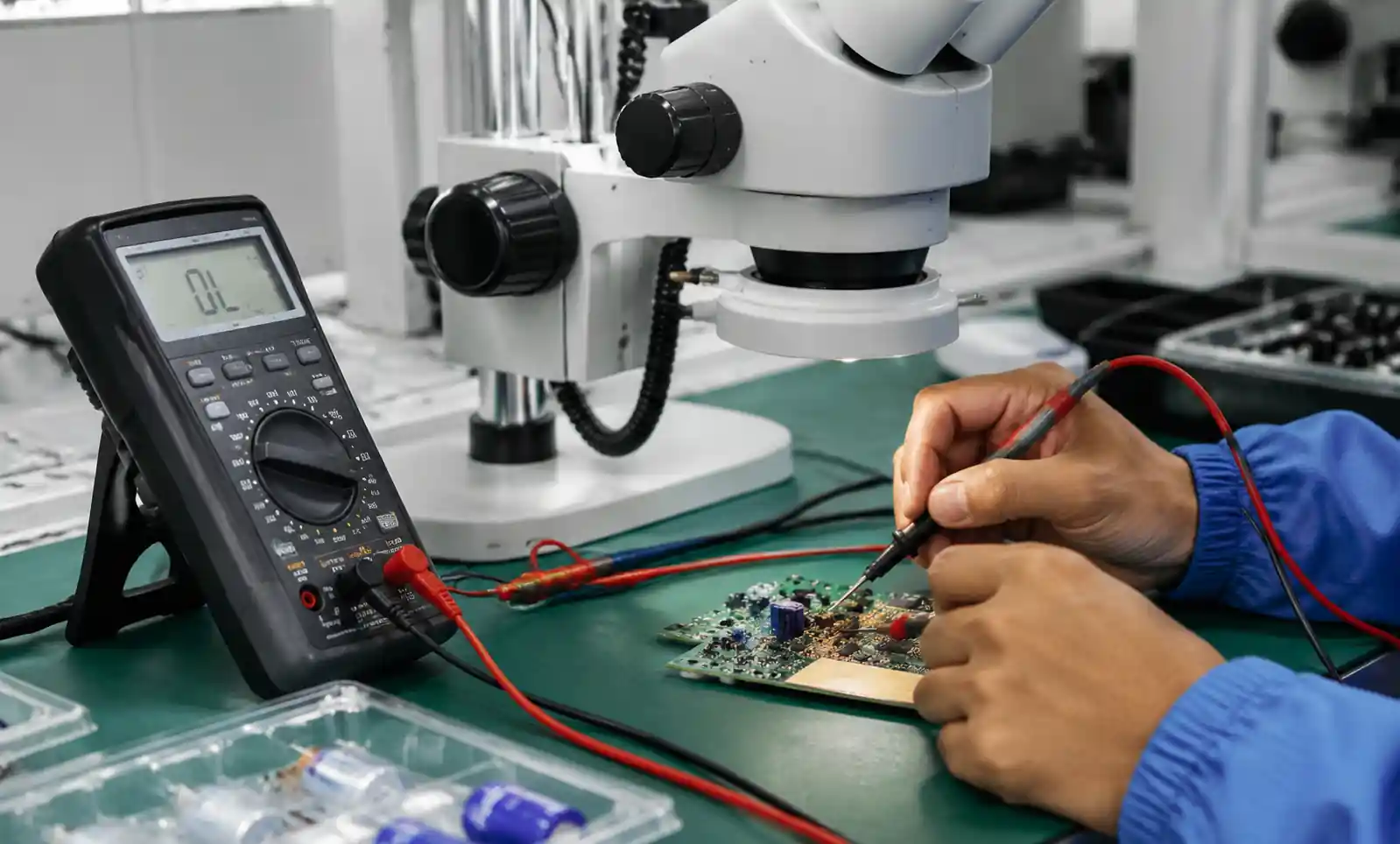 Electronic component quality testing and inspection equipment in use
Authorized Distribution: Source from franchised distributors who maintain chain of custody from manufacturer to customer. Prices may be 5-10% higher than gray market, but authenticity guarantees justify the premium.
X-Ray Analysis: For high-risk components, use XRF analysis to verify internal die structure and material composition. Third-party testing labs provide XRF services for $50-150 per component type.
Regional Sourcing Comparison
| Region | Strengths | Challenges | Best Use Cases | Typical Lead Time |
|---|---|---|---|---|
| Asia (China, Taiwan, Japan) | High availability, competitive pricing, strong manufacturing ecosystem | Quality verification needed, logistics complexity | High-volume production, cost-sensitive projects | 6-10 weeks |
| North America | Strong quality control, excellent technical support, IP protection | Higher pricing, limited variety | Aerospace/defense, R&D prototypes | 8-12 weeks |
| Europe | RoHS/REACH expertise, automotive components, engineering support | Higher costs, smaller network | Automotive, medical devices, industrial automation | 10-14 weeks |
| Africa | Growing market access, improving infrastructure | Limited local inventory, longer shipping, customs complexity | Regional manufacturing, infrastructure projects | 12-20 weeks |
Asia dominates component supply, accounting for 60% of semiconductor production and 70% of passive manufacturing. You can achieve 20-30% cost savings sourcing from Asia, but quality verification is critical. European suppliers excel at automotive and industrial components meeting strict environmental compliance, with premium pricing of 15-25% over Asian sources.
 International shipping and logistics for electronic component distribution
Cost Optimization Techniques
Volume Consolidation: Group purchases across multiple projects to achieve volume discounts. Combining demand moves you into lower price tiers – a 1200-piece order vs 400-piece order reduces unit cost by 12-18%.
Supplier Rationalization: Reduce your approved supplier list from 15-20 distributors to 3-5 strategic partners. Companies implementing supplier consolidation typically achieve 15-30% cost reduction through better pricing and reduced administrative overhead.
Total Cost of Ownership Analysis: Look beyond unit price. Include component cost, shipping, customs, quality verification, inventory carrying costs, and risk of counterfeits or delays. A component priced 8% lower from an unreliable source costs more when factoring in inspection time and defect rates.
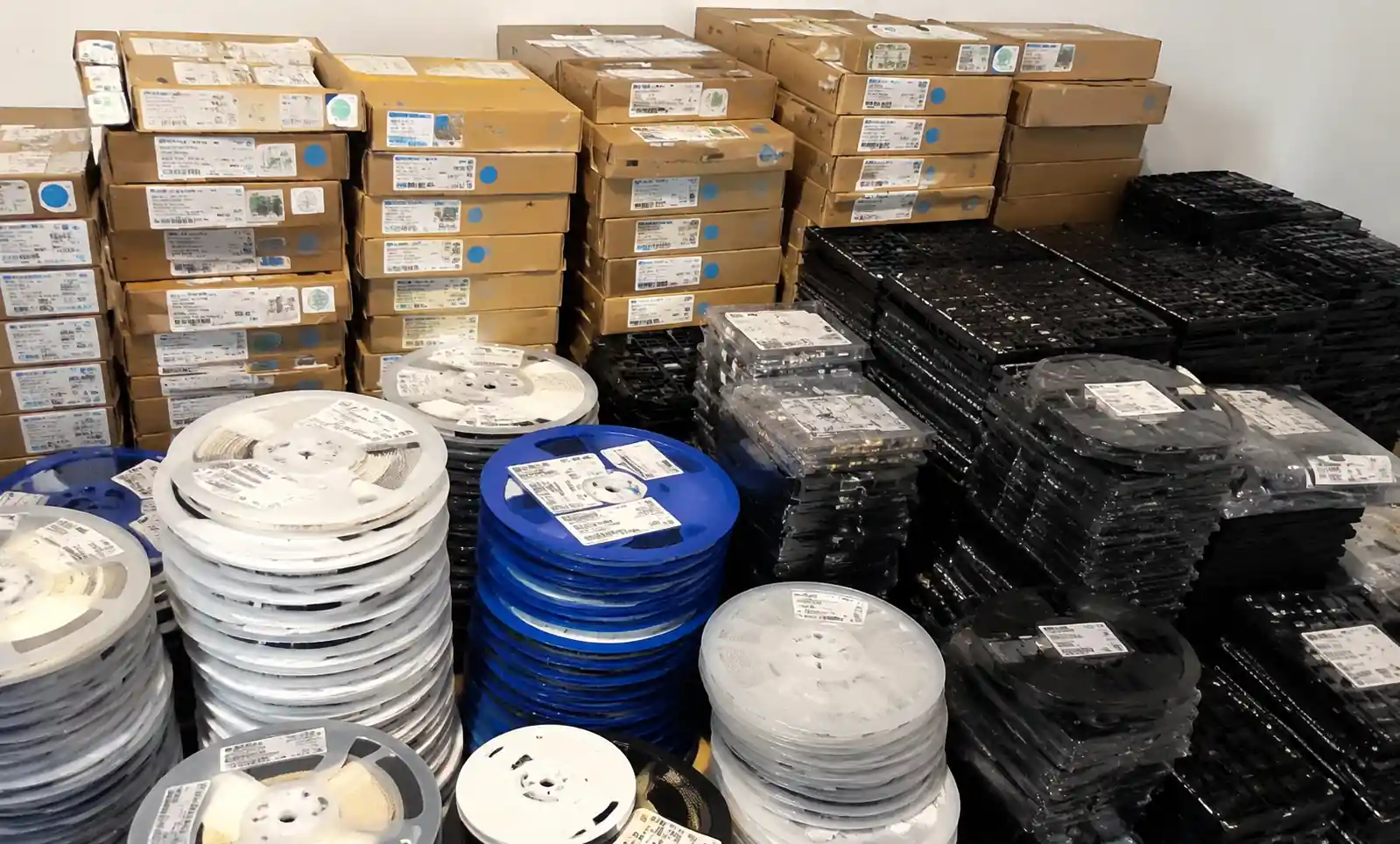 Bulk electronic components purchase showing volume pricing advantages
Long-Term Agreements: Negotiate annual pricing agreements for high-volume components. Lock in pricing for 12 months, protecting against market fluctuations. Include flexibility clauses allowing ±20% demand variation.
Lead Time Management
Forecast-Driven Procurement: Submit rolling 12-month forecasts to strategic suppliers quarterly. Accurate forecasting improves your reliability score with suppliers, strengthening your position during allocation.
Expedite Options: Most distributors offer expedited production for 15-25% premium, reducing lead time by 30-40%. Air freight adds $0.50-2.00 per unit but cuts shipping from 4-6 weeks to 3-5 days.
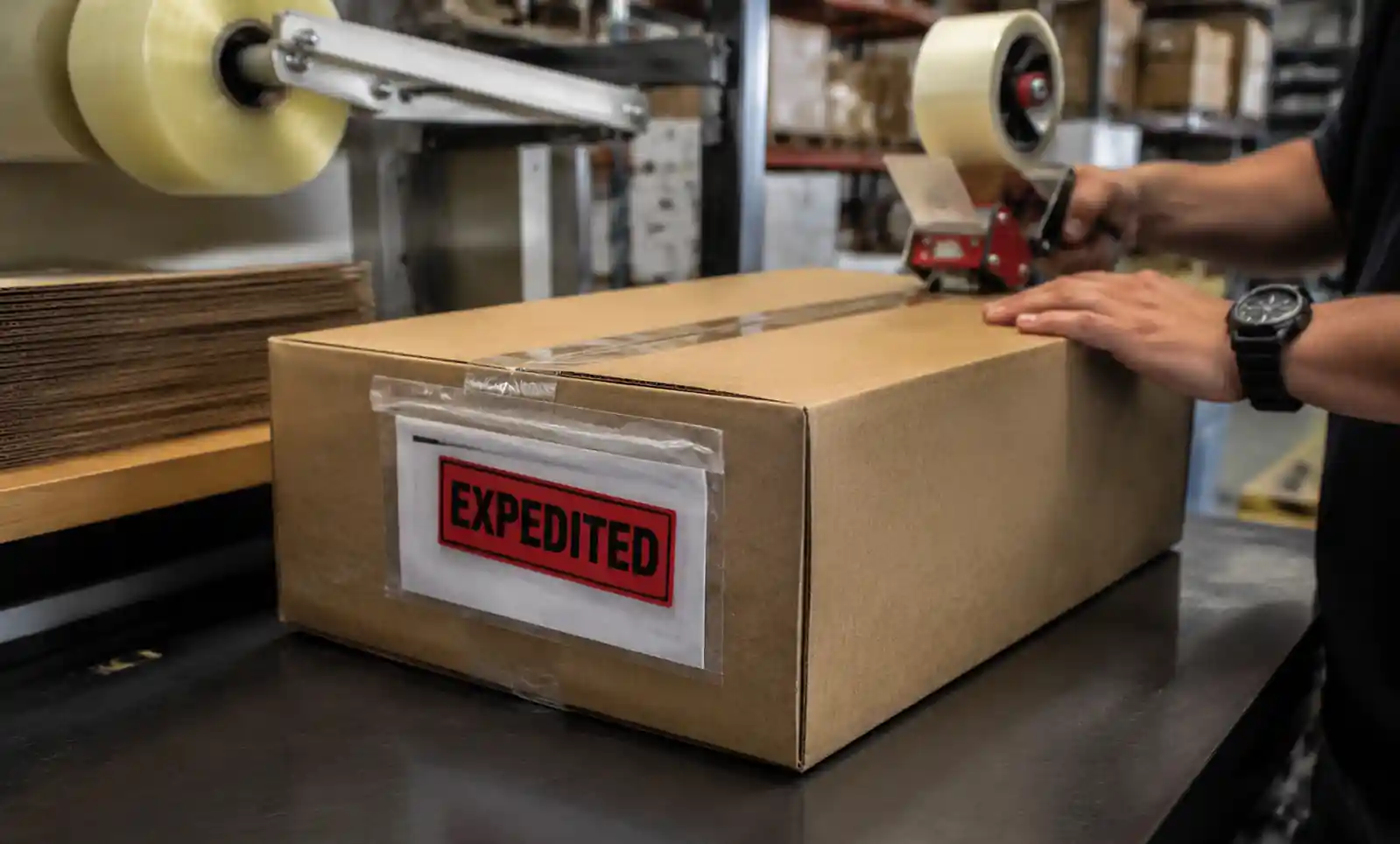 Express shipping and expedited delivery for urgent component orders
Component Lifecycle Monitoring: Track lifecycle status for every active design. Subscribe to manufacturer PCN and EOL announcements. When components enter EOL, you have 12-24 months to execute last-time-buy or redesign.
FAQs
What is the difference between franchised and independent distributors?
Franchised distributors have direct authorization from component manufacturers, sourcing products directly from production. Independent distributors purchase from various sources including franchised distributors, excess inventory, and secondary markets. Franchised distributors provide authenticity guarantees; independents offer hard-to-find and obsolete components.
How can I verify component authenticity?
Use multiple methods: source from franchised distributors, perform visual inspection under 40x magnification, conduct electrical testing against datasheet specs, and use XRF analysis for high-risk purchases. Request certificates of conformance and traceability documentation for all orders.
What lead times should I expect in 2026?
Standard components: 8-12 weeks. Power management ICs and automotive-grade parts: 16-24 weeks. Allocated components: 20-30 weeks. Passive components: 6-10 weeks. Maintain buffer stock for critical long-lead-time items.
How do I choose between Asian and European suppliers?
Asian suppliers offer 20-30% cost savings and high availability for cost-sensitive, high-volume production. European suppliers provide RoHS/REACH compliance expertise and automotive-grade components at premium pricing – ideal for regulated industries where compliance documentation justifies higher costs.
How can I reduce procurement costs without compromising quality?
Implement supplier consolidation to increase volume per partner. Use TCO analysis rather than unit price alone. Maintain buffer stock to avoid expedite costs. Negotiate annual pricing agreements. Design for availability by selecting components with multiple qualified sources.
 Product lifecycle management and component obsolescence planning
Conclusion
Effective electronic component sourcing in 2026 requires balancing cost, quality, and supply reliability. Strategic approaches – multi-source planning, supplier consolidation, and proactive lead time management – reduce costs by 20-40% while maintaining quality. Success depends on working with authorized distributors who provide authenticity guarantees and manufacturer support. Regional sourcing strategies optimize between Asian cost advantages, European compliance expertise, and North American quality control.
If you need reliable component sourcing with global supply network support, Hitop offers comprehensive procurement services across Asia, Europe, and Africa. Contact us today for sourcing solutions and competitive pricing.