



Industrial Pilot Lights: Complete Selection and Specification Guide for Engineers (2026)
Indicator lights seem simple—until you're chasing a 24V drop across 50 meters of wire or replacing bulbs in a panel mounted 10 feet off the floor. Pilot lights are the eyes of your control system, and picking the wrong one means unnecessary maintenance, operator confusion, or worse, missed alarms. Here's what actually matters.
Table of Contents
- Key Technical Parameters
- How to Choose the Right Pilot Light
- Performance Comparison Table
- Design Considerations and Common Pitfalls
- Supply Chain and Sourcing
- FAQ
- Conclusion
Key Technical Parameters
Voltage and Current Ratings: Standard voltages include 6V, 12V, 24V, 48V, 110V, 120V, 220V, and 240V AC/DC. Voltage tolerance is typically ±10%. Current varies by technology: incandescent draws 40-60mA at 24V DC; LED draws only 10-20mA. That matters when you're powering 50 indicators off a control transformer.
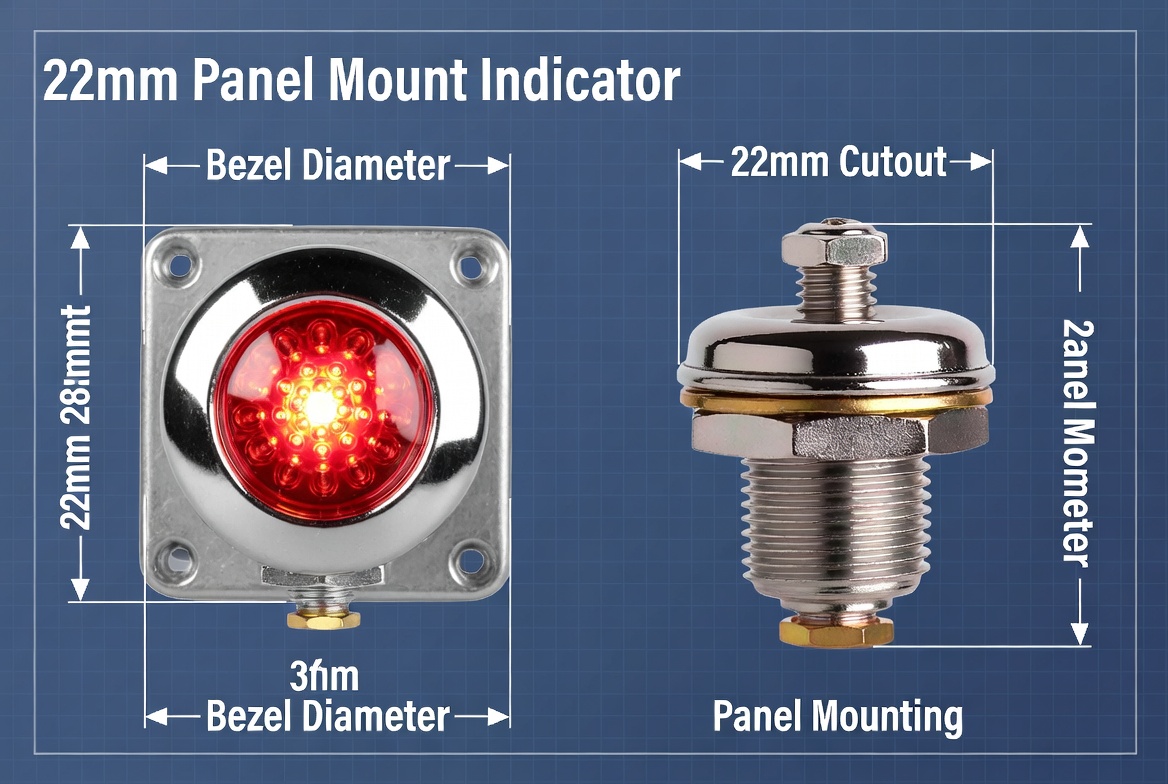
Mounting Dimensions: 22mm diameter is the industry standard (IEC 60947-5-1). Also available in 16mm, 25mm, and 30mm. Mounting depth runs 35-55mm behind the panel. LED units with integrated resistors are shallower than lamp holders with separate transformers.
Lens Colors and Visibility: Standard colors per ISO/ANSI: red (alarm/stop), green (normal/run), yellow/amber (caution/warning), blue (mandatory action), white (general). Polycarbonate lenses offer better impact resistance (IK08-IK10) than acrylic. Luminous intensity ranges 30-100 mcd standard; high-brightness hits 200+ mcd for outdoor or high-ambient light. Viewing angle typically 140-160°.
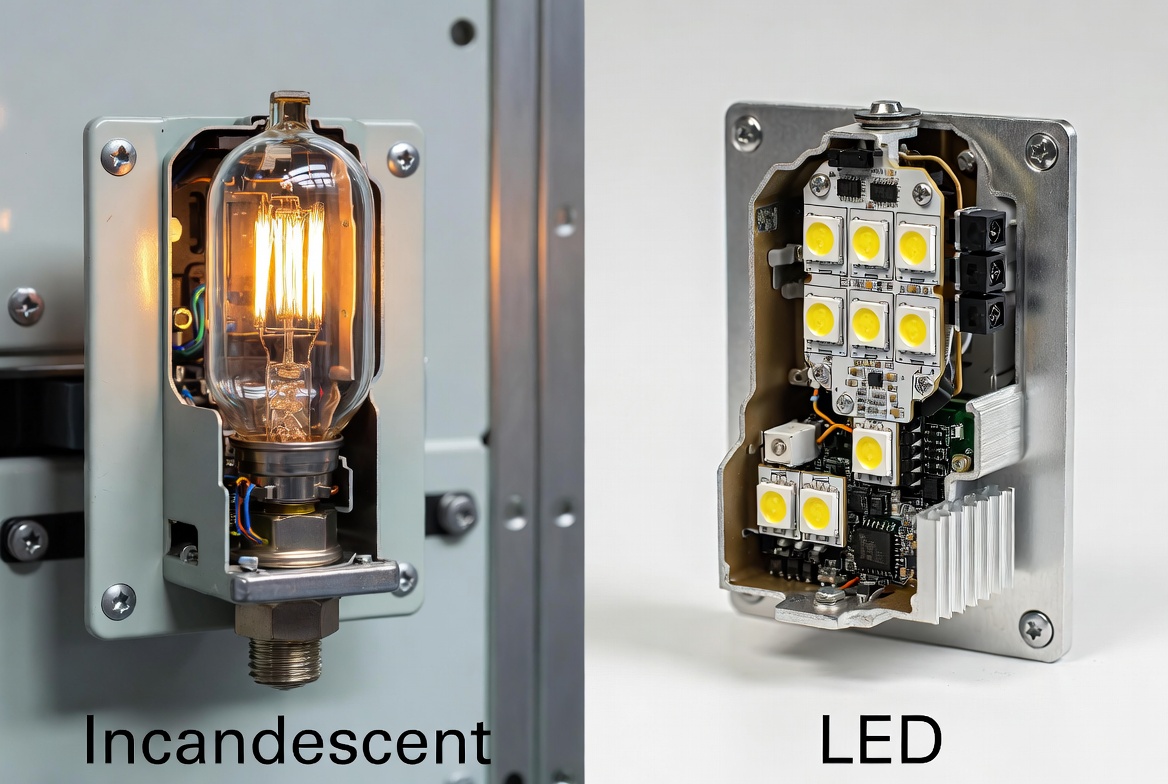
Technology Comparison: Incandescent (5,000-10,000 hrs, warm light, cheap upfront). Neon (25,000+ hrs, limited colors). LED (50,000-100,000 hrs, all colors, lowest TCO). For new designs, LED wins on every metric except initial cost.
How to Choose the Right Pilot Light
Step 1: Match control voltage. PLC systems usually run 24V DC. Relay panels might be 120V AC or 230V AC. Pick the exact voltage—converters add cost and failure points. For DC circuits, check polarity. Most modern LEDs are non-polarized, but some aren't.
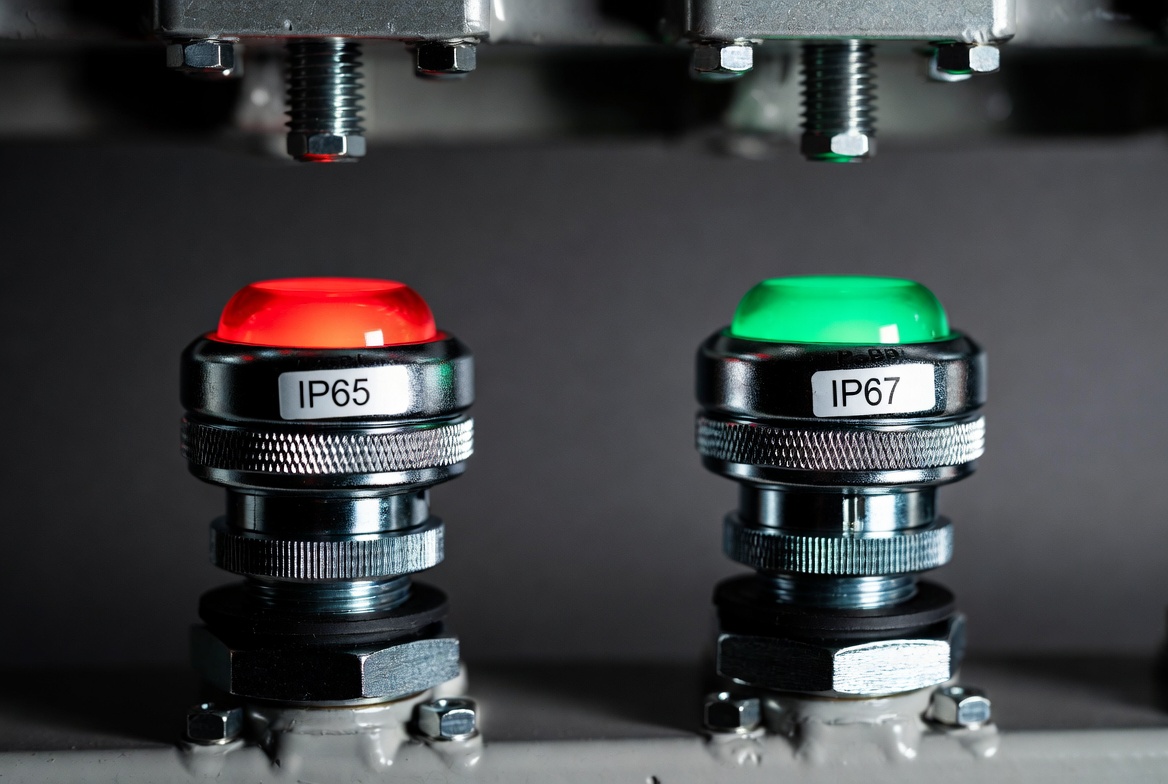
Step 2: Select IP rating. IP40 for clean control rooms. IP54 for general industrial. IP65 for washdown or outdoor. IP67 for temporary submersion. Don't over-specify—IP67 costs 20-30% more and seals tighter, but you don't need it unless water is pooling.
Step 3: Check mounting depth. Standard nuts work for 1-8mm panels. Thicker panels need extended sleeves. Metal panels provide better grounding; plastic panels might need extra EMI filtering.
Step 4: Pick connection type. Screw terminals (most flexible, 14-22 AWG), quick-connect spades (faster assembly), or pre-wired leads (150-300mm). For LEDs, verify if current-limiting is integrated. "Full voltage" modules drop in without external resistors.
Performance Comparison Table
| Parameter | Incandescent | Neon | LED | Application Impact |
|---|---|---|---|---|
| Operational life | 5,000-10,000 hrs | 25,000-35,000 hrs | 50,000-100,000 hrs | LED = less maintenance |
| Power consumption (24V) | 1.0-1.5W | 0.3-0.5W | 0.15-0.3W | LED reduces transformer load |
| Response time | 100-200ms | 1-2ms | <1ms | LED/neon for fast indication |
| Operating temp range | -20°C to +60°C | -40°C to +70°C | -25°C to +55°C | Neon best for extreme cold |
| Color availability | Full | Red, orange, green | Full + white | LED offers most flexibility |
| Shock/vibration | Low | Moderate | High | LED for mobile equipment |
| Initial cost | Lowest ($2-5) | Moderate ($5-8) | Higher ($6-12) | LED TCO lower long-term |
Bottom line: LED pilot lights cost more upfront but last 10-20× longer. For 100 indicators, switching from incandescent to LED eliminates about 8-10 lamp changes per year. The power savings also matter—100 LEDs draw 15-30W versus 100-150W for incandescent, reducing transformer sizing and panel heat load.
Design Considerations and Common Pitfalls
Voltage Drop in Long Runs: 24V at the panel can be 22V at the indicator 30 meters away. Calculate Vdrop = 2 × R × I × L. For distributed indicators, consider 48V circuits or specify wide-tolerance LEDs (18-30V DC).
Color Confusion: Yellow means "abnormal condition requiring attention"—not "caution during normal operation." Using yellow for routine states trains operators to ignore it. Follow IEC 60073: red = alarm, green = normal, yellow = warning, blue = mandatory action. No purple or pink—they have no defined meaning.
Flashing Modes: 1-2 Hz is standard for attention. Faster rates (3+ Hz) distract and may trigger photosensitive issues. For alarms, use steady-on after acknowledgment, flashing before.
Serviceability: Modular designs (lamp/LED separate from base) simplify replacement. But check that replacement parts are available from multiple sources—proprietary lamp bases lock you in. BA9s and T3 1/4 wedge bases offer multi-vendor compatibility.
Supply Chain and Sourcing
| Manufacturer | Strengths | Lead Time | Voltage Range | IP Options |
|---|---|---|---|---|
| Schneider (Harmony) | Wide voltage, extensive certs | 2-4 weeks | 6V-250V AC/DC | IP65, IP66, IP67 |
| Siemens (SIRIUS) | Modular, high brightness | 3-6 weeks | 12V-230V AC/DC | IP65, IP67 |
| Allen-Bradley (800T) | UL/CSA focus, NA stock | 1-2 weeks | 24V-240V AC, 24V DC | IP65 |
| Eaton (M22 Series) | Cost-effective, good stock | 1-3 weeks | 24V-240V AC/DC | IP66, IP67, IP69K |
| Omron (A22 Series) | Compact, Asian market | 2-4 weeks | 6V-24V DC, 24V-240V AC | IP65 |
TCO comparison: An LED at $10 with 50,000-hour life costs $0.0002/hour. Incandescent at $4 with 8,000-hour life costs $0.0005/hour plus 6× more maintenance interventions. For 100 indicators running 8,760 hours/year, LED saves ~$260/year in lamp costs alone—before you count labor.
Certifications: UL-listed parts cost 15-25% more but are mandatory for North American installations under NEC. Verify before you spec.
FAQ
What is the difference between IP65 and IP67 pilot lights?
IP65 = dust-tight + protection against water jets. Fine for most industrial and outdoor enclosures. IP67 = temporary submersion (1 meter for 30 minutes). Only specify IP67 if flooding or high-pressure washdown is actually happening—it adds 20-30% cost and tighter sealing that complicates installation.
Can I replace incandescent with LED without circuit changes?
Yes—if you use "full voltage" or "direct replacement" LED modules with integrated current-limiting resistors. These match the voltage rating and connect to the same terminals. Standard LEDs without integrated resistors need external components. Also verify mechanical fit—BA9s, wedge, and screw-terminal bases vary.
How do I select voltage rating for international equipment?
Use dual-voltage pilot lights rated for both 110-120V AC and 220-240V AC, or run 24V DC control circuits with local transformers. Many industrial LEDs offer wide-range (100-250V AC) that auto-adapt. This simplifies inventory and reduces wiring errors.
What causes LED pilot lights to flicker?
Voltage drop from undersized wiring, incorrect polarity (on polarized modules), or PWM interference from nearby VFDs. Check voltage at the terminals under load—below 90% nominal indicates wiring issues. For EMI environments, specify LEDs with built-in filtering.
Are there standards for pilot light color coding?
Yes. IEC 60073 and ISO 13850 define: red = emergency/alarm, yellow/amber = abnormal condition, green = normal operation, blue = mandatory action, white = general status. ANSI/NEMA provide equivalent guidance for North America. Following these ensures intuitive operation and machinery safety compliance.
How do I calculate how many pilot lights a control transformer can support?
Sum the current draw. At 24V DC, LED units draw 10-20mA each. A 100VA transformer at 24V provides 4.17A—roughly 200 LEDs or 40 incandescents. Add 20-30% derating for efficiency and inrush. For large panels, use a dedicated indicator power supply separate from coil loads.
Conclusion
For new designs, default to 22mm LED pilot lights with IP65 rating and integrated current limiting—they cost more upfront but pay back fast in maintenance savings and reliability. Match your voltage to the control circuit (24V DC for PLC systems, 120V or 230V AC for relay panels), calculate your total load if you're using more than 20 units, and don't over-specify IP ratings beyond what the environment actually demands. Stick to standard IEC 60073 colors so your operators aren't guessing what yellow means. Before you finalize, get samples from 2-3 manufacturers to check brightness and terminal accessibility, run the TCO numbers (LED typically pays back within 2-3 years), and if you're dealing with extreme temperatures, odd mounting depths, or specialized certifications, call the manufacturer's application engineers—they've already seen the mistakes you're about to make and can save you the rework.