



Power Adapter Connectors: A Practical Selection Guide for Design Engineers
When you're designing a new product that needs external power, one of the earliest decisions you'll face is which power connector to use. It's not the most glamorous part of hardware design, but get it wrong and you're looking at field failures, customer complaints, or worse—a costly redesign. I've seen projects delayed by months because someone picked a connector that couldn't handle the actual current draw, or chose one that's been discontinued by every major supplier.
This guide walks through the technical considerations that matter when selecting power adapter connectors. We'll cover the parameters that actually affect reliability, how different connector types perform in real-world conditions, and the trade-offs you'll need to make between cost, availability, and performance.
Table of Contents
- Understanding Power Adapter Connector Types
- Key Electrical and Mechanical Parameters
- How to Select the Right Connector for Your Application
- Connector Comparison: DC Barrel vs USB-C vs Proprietary
- Common Design Mistakes and How to Avoid Them
- Supply Chain Considerations
- FAQ
- Conclusion
1. Understanding Power Adapter Connector Types
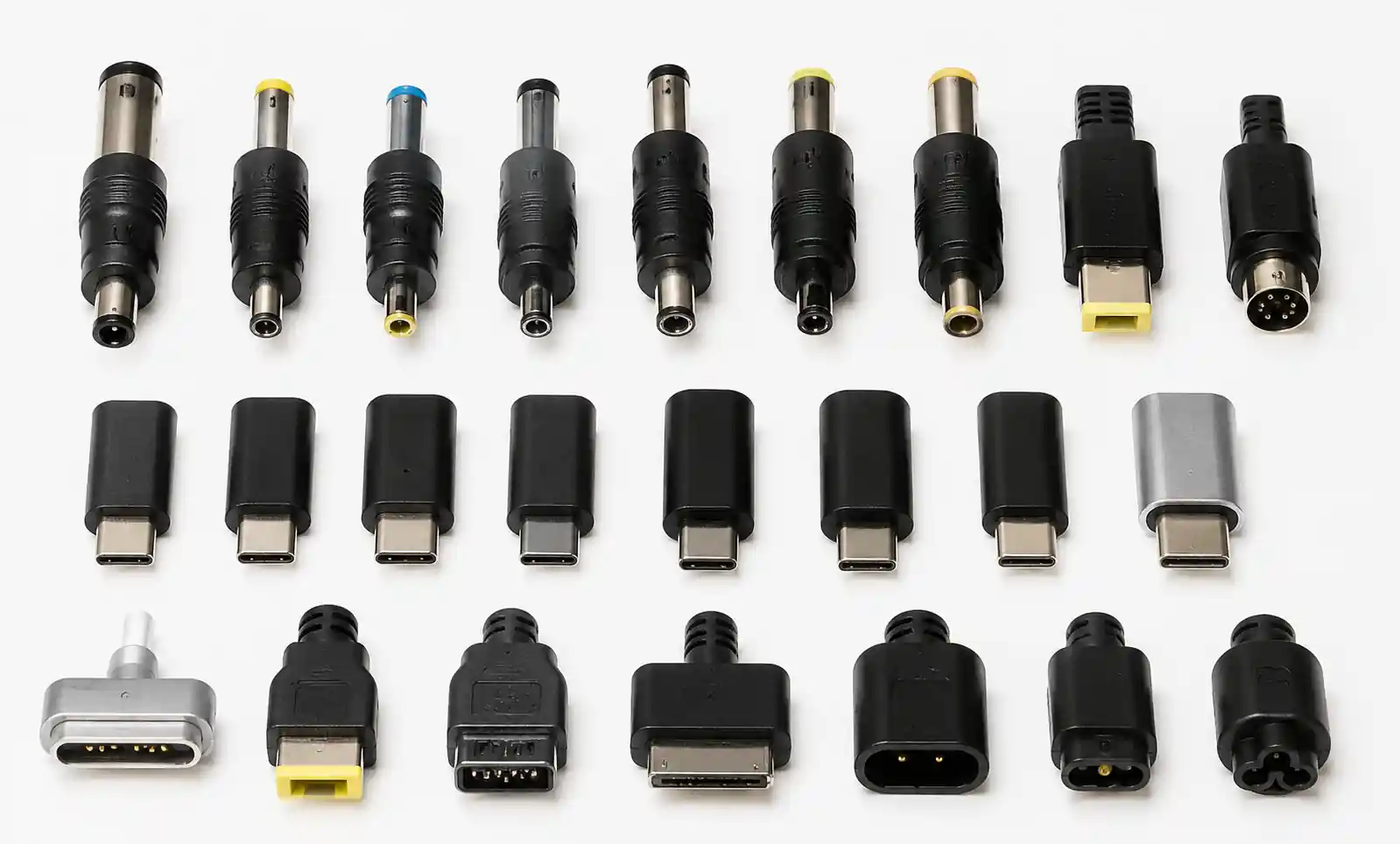
Power adapter connectors fall into several broad categories, each with distinct advantages and limitations. The three most common types you'll encounter in modern designs are DC barrel jacks, USB connectors (particularly USB-C with Power Delivery), and proprietary connectors.
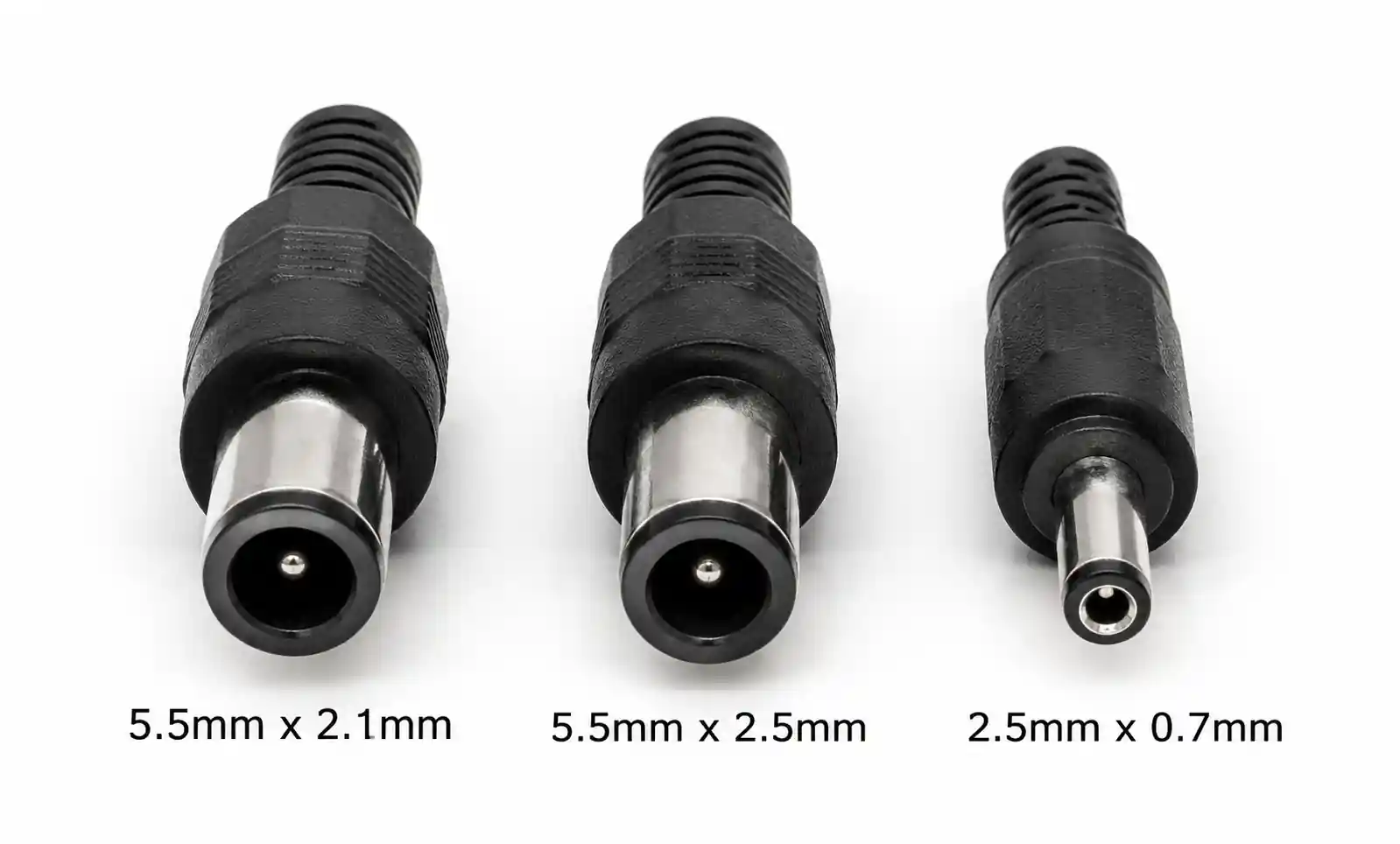
DC barrel jacks have been around for decades and remain popular in industrial equipment, consumer electronics, and anywhere you need a simple, reliable power connection. They come in dozens of size combinations—typically specified by outer diameter, inner diameter, and barrel length. The most common sizes are 5.5mm x 2.1mm and 5.5mm x 2.5mm, but you'll find everything from tiny 2.5mm x 0.7mm connectors for portable devices up to 6.5mm x 3.0mm for higher-power equipment.
USB-C with Power Delivery has changed the landscape significantly over the past few years. If your device draws less than 100W and you want to take advantage of the ubiquity of USB-C chargers, it's worth serious consideration. The Power Delivery specification handles negotiation between source and sink, which means your device can request the voltage it needs rather than requiring a dedicated adapter voltage. However, this comes with implementation complexity—you'll need a PD controller chip and proper USB-C spec compliance.
Proprietary connectors show up in applications where mechanical requirements, higher power levels, or differentiation matter more than using industry-standard connectors. Laptop manufacturers have traditionally used proprietary designs to control the accessory ecosystem, though many are moving to USB-C. In industrial settings, proprietary connectors often provide better environmental sealing or more robust mechanical retention than off-the-shelf options.
2. Key Electrical and Mechanical Parameters
Picking a connector isn't just about whether it physically fits. Several electrical and mechanical parameters determine whether your connector choice will work reliably over the product's lifetime.
Current rating is the obvious starting point. Connectors are rated for maximum continuous current, but there's more to it than just checking whether the rating exceeds your load current. Contact resistance matters—a connector rated for 5A might have 30 milliohms of contact resistance, which translates to 750mW of heat dissipation at full current. In a confined enclosure without good airflow, that heat buildup can push the connector beyond its temperature rating. Always derate by at least 20% for continuous operation, and consider worst-case scenarios where the connector might be partially plugged or oxidized over time.
Voltage rating typically isn't the limiting factor for DC power connectors unless you're working with higher voltages in industrial equipment. Most consumer-grade barrel jacks are rated for 24V or 30V, while USB-C PD goes up to 20V or 28V depending on the Extended Power Range. The voltage rating determines creepage and clearance distances, so if you're designing for 48V industrial systems, you'll need connectors explicitly rated for that voltage with appropriate spacing.
Insertion cycles become critical in any application where users will plug and unplug frequently. A typical DC barrel jack is rated for 5,000 to 10,000 insertion cycles. USB-C connectors are generally rated for 10,000 cycles. If your product is something users will plug in once and leave connected, this parameter matters less. But for portable devices that get plugged and unplugged daily, it's worth checking the datasheet spec and considering what happens at end-of-life when the contacts have worn.
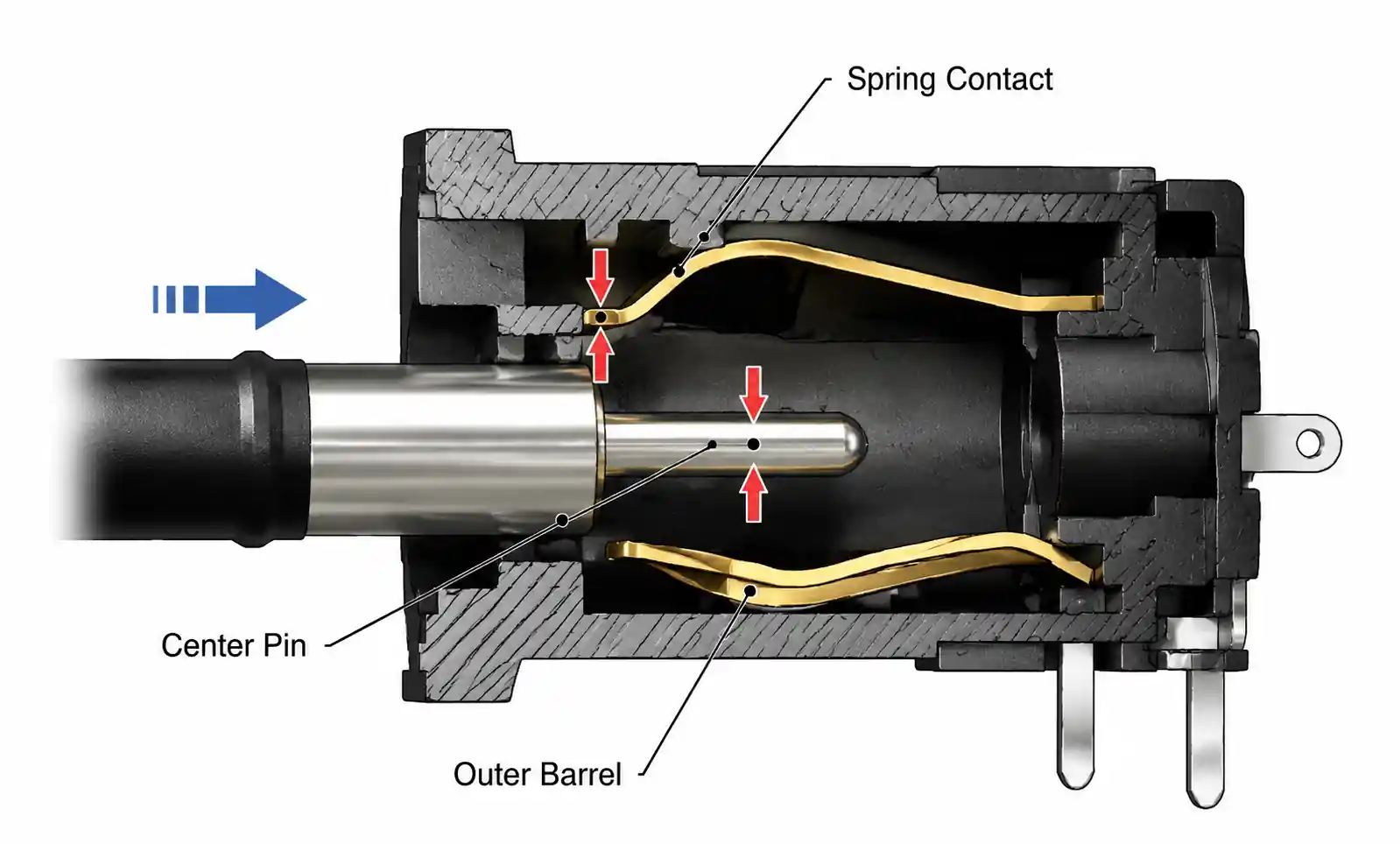
Retention force determines how much pull force is required to disconnect the plug. For desktop equipment, you generally want lower retention force so the cable disconnects before the device gets pulled off a desk. For portable devices or anything subject to vibration, you want higher retention force to prevent accidental disconnection. DC barrel jacks typically have low retention force, while USB-C provides moderate retention. Some connectors offer locking mechanisms—either threaded collars or bayonet locks—for applications where accidental disconnection would be problematic.
Operating temperature range varies significantly between consumer-grade and industrial-grade connectors. Standard barrel jacks are typically rated for -25°C to +85°C, which covers most consumer applications. Industrial connectors might be rated to -40°C to +105°C or higher. If your product will operate in automotive environments, you'll need components rated to AEC-Q200 standards, which includes temperature cycling and extended high-temperature operation.
3. How to Select the Right Connector for Your Application
Selection methodology depends on answering several questions about your application, starting with power requirements and working through mechanical, environmental, and supply chain constraints.
Start with your power budget. Calculate the maximum steady-state current your device will draw, add margin for startup inrush or transient loads, then multiply by 1.25 to establish your minimum connector current rating. For example, if your device draws 3A continuous with 4A inrush, you need a connector rated for at least 5A continuous. Don't forget to check the power adapter's rating as well—there's no point selecting a 7A connector if you're using a 3A adapter.
Determine your voltage requirements. For most battery-powered portable devices, you're looking at 5V or something in the 9V to 20V range. If you need precisely regulated voltage at the device, you'll either need an adapter with tight regulation or you'll need to regulate down on your PCB. USB-C PD offers discrete voltage steps (5V, 9V, 15V, 20V) with programmable current limits, which can simplify your adapter procurement since PD adapters are commodity items.
Consider the mechanical environment. Will users plug and unplug this connector daily, or is it a set-it-and-forget-it installation? Is there any chance of vibration, mechanical shock, or cable strain? For handheld devices, you want something with good retention and ideally reversible insertion (like USB-C). For equipment mounted in a rack, a locking connector or one with screw terminals might make more sense. For outdoor installations, you'll need IP-rated connectors with appropriate sealing.
| Application Type | Typical Current | Recommended Connector Type | Key Selection Criteria |
|---|---|---|---|
| Portable consumer devices | 1-3A | USB-C PD or small barrel jack (5.5x2.1mm) | Size, ubiquity of adapters, reversible insertion |
| Desktop equipment | 2-5A | Standard barrel jack (5.5x2.5mm) or USB-C PD | Ease of sourcing, low cost, adequate current rating |
| Industrial control equipment | 3-10A | Locking barrel jack or Phoenix-style terminal blocks | Vibration resistance, field replaceability, wide temperature range |
| High-power equipment (>60W) | 5-15A | Large barrel jack (6.5x3.0mm) or proprietary | Current handling, heat dissipation, mechanical robustness |
| Automotive applications | 2-8A | AEC-Q200 rated barrel or sealed circular connector | Temperature cycling, vibration, EMI compliance, ingress protection |
Once you've narrowed down the type, look at your PCB space constraints. DC barrel jacks come in through-hole and surface-mount varieties, with surface-mount versions saving board space but offering lower mechanical strength. If the connector will see any cable strain, use a through-hole connector with multiple anchor points or add mechanical strain relief to your enclosure design.
4. Connector Comparison: DC Barrel vs USB-C vs Proprietary
Each connector type has a characteristic performance envelope and set of trade-offs. Understanding where each makes sense helps you make better decisions early in the design process.
DC barrel connectors are the workhorses of low-to-medium power DC applications. They're simple, cheap, and available from dozens of manufacturers. The lack of any active electronics means they're extremely reliable—there's nothing to fail except mechanical wear. The downside is the proliferation of physically similar but incompatible sizes, and the lack of any polarity protection or reverse voltage safeguarding unless you design that into your circuit. Center-positive is the de facto standard, but you'll occasionally encounter center-negative adapters in older equipment, which can destroy your device if connected.
From a supply chain perspective, barrel jacks are commodity parts. You can source compatible parts from CUI Devices, Kycon, Switchcraft, or a dozen Chinese manufacturers. Lead times are typically short and pricing is low, usually under $0.50 in volume for standard sizes. The challenge is managing the variety—if you don't carefully control the dimensions, you might end up with a batch of connectors that don't mate properly with your existing adapter inventory.
USB-C with Power Delivery offers significant advantages for modern designs, particularly if your device operates at multiple voltages or you want to leverage the installed base of USB-C chargers. The PD protocol allows your device to request specific voltage and current levels, which means you can use a single connector for everything from 5V/1A slow charging up to 20V/5A fast charging.
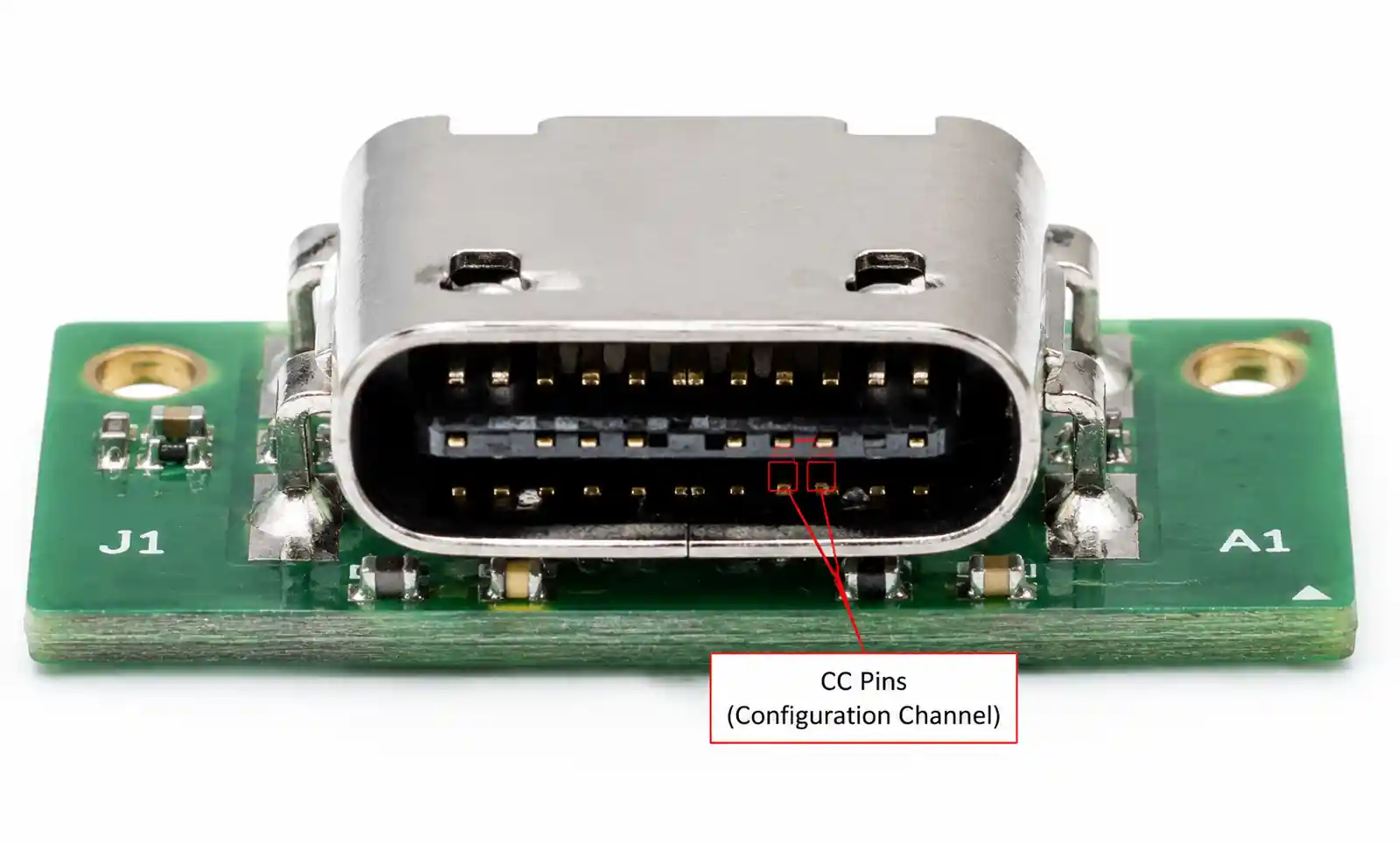
The implementation complexity is real, though. You'll need a PD controller IC (Texas Instruments, STMicroelectronics, and others make them), proper USB-C connector with CC pins wired correctly, and you'll need to pass USB-IF compliance testing if you want to use the USB logo. That adds several dollars to your BOM and weeks to your development schedule for testing and certification. You also need to handle the case where a user plugs in a USB-C cable that doesn't support PD—your device should fall back to 5V/3A operation gracefully.
Proprietary connectors make sense in a few specific scenarios. If you need more than 100W (the limit of standard USB-C PD), you'll need something custom or a higher-power standard like the USB PD Extended Power Range. If you need specific mechanical features—say, a connector that can't be plugged in backwards, or one with auxiliary pins for communication—a proprietary design might be the answer. And if you're in a market where controlling the accessory ecosystem has business value, proprietary connectors let you do that.
| Feature | DC Barrel Jack | USB-C with PD | Proprietary Connector |
|---|---|---|---|
| Max power (typical) | Up to 150W (large connectors) | 100W (240W with EPR) | Unlimited (design-dependent) |
| Implementation cost | Very low ($0.30-$1.00) | Medium ($3-$8 including PD controller) | High (NRE for tooling, typically $5-$20 per connector) |
| Adapter availability | High for common sizes, low for unusual sizes | Very high, growing rapidly | Low (must supply or specify) |
| Polarity protection | Must design into circuit | Inherent (USB-C is reversible) | Design-dependent |
| Voltage flexibility | Fixed (adapter-dependent) | Negotiated (5V/9V/15V/20V steps) | Design-dependent |
| EMI/ESD robustness | Good (simple, no high-speed signals) | Moderate (needs careful layout for CC pins) | Design-dependent |
| Supply chain risk | Low (multiple sources) | Low (standard part) | High (single source unless licensed) |
When I'm doing initial architecture work, I usually lean toward USB-C PD if the power requirements fit within 60W and the product is consumer-facing. For industrial equipment or anything above 60W, barrel jacks still make more sense unless there's a compelling reason to go proprietary.
5. Common Design Mistakes and How to Avoid Them
I've reviewed enough hardware designs to see the same connector-related mistakes come up repeatedly. Most of them are avoidable if you know what to look for.
Undersizing the connector. The most common mistake is picking a connector that's just barely adequate for the nominal current draw. If your device pulls 4.5A and you select a 5A connector, you're asking for trouble. Temperature rise due to contact resistance will push the connector beyond its ratings, accelerating oxidation and increasing contact resistance further. It's a failure mode that might not show up in initial testing but will appear after a few months in the field. Always derate by at least 20%, and test at elevated temperature with worst-case current draw.
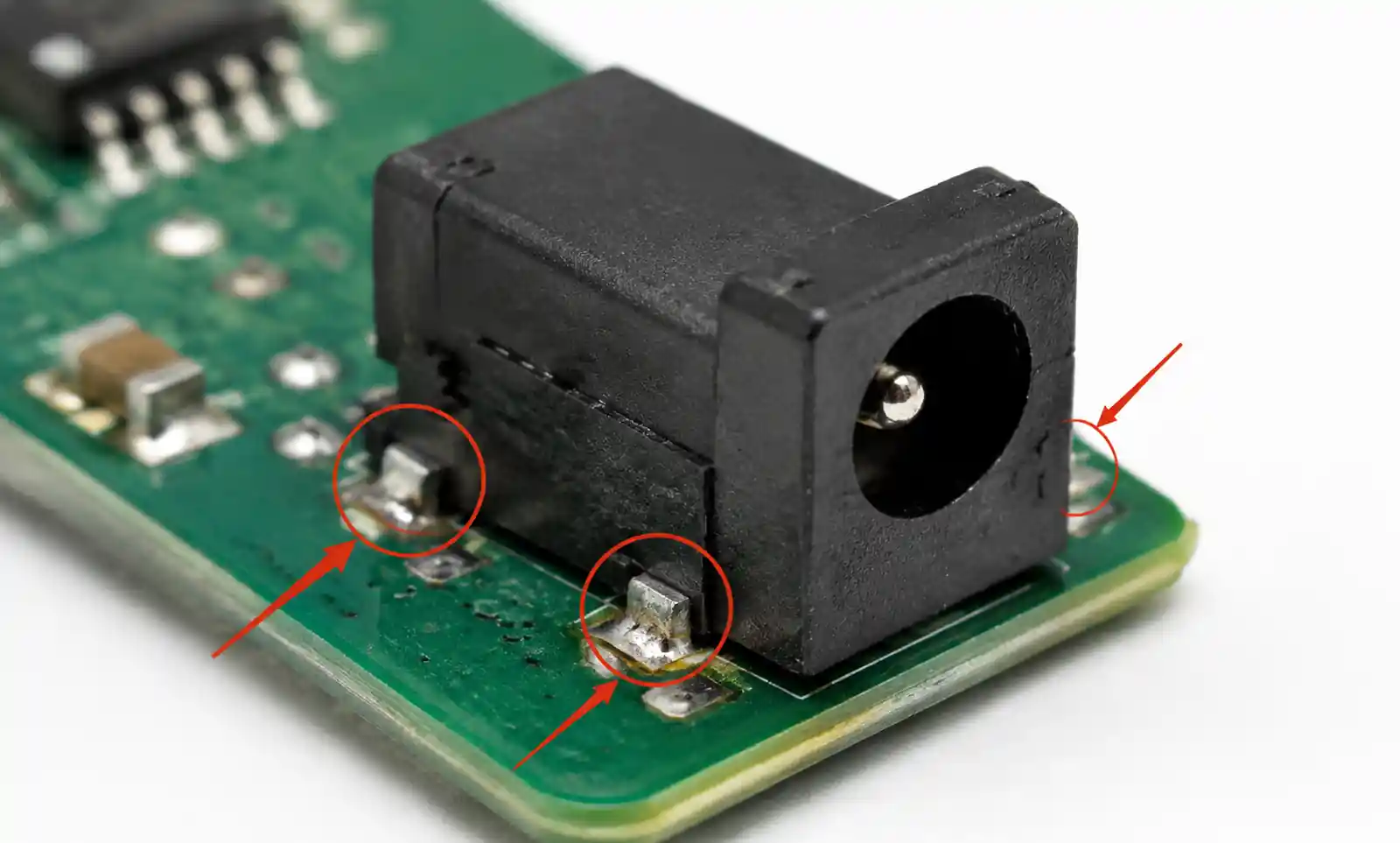
Ignoring mechanical stress. Connectors are often the weakest mechanical point on your PCB. Surface-mount barrel jacks, in particular, can tear off the board if subjected to lateral cable strain. If you're using SMT connectors, design strain relief into your enclosure or use a right-angle connector with the cable entry parallel to the PCB. Through-hole connectors are more robust but require more board space and add assembly cost. For any connector, think about what happens when a user trips over the cable or yanks it at an angle.
Failing to plan for obsolescence. Connectors have long product lifecycles, but not infinite ones. If you're designing a product with a 10-year service life, verify that your connector isn't already flagged as NRND (not recommended for new designs) by the manufacturer. Check whether there are second sources or compatible alternatives. I've seen products go into expensive redesigns because a connector went obsolete and the new version had slightly different mounting holes.
Poor PCB layout around the connector. For high-current connectors, trace width and copper weight matter. A 5A current requires at least 50 mils of trace width with 1oz copper, and that's for a short run with acceptable temperature rise. If you're routing the power to a regulator some distance away, you'll need wider traces or heavier copper. Also watch out for ground loops—the connector ground should tie directly to your ground plane with a short, low-inductance connection.
Neglecting ESD protection. Power connectors are entry points for electrostatic discharge and transient overvoltages. Even if your adapter is regulated, the cable can pick up ESD strikes or transients from the environment. At minimum, add a TVS diode close to the connector to clamp overvoltages. For more robust protection, use a multi-stage approach with a series resistor or ferrite bead followed by bulk capacitance and a TVS diode. This is especially important if your product will be used in industrial environments with heavy machinery or in dry climates where static buildup is common.
Not testing at temperature extremes. Contact resistance increases with temperature, and most connectors see significant heating at their rated current. If your product operates in a hot environment or inside an enclosure with limited airflow, test the connector temperature at maximum current draw and ambient temperature. I use a thermocouple right at the connector body during validation testing. If you're seeing more than 40°C rise above ambient, you need a higher-rated connector or better cooling.
6. Supply Chain Considerations
Even the best connector choice doesn't help if you can't actually procure it when you need to build units. Supply chain factors deserve consideration during the selection process, not after you've committed to a design.
Lead times and availability vary dramatically between connector types. Common DC barrel jacks from major distributors (Digi-Key, Mouser, Arrow) typically stock thousands of units with same-day shipping. Unusual sizes or proprietary connectors might have 12-week lead times and minimum order quantities in the thousands. Check current stock levels at multiple distributors before finalizing your selection, and look at the historical availability—if a part shows frequent out-of-stock periods, that's a red flag.
Second sourcing is critical for any product you'll manufacture in volume. Even if you've selected a specific connector from a specific manufacturer, identify compatible alternatives from at least one other supplier. For common barrel jack sizes, this is straightforward—dozens of manufacturers make 5.5mm x 2.1mm jacks with nearly identical footprints. For USB-C connectors, verify that your PCB layout works with connectors from multiple suppliers, since pin assignments and mechanical details can vary slightly.
| Supply Chain Factor | What to Check | Red Flags | Mitigation Strategy |
|---|---|---|---|
| Lead time | Current lead time at major distributors | >12 weeks, or highly variable week-to-week | Stock buffer inventory, identify second source |
| Stock depth | Units available at 3+ distributors | <1000 units total, single-source inventory | Choose more common variant, qualify alternative |
| Price stability | Price history over 6-12 months | >20% price swings, frequent allocation | Long-term pricing agreement, design in cost margin |
| Manufacturer status | Product lifecycle stage, NRND flags | Active production <3 years, NRND notice | Choose newer connector family, qualify replacement |
| MOQ requirements | Minimum order quantity from manufacturer | >5000 units for low-volume product | Buy through distribution, negotiate MOQ waiver |
Price trends matter if you're designing for cost-sensitive markets. USB-C connectors have dropped significantly in price over the past few years as volumes have increased, and that trend will likely continue. Barrel jacks are already commodity-priced and unlikely to see major price reductions. If your product will be in production for multiple years, factor in probable price evolution when calculating margin.
Regional availability can be an issue if you're manufacturing in Asia but selling primarily in North America or Europe. Verify that your connector choice is available from distributors in your manufacturing region. Some Chinese connector manufacturers produce parts that are readily available in Shenzhen but have limited availability or long lead times in the US. Conversely, some Western manufacturers have better North American distribution than Asian distribution.
Counterfeit risk is lower for connectors than for active components, but it exists. This is primarily a concern with brand-name proprietary connectors that command price premiums. If you're sourcing through brokers or gray-market channels, inspect incoming parts carefully. Mechanical dimensions, plating quality, and contact spring tension are the easiest things to verify without specialized equipment.
7. FAQ
What's the difference between 5.5mm x 2.1mm and 5.5mm x 2.5mm barrel connectors?
The difference is the inner pin diameter—2.1mm versus 2.5mm. They're not interchangeable. A 2.5mm plug will fit loosely in a 2.1mm jack and make unreliable contact, while a 2.1mm plug will not mate properly with a 2.5mm jack. Always verify both dimensions when selecting components or adapters. In practice, 2.1mm is more common in consumer electronics, while 2.5mm shows up in some industrial equipment and older designs.
Can I use a USB-C connector without implementing Power Delivery?
Yes, but you're limited to 5V at up to 3A (15W) using the USB-C default power profile. Your device must present the correct termination on the CC pins to tell the source it's allowed to supply more than 0.5A. Without a PD controller, you can't request higher voltages. This approach works fine for low-power devices, but if you need more than 15W, you'll need to implement PD or use a different connector type.
How do I prevent damage if someone plugs in the wrong adapter?
Add protection circuitry. At minimum, use a reverse-polarity protection diode or MOSFET. For overvoltage protection, add a TVS diode or crowbar circuit that shorts the input if voltage exceeds a safe threshold. For overcurrent protection, use a PTC fuse or current-limiting IC. These measures add cost but prevent expensive field failures. Consider the failure modes—would you rather have a $2 protection circuit fail, or a $200 board?
What current rating do I need for a device that draws 3.5A?
At minimum, select a connector rated for 5A (3.5A times 1.4 derating factor). Better yet, go to the next standard rating up, which might be 7A or 8A depending on the connector family. The extra margin accounts for contact resistance, temperature rise, and aging effects. Testing at your maximum current draw will tell you whether the connector temperature rise is acceptable—aim for less than 40°C above ambient at full load.
Are right-angle connectors as reliable as straight connectors?
Generally yes, if they're designed properly. Right-angle connectors see different mechanical stress patterns—less pull-out force but more lateral bending stress on the cable. For through-hole connectors, the mechanical strength is similar. For SMT right-angle connectors, make sure they have adequate board support and consider adding mechanical strain relief. I've used right-angle connectors in high-vibration environments without issues, but they need proper mounting.
What's the typical lifetime of a DC barrel connector?
Most are rated for 5,000 to 10,000 insertion cycles, which translates to years of service in typical applications. A device that's plugged in once and left connected will see minimal wear. A device that's plugged and unplugged daily might see 5,000 cycles in 15 years. Contact oxidation and mechanical wear are the limiting factors. If your application has higher cycle count requirements, look for connectors specifically rated for extended cycle life or consider USB-C, which typically has better cycle ratings.
Do I need a locking connector for automotive applications?
It depends on the installation and vibration environment. For dash-mounted equipment, a standard barrel jack with reasonable retention force is usually adequate. For under-hood applications or anywhere subject to significant vibration, a locking connector (threaded or bayonet-style) prevents disconnection from vibration. Even with locking connectors, proper cable strain relief is essential. Check your application's vibration specifications and test accordingly.
Can I mix different connector sizes in a product line?
You can, but it complicates your adapter inventory and increases support costs. If you have products at different power levels, it's tempting to use different connector sizes. The downside is that customers might try to use the wrong adapter, potentially damaging the device. If you do use different connectors, make them physically incompatible so wrong adapters won't fit, and clearly label both the device and adapter with power requirements.
8. Conclusion
Selecting the right power adapter connector comes down to balancing electrical requirements, mechanical constraints, cost, and supply chain realities. For most new designs under 60W, USB-C with Power Delivery offers the best combination of performance and ecosystem compatibility. For higher power applications or industrial equipment, traditional barrel jacks remain a solid choice with proven reliability and excellent supply chain depth.
Whichever direction you go, size the connector with adequate margin, protect against common failure modes with appropriate circuitry, and verify supply chain availability before committing to production. Test your connector choice under worst-case conditions—maximum current, elevated temperature, repeated insertion cycles—to catch problems in development rather than in the field.
If you're working on a design and need to dig deeper into specific connector datasheets or application notes, most major manufacturers (CUI Devices, TE Connectivity, Molex) maintain comprehensive technical libraries. For USB-C implementations, the USB-IF provides detailed specifications and compliance testing information. And if you're uncertain about your connector selection for a critical application, consulting with your connector manufacturer's field applications engineer can save you from expensive mistakes down the road.