



How to Reduce Electronic Component Procurement Costs: 2024 B2B Strategy Guide
The global semiconductor shortage may have stabilized, but the hangover remains. B2B hardware procurement managers, supply chain directors, and NPI (New Product Introduction) engineers are now facing a new mandate: drastically compress the Bill of Materials (BOM) costs without sacrificing quality or introducing catastrophic supply chain risks. Relying on outdated Excel spreadsheets and manual supplier negotiations is no longer viable. In this guide, you will learn how to leverage Design for Procurement (DfP), automate real-time sourcing via APIs, and navigate the delicate balance between cost reduction and strict compliance (RoHS, REACH).
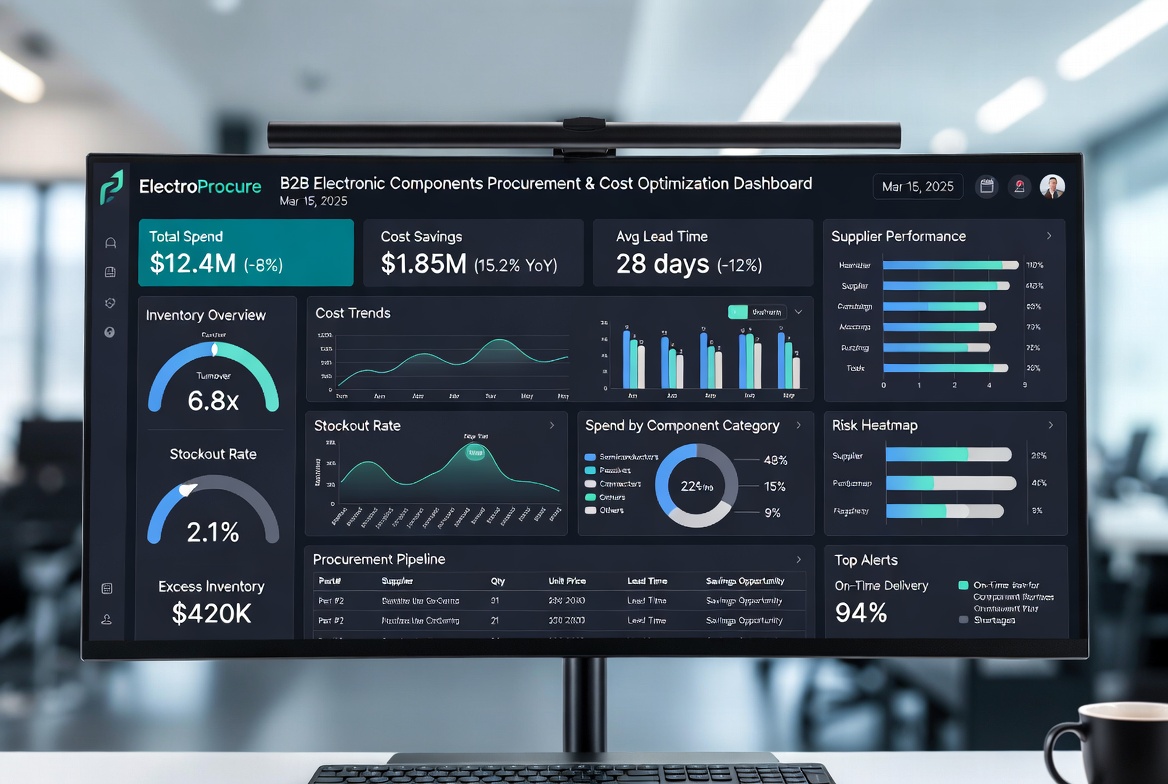
Table of Contents
- 1. Understanding BOM Cost Reduction: The Basics
- 2. Core Concepts Simplified
- 3. Step-by-Step Guide: Implementing a Cost-Reduction Engine
- 4. Expert Tips & Common Pitfalls to Avoid
- 5. Conclusion & Final Thoughts
1. Understanding BOM Cost Reduction: The Basics
For hardware startups and established enterprise manufacturers in North America and Europe, the procurement landscape has fundamentally shifted. The goal is no longer just "securing inventory at any cost" as it was during the peak chip crisis. Today, it is about systematic cost optimization driven by data transparency.
However, reducing electronic component procurement costs is a high-stakes game. A single counterfeit micro-controller or a non-compliant capacitor can halt your entire production line, trigger massive recalls, and destroy your brand's credibility. Decision-makers must navigate a complex web of compliance regulations, including RoHS (Restriction of Hazardous Substances) and REACH (Registration, Evaluation, Authorisation and Restriction of Chemicals).
Recent Supply Chain Dive reports on the global semiconductor inventory glut highlight a critical opportunity: we are currently in a buyer's market for many standard components. Yet, companies failing to modernize their procurement workflows are leaving millions of dollars on the table due to hidden logistics costs, high Minimum Order Quantities (MOQs), and vendor lock-in. To survive and thrive, your procurement strategy must transition from reactive purchasing to proactive, engineering-integrated cost management.
2. Core Concepts Simplified
To effectively reduce costs, procurement teams and hardware engineers must speak the same language. Here are the core strategies, translated into plain English:
Design for Procurement (DfP) & Cross-Referencing
Think of electronic components like medication. You do not always need the expensive, brand-name drug if there is a generic equivalent with the exact same active ingredients. Design for Procurement (DfP) means identifying 2-3 "drop-in replacements" (alternative chips that share the same footprint, pinout, and electrical characteristics) during the initial PCB design phase. If your engineers only specify one premium brand (e.g., Texas Instruments), your procurement team has zero negotiation leverage. Cross-referencing gives you the power of choice.
API Integration for Real-Time Sourcing
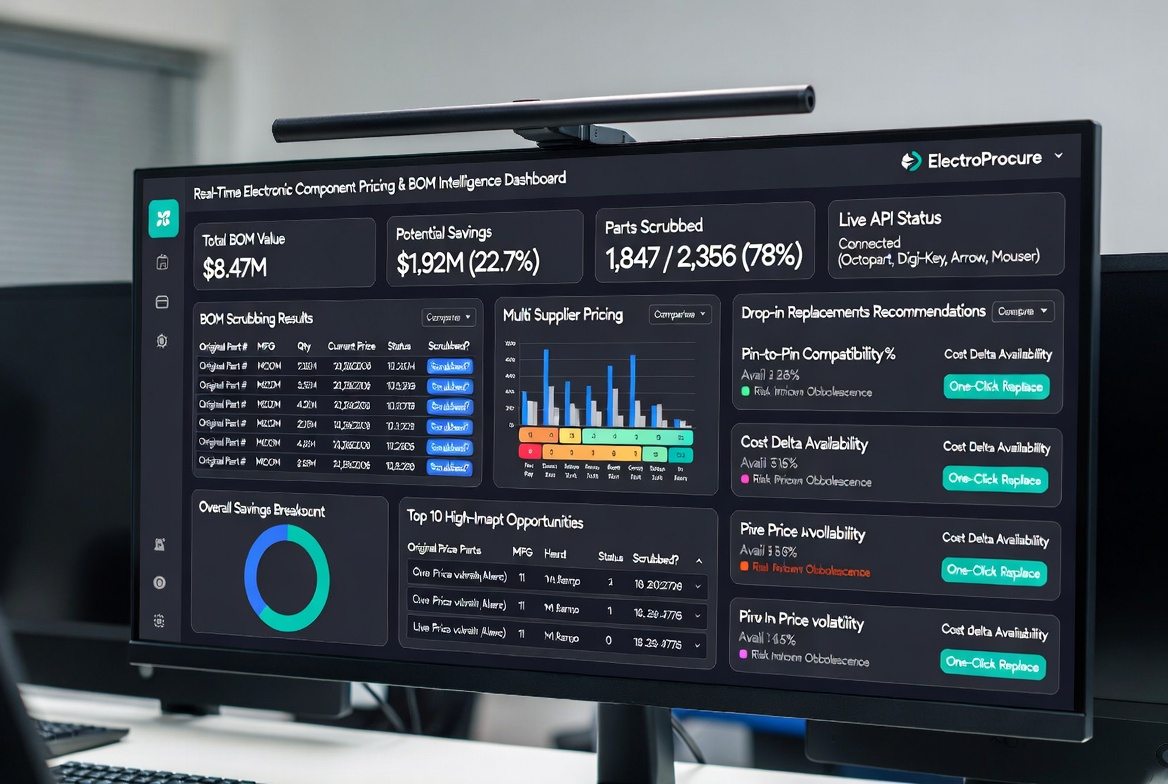
Imagine having a dedicated "Skyscanner for microchips." Instead of a buyer spending hours manually checking Digi-Key, Mouser, or Arrow for prices, API Integration connects your ERP (Enterprise Resource Planning) system directly to global distributors. It automatically fetches real-time pricing, stock levels, and lead times across dozens of authorized vendors.
Supplier Consolidation & Vendor Managed Inventory (VMI)
Rather than buying from 50 different vendors, Supplier Consolidation means funneling your purchasing volume to a handful of strategic partners to unlock VIP volume discounts. Vendor Managed Inventory (VMI) takes this a step further: it is like having a hotel minibar in your warehouse. The supplier physically stores the components at your facility, but you only pay for them the moment you pull them off the shelf for production. This shifts the warehousing costs and cash-flow burden back to the supplier.
BOM Scrubbing
This is a regular "health check-up" for your Bill of Materials. BOM Scrubbing involves scanning your parts list to weed out overpriced, obsolete, or out-of-stock components, replacing them with modern, cost-effective alternatives.
Strategic Procurement Comparison
| Feature | Traditional Procurement | Modern Automated Procurement (API + DfP) |
|---|---|---|
| Sourcing Method | Manual Excel sheets, phone calls, web portals. | Automated API queries directly integrated into ERP. |
| Component Selection | Single-source dependency (Vendor Lock-in). | Multi-source strategy with pre-approved drop-in replacements. |
| Price Negotiation | Volume-based haggling at the end of the design cycle. | Real-time global price arbitrage and automated BOM scrubbing. |
| Risk Management | Reactive (scrambling when a part goes out of stock). | Proactive (predictive EOL alerts and lifecycle management). |
| Inventory Model | Just-in-Case (JIC) - hoarding expensive safety stock. | Vendor Managed Inventory (VMI) - pay as you consume. |
3. Step-by-Step Guide: Implementing a Cost-Reduction Engine
Implementing these strategies requires a bridge between your engineering and supply chain teams. Here is how to execute a data-driven procurement overhaul.
Step 1: Institutionalize "Design for Procurement" (DfP)
The most expensive mistake a company can make happens in the CAD software, not the purchasing department. Frequent discussions on r/TheAmpHour & r/AskElectronics reveal the deep frustration engineers face when forced to redesign a board because a single, single-sourced component became unavailable or too expensive.
- Mandate Alternates: Require NPI engineers to list at least two Form-Fit-Function (FFF) alternatives for every passive component and standard active component on the BOM.
- Standardize Footprints: Avoid proprietary chip packages. Design PCBs using standard IPC footprints so that switching suppliers does not require a board re-spin.
Step 2: Automate Sourcing with API Integration
Manual BOM quoting is dead. By integrating a pricing API, your team can evaluate thousands of parts in seconds. As highlighted by Octopart / Nexar Blog insights, API automation drastically reduces the hidden labor costs associated with procurement.
Below is a practical Python script template using the Nexar/Octopart GraphQL API. This script allows your system to automatically query the global market for a specific Microprocessor (e.g., STM32) and return real-time inventory and pricing data.
Execute the API request
response = requests.post(ENDPOINT, json={'query': query, 'variables': variables}, headers=headers)
4. Expert Tips & Common Pitfalls to Avoid
Even with the best tools, procurement teams can fall into traps that cost more than they save. Here is real-world advice gathered from industry veterans.
Pitfall 1: The Grey Market Trap (Independent Brokers)
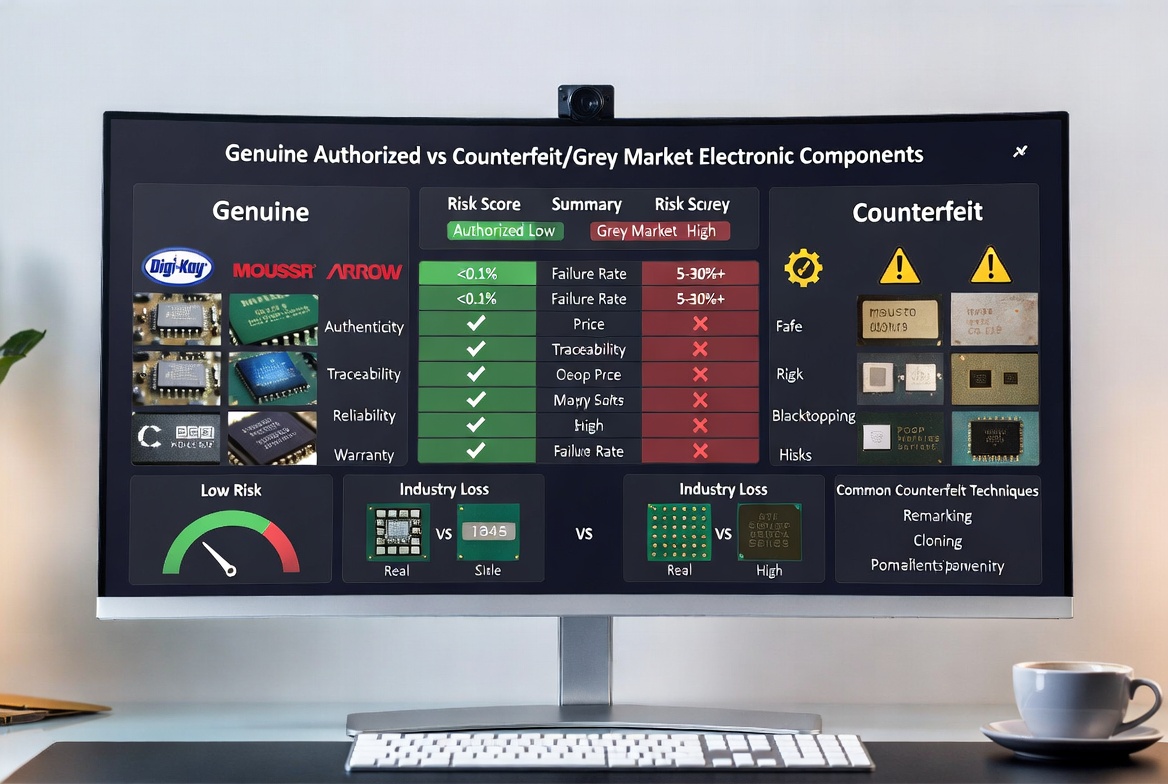
When a critical part is out of stock at authorized distributors (franchised lines), buyers often turn to the Grey Market—unauthorized independent brokers. While you might find obsolete parts here, the risk of buying Counterfeit components is astronomical.
As frequently debated on the EEVblog Forum, SMEs (Small and Medium Enterprises) are particularly vulnerable to "blacktopped" chips (old chips sanded down and laser-etched with new part numbers) or empty packages containing no silicon die.
- Expert Tip: If you absolutely must use an independent broker, insist on a strict testing protocol. Require X-ray inspection, decapsulation, and solderability testing reports before accepting the shipment. The cost of testing is infinitely cheaper than a product recall.
Pitfall 2: Ignoring EOL (End of Life) Alerts
Buying electronic components is like buying a car; you do not want a model that the manufacturer is discontinuing tomorrow. When a factory issues an EOL notice, they usually offer a LTB (Last Time Buy) window.
- Expert Tip: Integrate Lifecycle Management into your BOM Scrubbing process. If a $0.05 resistor goes EOL and you miss the LTB, you may have to redesign a $500 circuit board just to accommodate a different footprint. Always monitor the lifecycle status (Active, NRND - Not Recommended for New Designs, EOL) via your API tools.
Pitfall 3: Over-Negotiating on "C-Class" Items
Components are generally categorized by the Pareto principle (80/20 rule). "A-Class" items (processors, FPGAs, custom displays) make up 80% of the cost but 20% of the volume. "C-Class" items (resistors, capacitors, standard headers) make up 20% of the cost but 80% of the volume.
- Expert Tip: Stop wasting labor hours negotiating the price of a 1-cent resistor. Automate the procurement of C-Class items completely using VMI or API auto-purchasing, and focus your human negotiation power entirely on the high-value A-Class components.
5. Conclusion & Final Thoughts
Reducing electronic component procurement costs in today's volatile market requires far more than aggressive negotiation tactics. It demands a systemic, automated approach that begins in the engineering department and extends through your ERP system.
By enforcing Design for Procurement (DfP) to eliminate vendor lock-in, leveraging API integrations for real-time BOM scrubbing, and strictly avoiding the false economy of untested grey market brokers, B2B organizations can build a resilient, cost-optimized supply chain.
Frequently Asked Questions (FAQ)
Q1: What is Design for Procurement (DfP)? A: DfP is a strategy where engineers identify 2-3 pin-to-pin compatible drop-in replacements for each component during the initial PCB design phase. This gives procurement teams negotiation leverage and prevents vendor lock-in.
Q2: How does API integration reduce procurement costs? A: API integration connects your ERP system directly to distributor databases (Digi-Key, Mouser, Arrow), automatically fetching real-time pricing, stock levels, and lead times. This eliminates manual quoting labor and enables instant global price arbitrage.
Q3: What is Vendor Managed Inventory (VMI)? A: VMI shifts inventory ownership to your supplier. They store components at your facility, but you only pay when you pull parts for production. This reduces warehousing costs, improves cash flow, and eliminates excess stock risk.
Q4: What is BOM Scrubbing and how often should I do it? A: BOM Scrubbing is a regular "health check" that scans your parts list for overpriced, obsolete, or out-of-stock components. Perform it quarterly for active products and before every design review for new projects.
Q5: Is the grey market safe for sourcing EOL components? A: No—grey market brokers carry extreme counterfeit risks (blacktopped chips, empty packages, recycled e-waste). If unavoidable, demand X-ray inspection, decapsulation testing, and CoC traceability documentation before accepting any shipment.
Q6: Should I negotiate prices on every component? A: No. Focus human negotiation on A-Class items (processors, FPGAs, displays) that drive 80% of BOM cost. Automate C-Class procurement (resistors, capacitors, headers) via VMI or API auto-purchasing to avoid wasting labor on pennies.
Quick Summary: Actionable Takeaways
| Strategic Initiative | Implementation Effort | Cost Reduction Impact | Key Benefit |
|---|---|---|---|
| Design for Procurement (DfP) | High (Requires Engineering Buy-in) | ⭐⭐⭐⭐⭐ | Eliminates vendor lock-in; creates negotiation leverage. |
| API Real-Time Sourcing | Medium (IT/ERP Integration) | ⭐⭐⭐⭐ | Eliminates manual quoting; ensures lowest global price. |
| Supplier Consolidation & VMI | Medium (Contract Negotiation) | ⭐⭐⭐⭐ | Transfers warehousing costs; secures volume discounts. |
| BOM Scrubbing & Lifecycle Mgt | Low (Using Automated Tools) | ⭐⭐⭐ | Prevents expensive board re-spins due to EOL parts. |
Next Steps: Start small. Export your most expensive BOM this week, run it through an API tool like Nexar or Octopart, and identify just three high-cost components that can be replaced with drop-in alternatives. The savings from that single exercise will prove the ROI of modernizing your entire procurement workflow.