



Changeover Switch: Engineering Principles, Types, and Application Design Guide
A changeover switch (transfer switch) is a critical switching device used to safely transfer electrical loads between multiple power sources such as utility mains, generators, or renewable systems. From an engineering perspective, its role extends beyond simple switching—it ensures electrical isolation, prevents backfeeding, maintains phase integrity, and supports system reliability. This article provides a deeper technical analysis of working mechanisms, classification, system integration, and selection criteria, with practical insights for real-world deployment.
Table of Contents
- 1. Fundamentals of Changeover Switch
- 2. Working Principle and Switching Sequence
- 3. Types of Changeover Switch
- 4. Single-Phase vs Three-Phase Systems
- 5. Engineering Applications
- 6. Design Considerations and Selection Criteria
- 7. Advantages and Limitations
- 8. FAQ
1. Fundamentals of Changeover Switch
A changeover switch is an electromechanical or automatic switching device designed to transfer a load between two independent power sources under controlled conditions. Its primary engineering objectives include:
- Electrical Isolation: Ensures no physical or electrical overlap between sources
- Interlocking Mechanism: Prevents simultaneous connection (critical for safety compliance such as IEC 60947-6-1)
- Load Continuity: Minimizes disruption during power transition
- System Protection: Avoids reverse power flow (backfeeding), which can damage equipment and endanger personnel
Unlike circuit breakers, changeover switches do not provide overcurrent protection; they must be integrated with protective devices such as MCCBs or fuses.
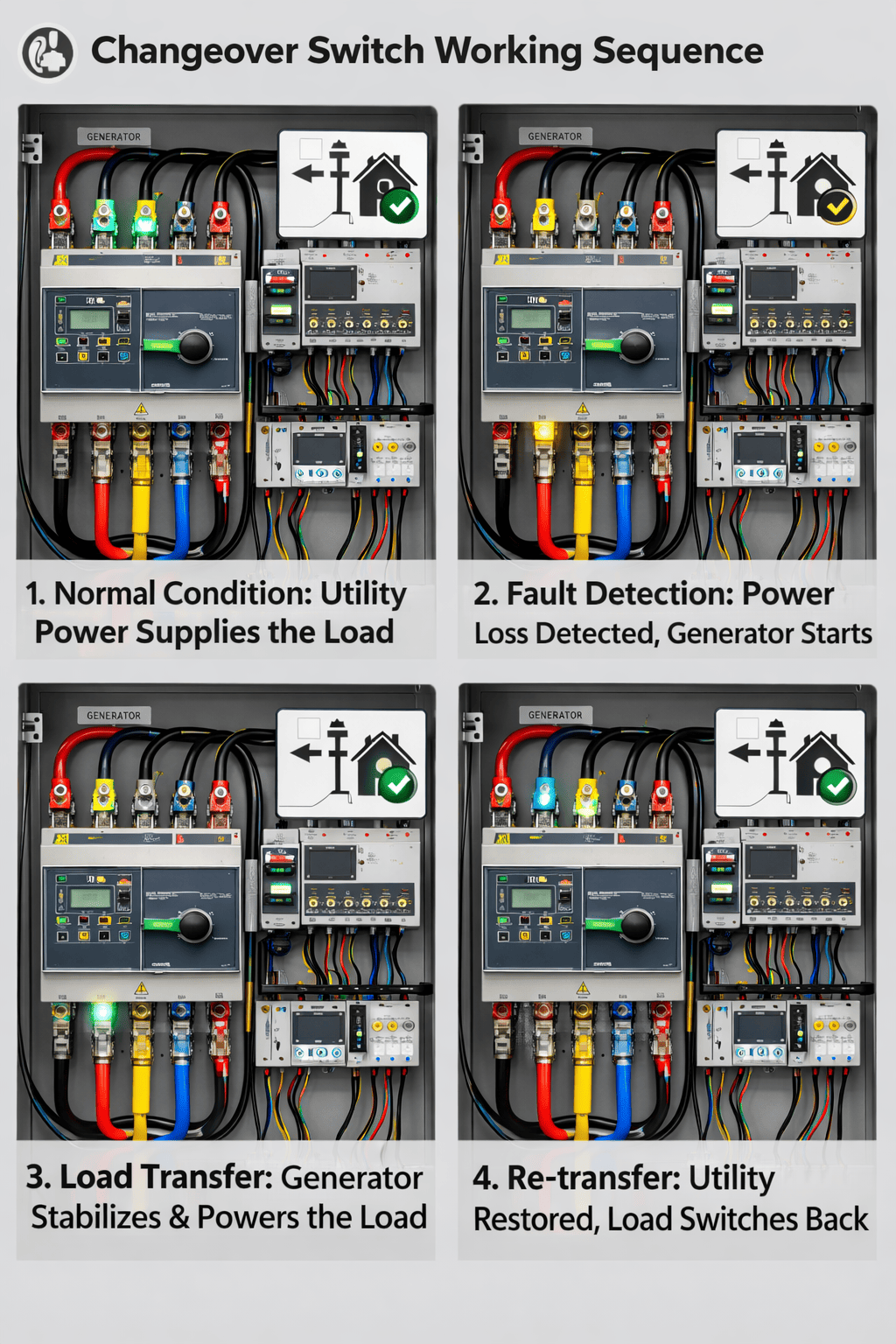
2. Working Principle and Switching Sequence
2.1 Operational Logic
A standard transfer sequence (especially in ATS systems) follows a deterministic control flow:
-
Normal Condition
Utility power supplies the load -
Fault Detection
Voltage, frequency, or phase failure is detected via sensing relays -
Source Disconnection
Utility source is disconnected (open transition) -
Generator Start & Stabilization
Generator reaches rated voltage and frequency -
Load Transfer
Load is connected to generator -
Re-transfer Process
Once utility is restored, load is switched back after synchronization checks
2.2 Transition Types
-
Open Transition (Break-Before-Make)
No overlap between sources; safest and most common -
Closed Transition (Make-Before-Break)
Brief parallel connection; requires synchronization (voltage, phase angle, frequency)
3. Types of Changeover Switch
3.1 Manual Changeover Switch
Characteristics:
- Mechanical interlock operation
- Operator-dependent switching
- Typically used in low-voltage distribution systems
Engineering Insight:
Manual switches are often built using rotary cam mechanisms or knife switches, ensuring physical interlocking without reliance on control logic.
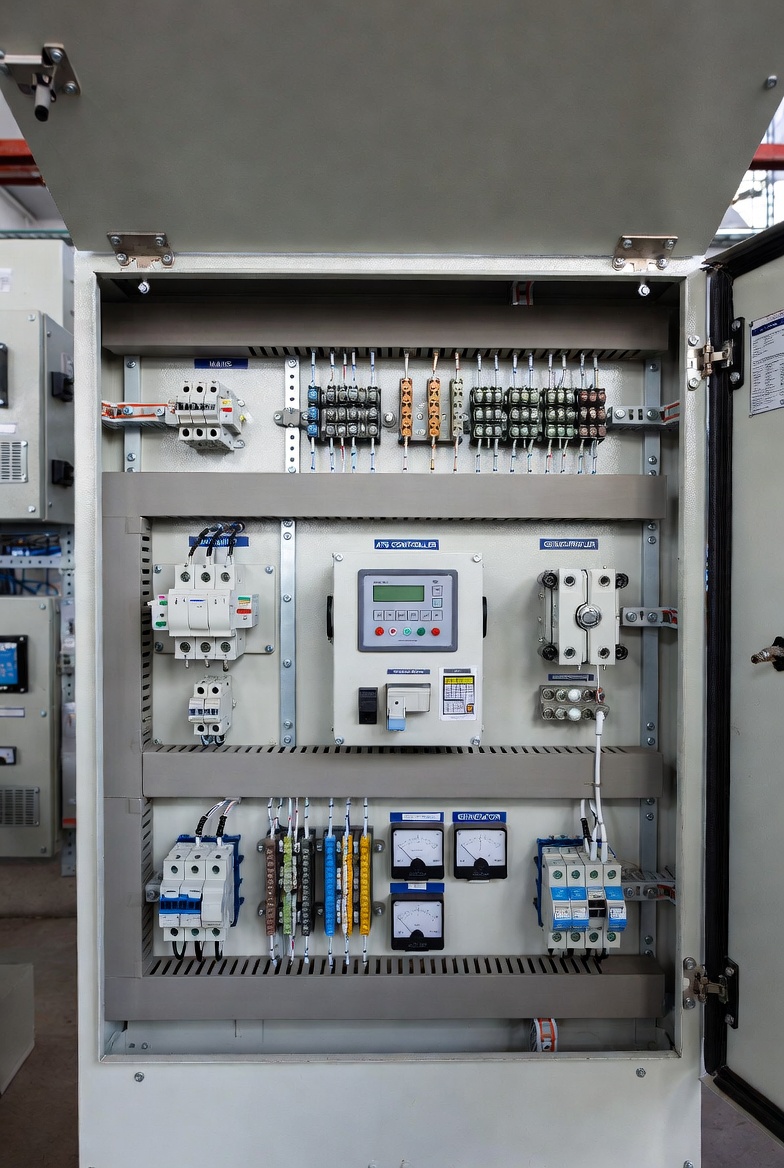
3.2 Automatic Transfer Switch (ATS)
Core Components:
- Controller (PLC or microcontroller-based)
- Voltage/frequency sensing modules
- Motorized switching mechanism
Advanced Features:
- Time delay logic (avoid nuisance switching)
- Generator auto-start interface
- Remote monitoring (Modbus, IoT integration)
3.3 Static Transfer Switch (STS)
- Uses solid-state devices (SCRs/thyristors)
- Transfer time in milliseconds (<4 ms)
- Used in mission-critical loads (data centers, hospitals)
Trade-off: Higher cost and thermal management requirements
4. Single-Phase vs Three-Phase Systems
| Parameter | Single-Phase | Three-Phase |
|---|---|---|
| Voltage Level | 230V typical | 400–415V |
| Conductors | L, N, PE | L1, L2, L3, N, PE |
| Load Type | Residential loads | Industrial motors, HVAC |
| Switching Complexity | Low | High (phase synchronization required) |
| Failure Modes | Voltage drop | Phase loss, imbalance |
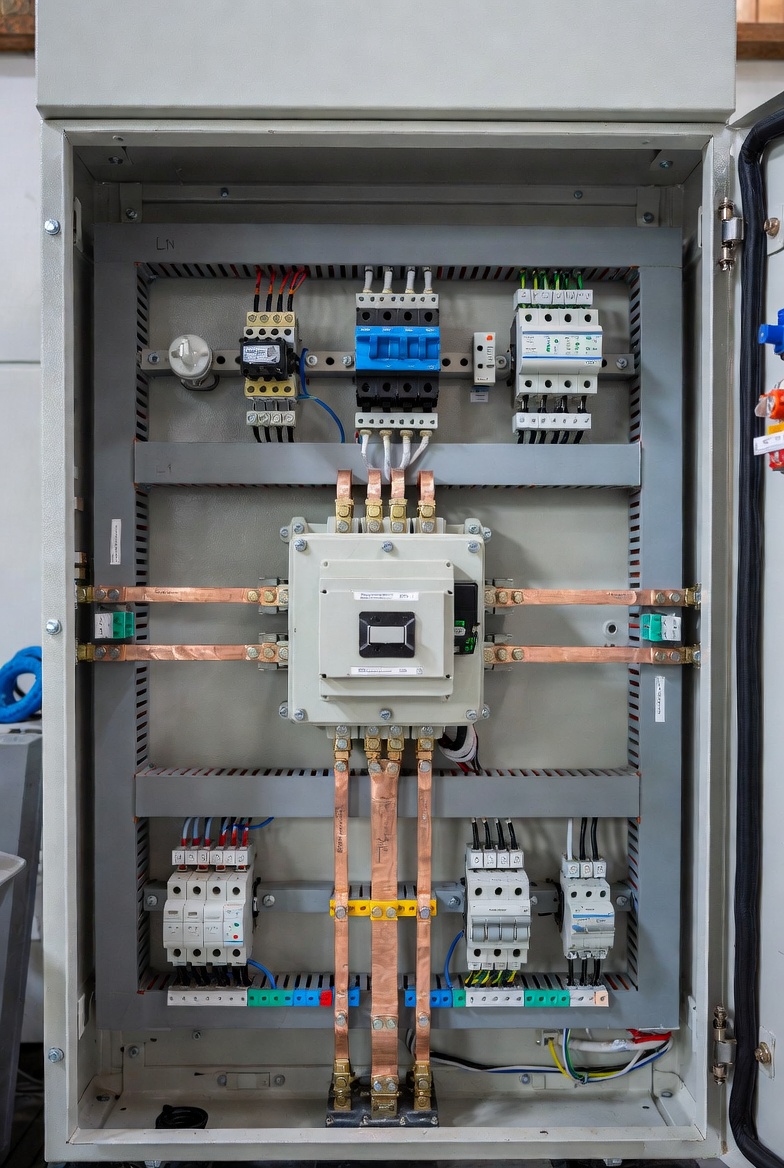
4.1 Three-Phase Engineering Considerations
- Phase Sequence Protection
- Load Balancing
- Neutral Switching (4-pole vs 3-pole design)
- Short-circuit withstand capacity (Icw)
5. Engineering Applications
5.1 Residential Systems
- Backup generator integration
- Solar + grid hybrid switching
5.2 Commercial Infrastructure
- Retail buildings
- Office complexes requiring uptime continuity
5.3 Industrial Systems
- Motor-driven loads (high inrush current considerations)
- Process-critical manufacturing lines
5.4 Critical Facilities
- Hospitals (life-support systems)
- Data centers (often paired with UPS + STS architecture)
6. Design Considerations and Selection Criteria
6.1 Electrical Ratings
- Rated Current (In): Must exceed maximum load current
- Short-Circuit Rating (Icu/Ics)
- Utilization Category (AC-33, AC-23, etc.)
6.2 Mechanical and Functional Design
- Number of Poles (2P, 3P, 4P)
- Switching Mechanism (manual/motorized/static)
- Interlocking Type (mechanical vs electrical)
6.3 System Integration Factors
- Generator compatibility
- Synchronization requirements
- Communication protocols (for smart grids)
7. Advantages and Limitations
Advantages
- Ensures safe source isolation
- Enables continuous power availability
- Protects against backfeeding hazards
- Flexible integration with multi-source systems
Limitations
- Does not replace protective devices
- ATS systems require control logic tuning
- STS introduces thermal and harmonic considerations
8. FAQ
Q1: What is the difference between ATS and STS?
ATS uses mechanical switching with a delay (seconds), while STS uses solid-state devices for near-instant transfer (milliseconds).
Q2: Why is interlocking critical in changeover switches?
Interlocking ensures that two power sources are never connected simultaneously, preventing catastrophic faults and safety hazards.
Q3: When should a 4-pole changeover switch be used?
In systems where the neutral must also be isolated (e.g., generator systems with separate grounding), a 4-pole switch is required.
Q4: Can a changeover switch replace a circuit breaker?
No. A changeover switch handles source transfer only and must be used alongside protective devices like MCCBs or fuses.
Q5: What is the biggest risk in improper installation?
Backfeeding, which can damage equipment and pose serious safety risks to utility workers.
Conclusion
From an engineering standpoint, a changeover switch is not just a switching device but a system-level reliability component. Proper selection, correct installation, and integration with protection and control systems are essential to ensure operational safety, efficiency, and long-term performance.