



How to Verify Electronic Component Authenticity and Avoid Counterfeits
The global counterfeit electronic component market represents a $169 billion annual threat to manufacturers, with failure rates up to 1,000 times higher than genuine parts. For procurement managers and design engineers, one counterfeit IC can trigger product recalls, safety failures, and regulatory penalties that far exceed initial cost savings. This guide provides tested verification methods, inspection techniques, and sourcing strategies that reduce counterfeit risk throughout your supply chain.
At Hitop Tech Limited, we implement rigorous counterfeit detection protocols across our procurement services to ensure every component meets authenticity standards before reaching your production line.
Table of Contents
- Understanding the Counterfeit Component Problem
- Visual Inspection Methods and Red Flags
- Electrical Testing and Performance Verification
- Advanced Authentication Techniques
- Authorized vs Gray Market Sourcing
- FAQ
- Conclusion
1. Understanding the Counterfeit Component Problem
Counterfeit electronic components fall into seven distinct categories, each presenting different detection challenges and failure risks. Understanding these types helps prioritize inspection resources and select appropriate verification methods.
| Counterfeit Type | Description | Failure Risk | Detection Difficulty |
|---|---|---|---|
| Recycled/Used | Removed from scrap boards, remarked as new | High - degraded reliability | Medium - solder residue visible |
| Remarked/Relabeled | Lower-spec parts marked as higher-grade | Critical - performance failure | Low to Medium |
| Cloned/Copied | Reverse-engineered functional replicas | Variable - may initially work | High - functional but no QC |
| Forged Documentation | Genuine parts with fake traceability | Low immediate, high traceability risk | High - needs forensics |
| Defective/Rejected | Factory rejects diverted to market | Critical - failed manufacturer QC | Medium |
| Empty Packages | Correct packaging with wrong/no die | Critical - complete failure | High without decapsulation |
| Tampered Date Codes | Old stock remarked with recent dates | Medium - obsolescence issues | Medium - ink analysis needed |
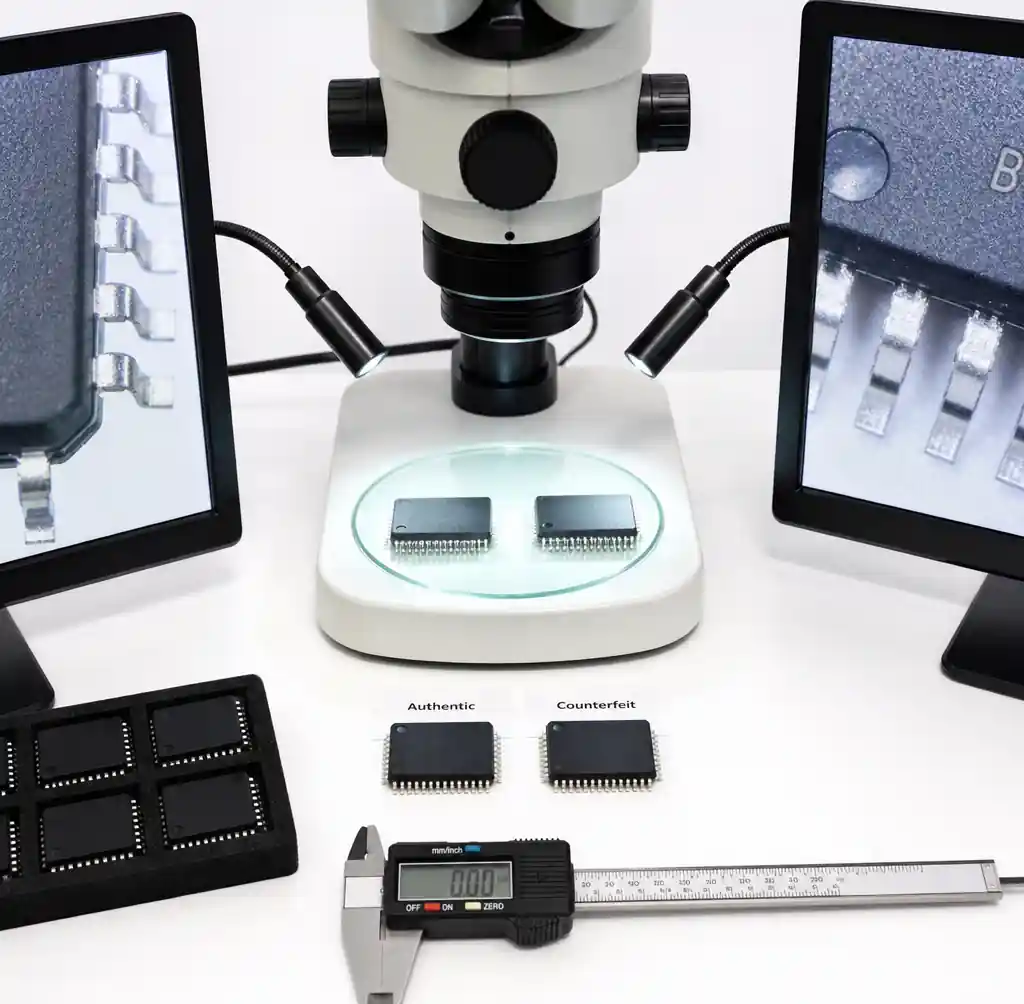 Electronic component counterfeit identification and inspection workspace
The financial impact extends beyond replacement costs. Automotive Tier 1 suppliers report that a single counterfeit power management IC discovered during production can trigger $500K to $2M in line stoppage, rework, and testing expenses. Regional patterns show 67% of reported counterfeits originate from Southeast Asian markets, with secondary hubs in Eastern Europe and African ports.
2. Visual Inspection Methods and Red Flags
Visual inspection remains the first defense line and can identify 40-60% of counterfeits when performed systematically. Effective inspection requires calibrated tools, reference samples, and trained personnel.
Equipment Requirements
Minimum inspection capability requires a stereo microscope with 10x to 40x magnification, adjustable LED lighting, and digital camera for documentation. Advanced inspection adds a USB microscope (200x+) for die pad inspection and handheld XRF analyzer for material verification.
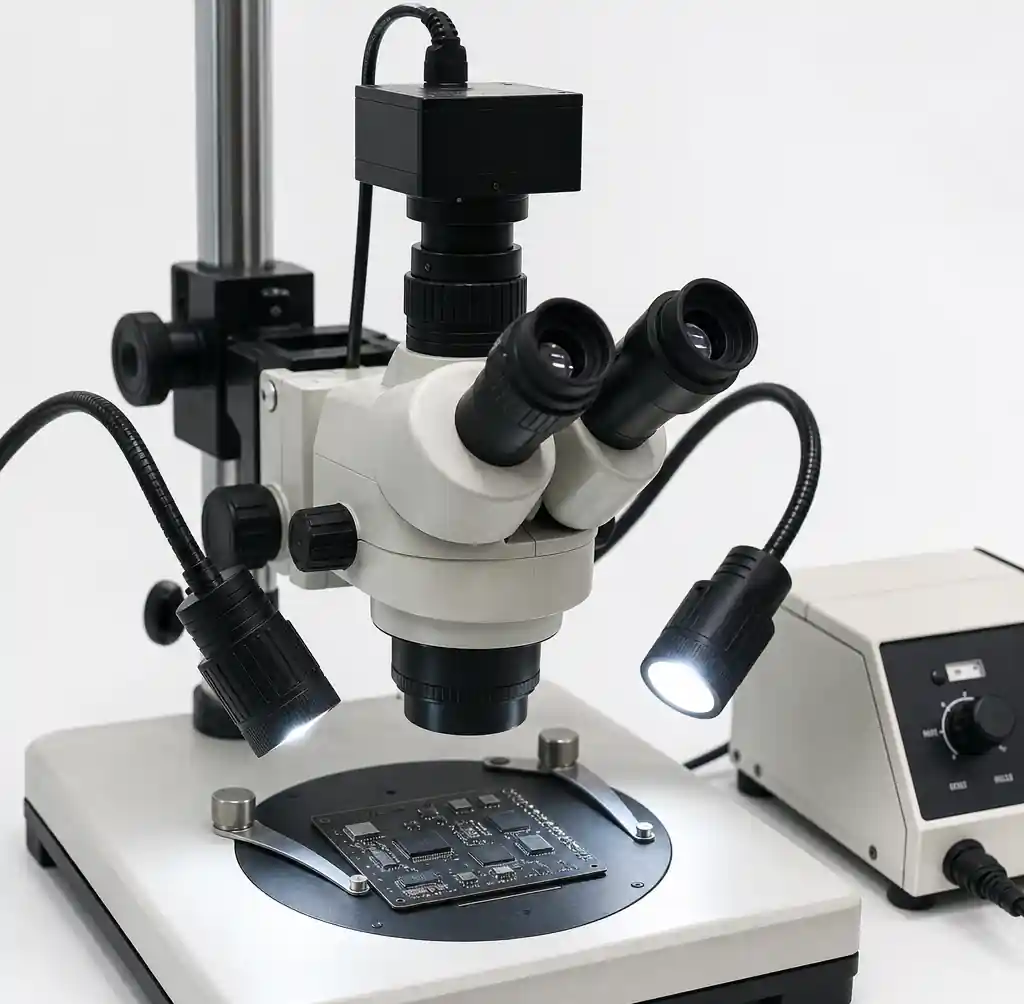 Stereo microscope setup for electronic component visual inspection
Critical Visual Indicators
Inspect markings first. Authentic components have crisp, consistent font depth and alignment. Counterfeiters use laser etching or screen printing to remark parts, leaving telltale signs: offset text positioning, inconsistent character spacing, font mismatches, and incorrect logo proportions.
Package condition reveals handling history. Red flags include solder residue or flux on leads, bent or retinned leads, scratches from chip removal tools, moisture stains, and corrosion. Date code forensics require manufacturer knowledge—verify date codes match manufacturing site capabilities.
| Inspection Point | Authentic Characteristics | Counterfeit Indicators |
|---|---|---|
| Laser markings | Crisp edges, consistent depth | Blurred edges, wrong typeface |
| Package molding | Uniform color, sharp edges | Color mismatch, rough texture |
| Lead frame condition | Uniform plating, straight leads | Discoloration, solder flux, bent leads |
| Die pad exposure | Clean, uniform, correct size | Residue, wrong die size, empty cavity |
| Tape & reel packaging | Sealed manufacturer packaging | Generic packaging, peeling labels |
3. Electrical Testing and Performance Verification
Electrical testing validates functionality and performance parameters, catching sophisticated counterfeits that pass visual inspection. Testing depth scales with component criticality—spot-check testing for low-risk purchases, full parametric validation for safety-critical applications.
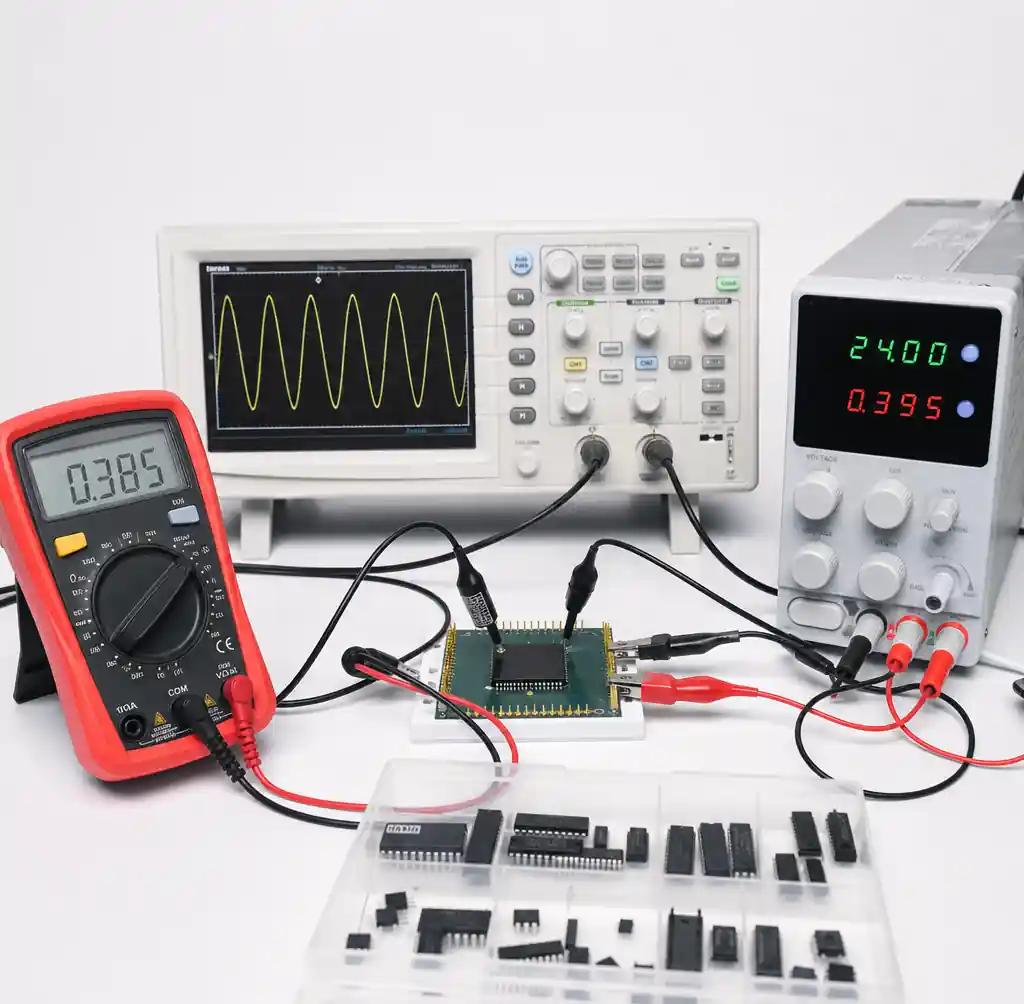 Electrical testing and parametric measurement of electronic components
Basic Functional Testing
Minimum electrical verification confirms the component responds as expected. For digital ICs, apply power within datasheet specifications and verify logic-level response. For analog components, check input/output impedance, voltage references, and quiescent current. Even basic testing catches empty packages and grossly out-of-spec remarked parts.
Parametric Testing for Critical Applications
Safety-critical applications require full parametric testing against datasheet specifications: supply current across voltage range, DC electrical characteristics (VOH, VOL, IIH, IIL), AC timing parameters, and temperature-dependent parameters. Parametric test failures reveal remarked parts most effectively.
| Test Category | Parameters Checked | Failure Indication | Equipment Needed |
|---|---|---|---|
| Power-on verification | Supply current, logic response | Empty package, wrong die | Bench PSU, DMM |
| DC parametrics | VOH, VOL, Vref, Iq | Remarked grade, degraded parts | Parametric tester |
| AC timing | Propagation delay, frequency response | Speed grade remarking | Oscilloscope |
| Temperature performance | Parameters at -40°C to +125°C | Commercial remarked as auto/industrial | Environmental chamber |
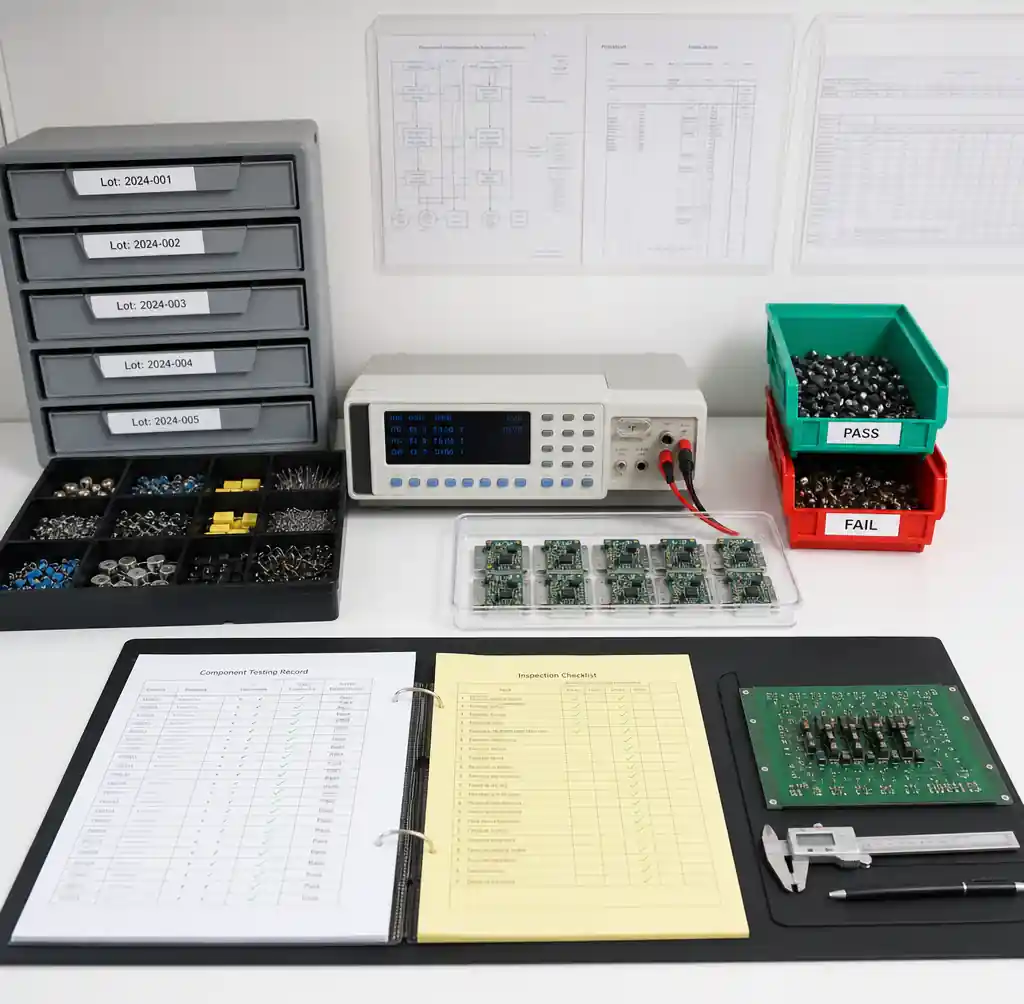 Electronic component sample testing and quality control process
For production quantities, implement sample-based testing using ANSI/ASQ Z1.4 acceptance sampling standards. Critical components warrant 100% electrical screening despite cost. For commercial applications, 10% sample testing provides reasonable confidence while controlling costs.
4. Advanced Authentication Techniques
When visual and electrical testing cannot definitively authenticate components, advanced analytical techniques provide conclusive verification.
X-Ray Fluorescence (XRF) Analysis
XRF spectroscopy measures elemental composition by detecting fluorescent X-rays. For electronic components, XRF verifies lead frame alloy composition and package plating layers match manufacturer specifications. Handheld XRF analyzers cost $20K to $45K but provide non-destructive testing in under 60 seconds. A component marked RoHS-compliant showing 35% lead content is definitively counterfeit.
Decapsulation and Die Inspection
Destructive physical analysis exposes the silicon die for direct inspection. This definitively confirms die marking, size, bond wire configuration, and metallization patterns against manufacturer references.
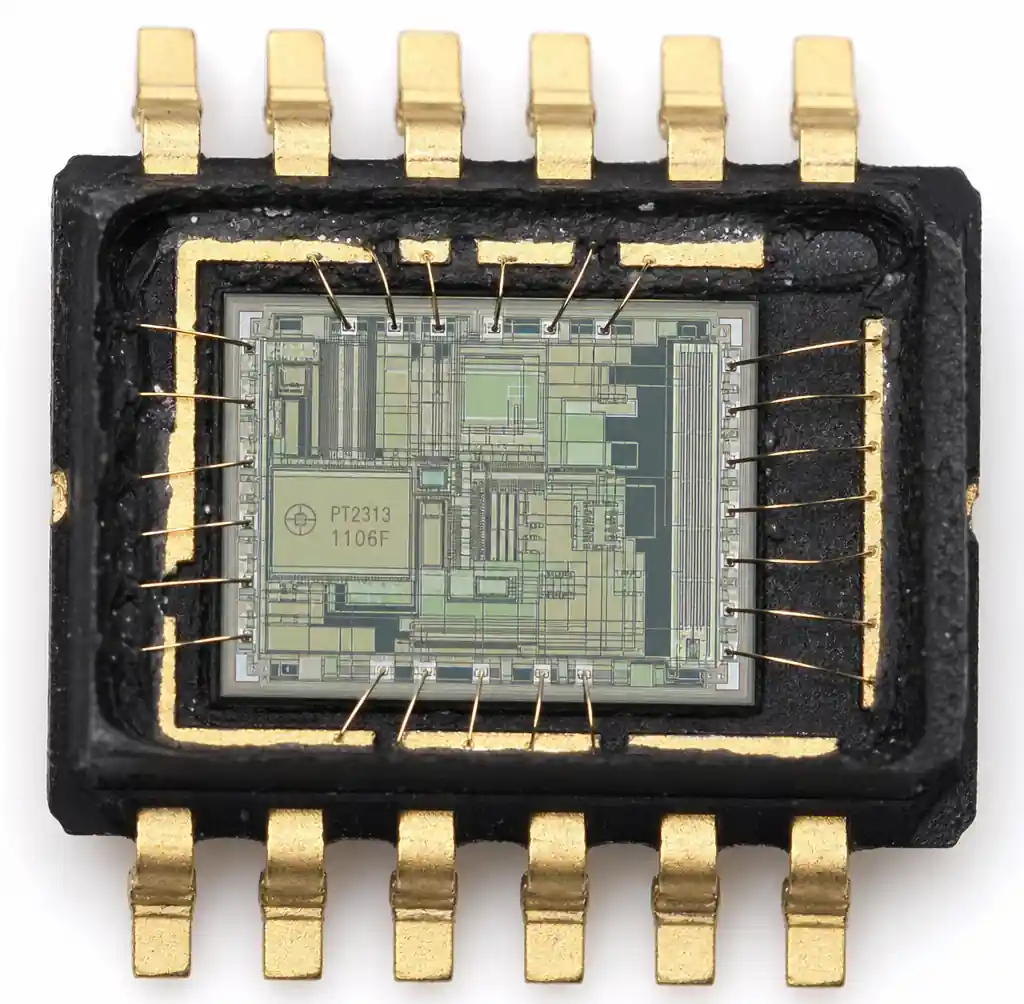 Semiconductor die inspection under metallurgical microscope
Decapsulation uses controlled chemical etching performed in specialized fume hoods. After package removal, inspect the die surface under metallurgical microscope at 100x to 500x magnification. Authentic dies have manufacturer logos, alphanumeric codes, and wafer alignment marks etched during fabrication.
| Scenario | Recommended Test | Justification |
|---|---|---|
| Authorized distributor, established supplier | Visual inspection only | Low risk, cost-optimized |
| Gray market purchase, unfamiliar broker | Visual + electrical screening | Medium risk, affordable verification |
| Safety-critical application | Visual + electrical + XRF | High consequence, regulatory requirement |
| Suspect lot with inconsistencies | Full forensics including decapsulation | Definitive authentication required |
5. Authorized vs Gray Market Sourcing
Supply chain pathway fundamentally determines counterfeit risk. Authorized distributors maintain direct manufacturer relationships with full traceability, while gray market brokers operate in secondary markets with broken chain-of-custody documentation.
Authorized Distribution Channels
Authorized distributors (Arrow, Avnet, Digi-Key, Mouser, TTI) sign formal agreements with component manufacturers granting exclusive distribution rights. These agreements mandate quality system certifications and traceability documentation. Components flow directly from manufacturer to distributor to customer with documented custody.
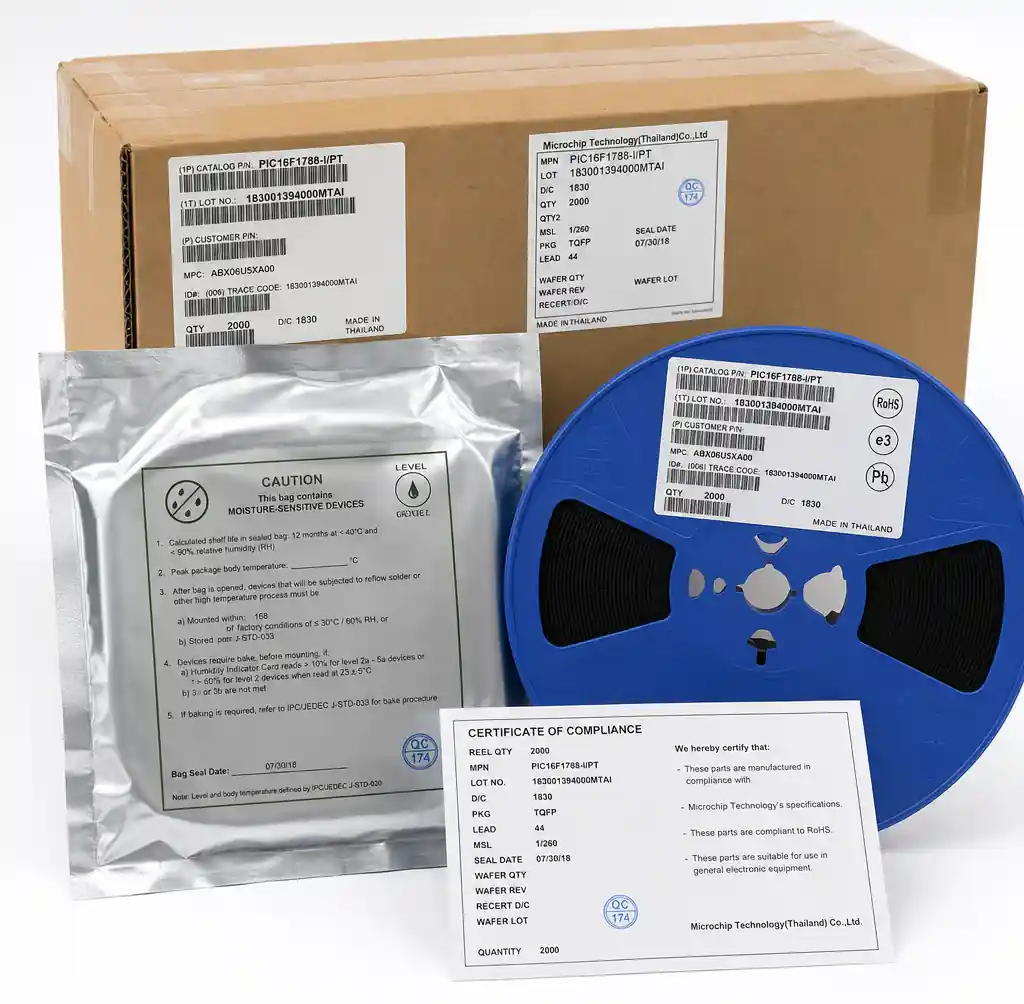 Authorized distributor sealed packaging for electronic components
The authorized channel provides manufacturer-backed warranties, technical support access, and eligibility for qualification programs. Purchase price reflects these services—typically 10-25% higher than gray market alternatives. Counterfeit contamination risk through authorized distributors approaches zero for properly managed inventories.
Gray Market Risk Assessment
Gray market components are legitimate manufacturer products sold outside authorized channels. Sources include excess inventory liquidations, contract manufacturer overbuy, and international arbitrage. While components may be authentic, broken traceability creates counterfeit infiltration opportunities.
| Factor | Authorized Distributor | Reputable Broker | Unknown Gray Market |
|---|---|---|---|
| Manufacturer traceability | Complete, documented | Partial, may have gaps | Usually absent |
| Counterfeit risk | Near-zero | Low to Medium (5-15%) | High (30-60%) |
| Price vs authorized | Baseline | 15-40% lower | 40-70% lower |
| Warranty support | Manufacturer-backed | Limited or none | None |
| Inspection required | Receiving verification | Enhanced visual + electrical | Full forensic testing |
When gray market becomes unavoidable for obsolete components or urgent needs, qualify brokers before purchasing. Request counterfeit detection procedures, certifications (AS6496, IDEA-STD-1010), and customer references. Incoming inspection for gray market purchases warrants 100% visual screening with sample electrical testing per lot. Our supplier consolidation services help reduce exposure by concentrating purchases through verified authorized channels.
6. FAQ
Can counterfeit components pass basic electrical testing?
Yes, sophisticated counterfeits often pass basic functional testing, especially remarked lower-grade parts or recycled components operating within limited specifications. Remarked speed grades may function at nominal rates but fail at maximums. Comprehensive parametric testing across temperature and voltage ranges catches most remarked parts, but only advanced techniques like decapsulation definitively confirm authenticity.
What percentage of electronic components in the supply chain are counterfeit?
Industry estimates place global counterfeit prevalence at 4-8% of total market volume, with significantly higher rates in specific high-risk categories. Obsolete components show 15-25% counterfeit rates, allocated components during shortages reach 20-30%, and gray market purchases from unvetted brokers can exceed 50% in high-risk regions. Authorized distributor channels maintain near-zero counterfeit rates.
What certification should I look for in component brokers?
Independent distributors should hold AS6496 (aerospace counterfeit avoidance) or IDEA-STD-1010 (inspection standard for electrical components) certifications, demonstrating formal counterfeit detection programs. ISO 9001 provides baseline process controls but doesn't specifically address counterfeit detection. AS9120 certification includes counterfeit prevention requirements. Evaluate brokers' actual inspection capabilities through facility tours and sample inspection reports.
How can I verify if a distributor is truly authorized?
Verify authorized distributor status directly with the component manufacturer, not the distributor. Most semiconductor manufacturers publish authorized distributor lists on their websites with geographic regions covered. Contact the manufacturer's sales organization and provide the distributor name and location for confirmation. Manufacturer verification takes 24-48 hours but provides definitive confirmation before committing large orders.
What should I do if I discover counterfeits after production?
Immediately quarantine all remaining suspect components and trace usage through production records to identify affected products. Perform failure risk assessment based on component function—safety-critical applications warrant field recall consideration. Report the incident to ERAI (erai.com) and GIDEP databases to warn other manufacturers. Pursue civil remedies against suppliers through contractual indemnification clauses, and implement enhanced inspection for all future purchases from that supply chain path.
Can I use XRF testing on all component types?
XRF analysis works effectively on leaded components and exposed metal surfaces like lead frames and heat slugs. It cannot analyze internal die composition through thick molding compound, and spatial resolution limits prevent testing on components smaller than 3-5mm. XRF provides limited value for ceramic components and fully-encapsulated modules. For comprehensive authentication, rely on visual inspection, electrical testing, and when necessary, decapsulation.
Are there legal protections if I unknowingly purchase counterfeits?
Legal protections vary by jurisdiction. In the US, purchasing counterfeit components unknowingly through a legitimate supplier doesn't create trademark infringement liability, but you may lose intellectual property protections if your product incorporates counterfeit ICs. Contractual protections—right of return, indemnification clauses, inspection acceptance terms—provide civil remedies. For safety-critical applications, maintain comprehensive documentation of your counterfeit prevention program to demonstrate due diligence.
7. Conclusion
Counterfeit electronic component prevention requires layered defense combining supply chain selection, systematic inspection, and risk-appropriate testing. Authorized distributors eliminate the majority of exposure, but when allocation, obsolescence, or cost pressure force gray market sourcing, enhanced verification protocols must match the elevated risk.
Ready to secure your component supply chain? Request a quote to discuss how our authentication services and authorized manufacturer relationships protect your production from counterfeit risks.