



Electrolytes and Nonelectrolytes: A Complete Guide to Understanding Electrical Conductivity in Solutions
Understanding the difference between electrolytes and nonelectrolytes is fundamental to chemistry, biology, and many practical applications. Whether you're studying for an exam, working in a laboratory, or simply curious about how substances behave in water, this comprehensive guide will clarify everything you need to know about these important chemical classifications.
Table of Contents
- What Are Electrolytes?
- What Are Nonelectrolytes?
- Key Differences Between Electrolytes and Nonelectrolytes
- Types of Electrolytes: Strong vs Weak
- Common Examples of Electrolytes
- Common Examples of Nonelectrolytes
- How to Test for Electrolytes
- Real-World Applications and Importance
- Common Misconceptions About Electrolytes
- Frequently Asked Questions
1. What Are Electrolytes?
Electrolytes are substances that produce ions when dissolved in water or melted, allowing the solution to conduct electricity. The term "electrolyte" comes from "electro" (electricity) and "lyte" (to dissolve), literally meaning a substance that conducts electricity when dissolved.
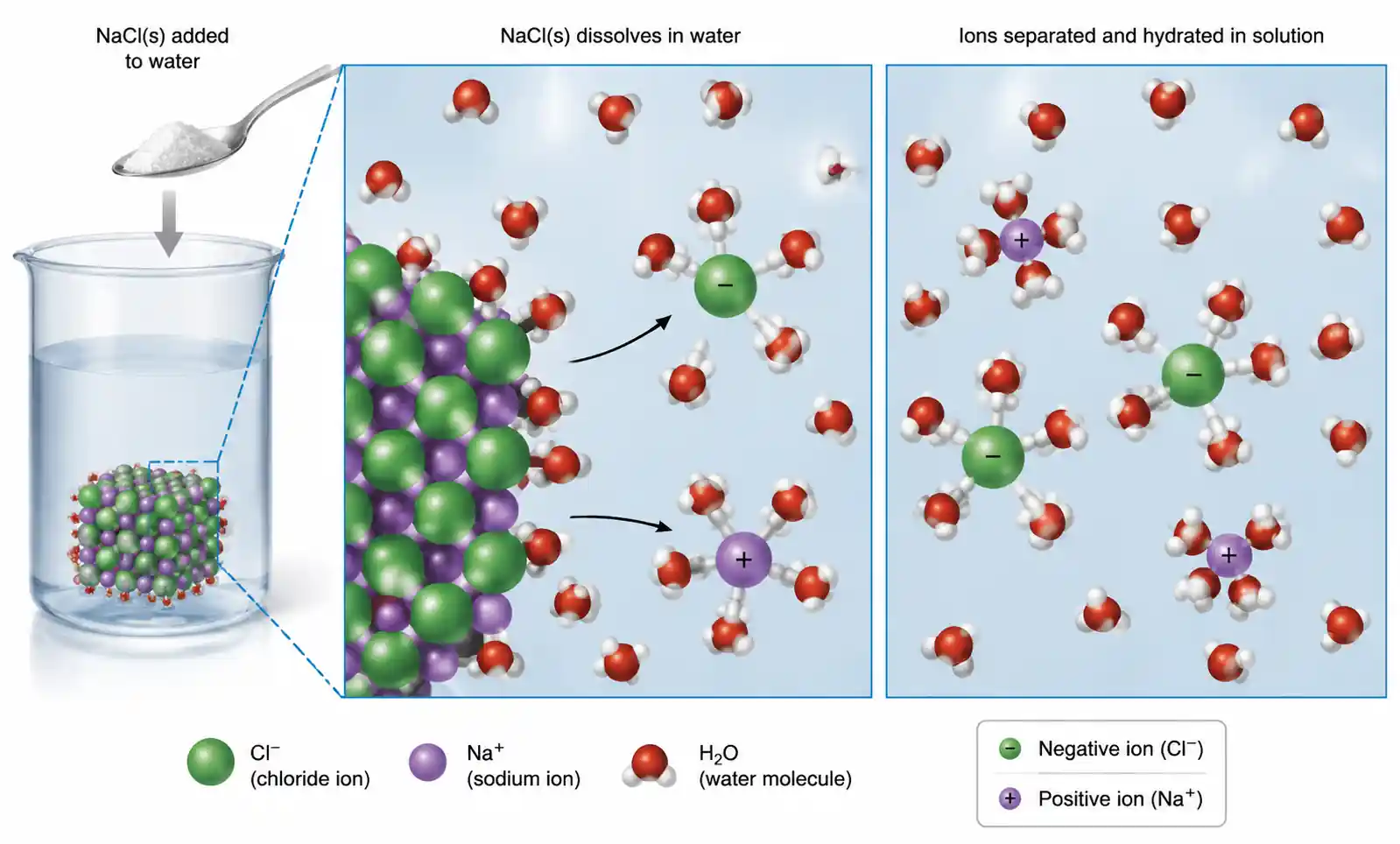
When an electrolyte dissolves in water, it undergoes a process called dissociation or ionization, breaking apart into positively charged ions (cations) and negatively charged ions (anions). These free-moving ions act as charge carriers, enabling the solution to conduct electrical current.
Key Characteristics of Electrolytes:
- Ion formation: Break apart into charged particles in solution
- Electrical conductivity: Solutions conduct electricity
- Chemical bonding: Typically ionic or polar covalent compounds
- Reactivity: Generally more reactive in solution due to ion presence
The strength of an electrolyte depends on the degree of ionization. Some electrolytes completely dissociate (strong electrolytes), while others only partially dissociate (weak electrolytes).
2. What Are Nonelectrolytes?
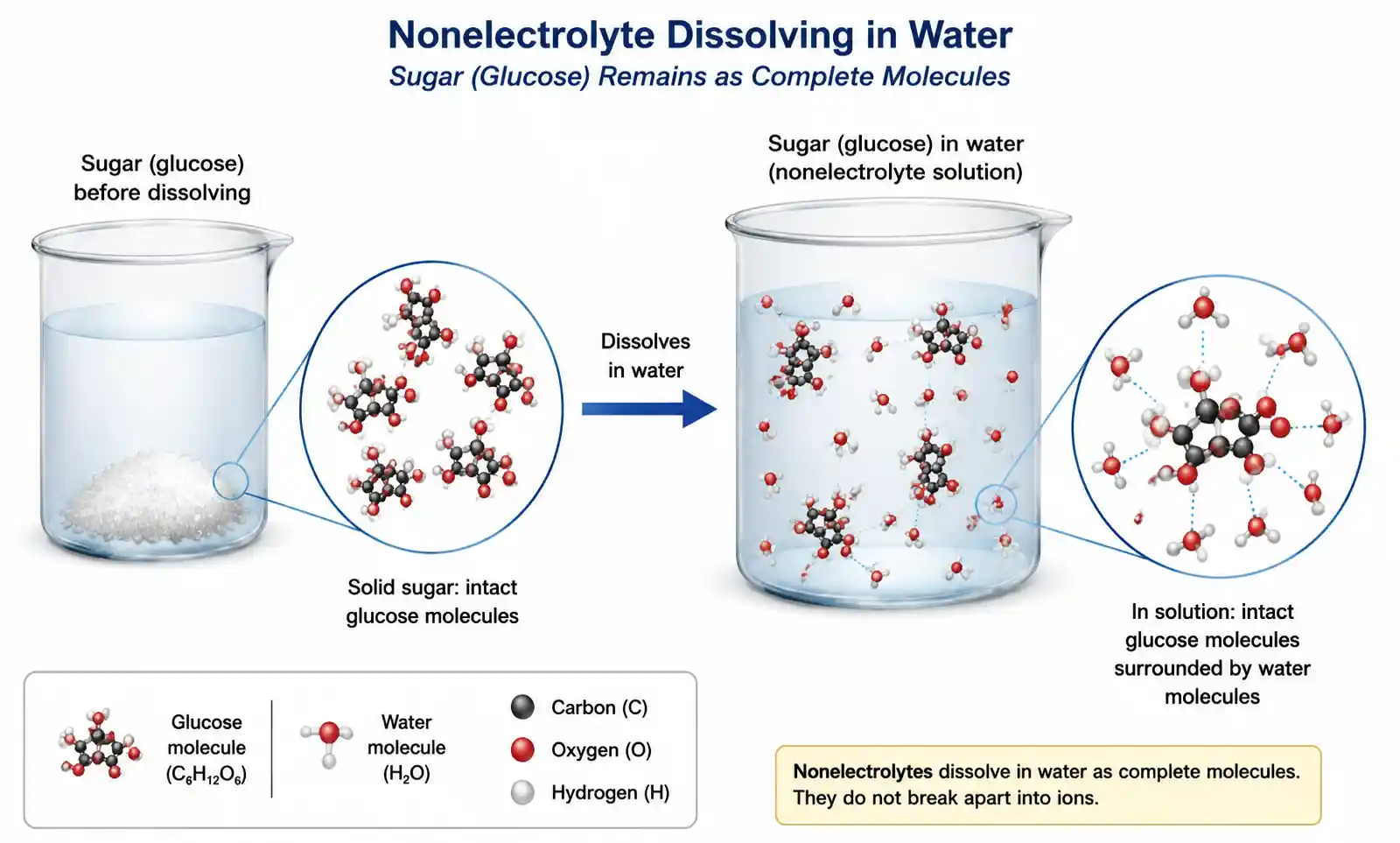
Nonelectrolytes are substances that do not produce ions when dissolved in water, resulting in solutions that cannot conduct electricity. These compounds dissolve in water as intact molecules rather than breaking apart into ions.
When a nonelectrolyte dissolves, the molecules remain whole and simply disperse throughout the solvent. Since there are no charged particles to carry electrical current, the solution remains non-conductive.
Key Characteristics of Nonelectrolytes:
- No ion formation: Remain as complete molecules in solution
- No electrical conductivity: Solutions do not conduct electricity
- Chemical bonding: Typically nonpolar covalent compounds
- Stability: Molecules remain intact in solution
Common nonelectrolytes include sugars, alcohols, and many organic compounds that dissolve in water without breaking into ions.
3. Key Differences Between Electrolytes and Nonelectrolytes
Understanding the fundamental differences between these two categories helps predict how substances will behave in solution.
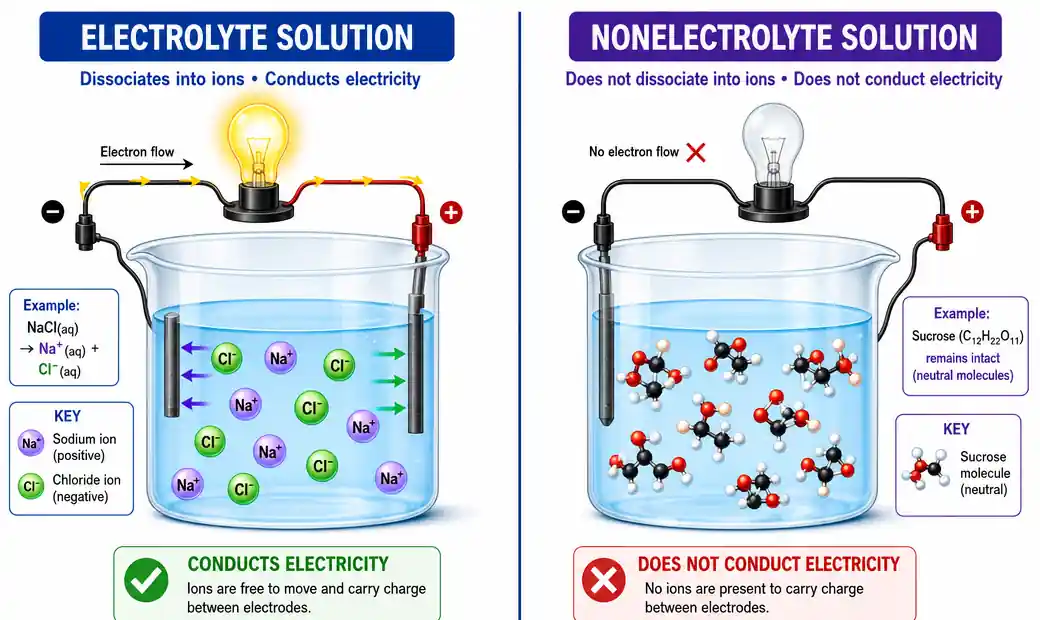
| Property | Electrolytes | Nonelectrolytes |
|---|---|---|
| Ion Formation | Dissociate into ions | Remain as molecules |
| Electrical Conductivity | Conduct electricity | Do not conduct electricity |
| Chemical Bonding | Ionic or polar covalent | Nonpolar covalent |
| Particle Type in Solution | Ions (charged) | Molecules (neutral) |
| Examples | NaCl, HCl, NaOH | Sugar, ethanol, urea |
| Reactivity | Higher (due to ions) | Lower (molecular form) |
| Colligative Properties | Greater effect (more particles) | Lesser effect (fewer particles) |
Why the Difference Matters:
The distinction between electrolytes and nonelectrolytes affects:
- Biological processes: Nerve impulses, muscle contractions, and cellular functions depend on electrolyte balance
- Industrial applications: Battery technology, electroplating, and chemical manufacturing
- Medical treatments: IV fluids, oral rehydration solutions, and electrolyte replacement therapy
- Environmental science: Water quality testing and pollution monitoring
4. Types of Electrolytes: Strong vs Weak
Not all electrolytes behave the same way. The degree of ionization determines whether an electrolyte is classified as strong or weak.
Strong Electrolytes
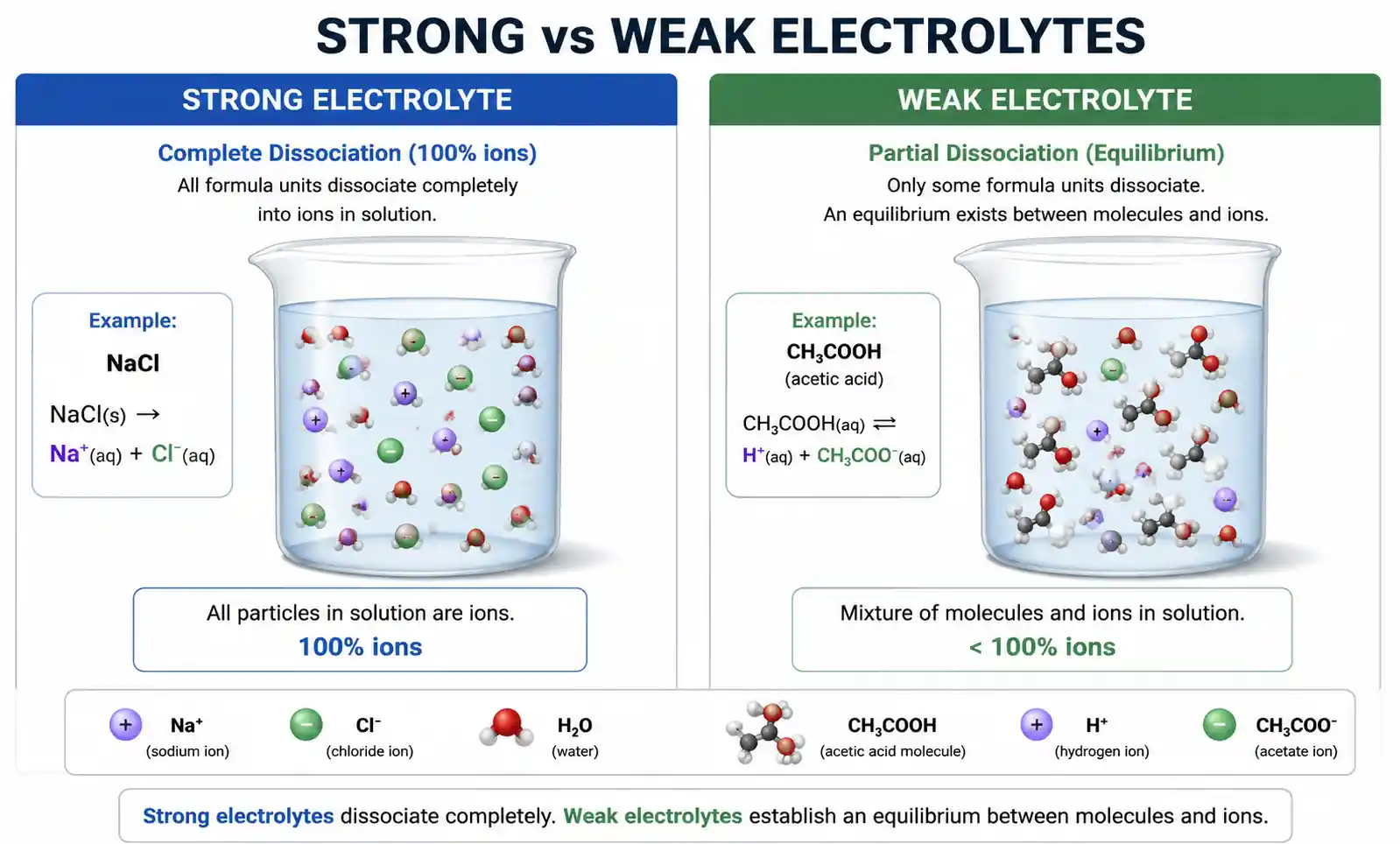
Strong electrolytes completely dissociate into ions in aqueous solution. Nearly 100% of the dissolved molecules break apart into ions, resulting in high electrical conductivity.
Categories of Strong Electrolytes:
- Strong acids: HCl, HNO₃, H₂SO₄, HBr, HI, HClO₄
- Strong bases: NaOH, KOH, Ca(OH)₂, Ba(OH)₂
- Most salts: NaCl, KBr, MgSO₄, CaCl₂
Example reaction:
NaCl(s) → Na⁺(aq) + Cl⁻(aq) [100% dissociation]
Weak Electrolytes
Weak electrolytes only partially dissociate in solution. An equilibrium exists between the undissociated molecules and the ions, with most molecules remaining intact.
Categories of Weak Electrolytes:
- Weak acids: CH₃COOH (acetic acid), HF, H₃PO₄
- Weak bases: NH₃ (ammonia), CH₃NH₂
- Some salts: HgCl₂, PbCl₂
Example reaction:
CH₃COOH(aq) ⇌ CH₃COO⁻(aq) + H⁺(aq) [~1-5% dissociation]
The double arrow (⇌) indicates an equilibrium, meaning the reaction goes both ways, with most acetic acid molecules remaining undissociated.
5. Common Examples of Electrolytes
Understanding specific examples helps identify electrolytes in everyday situations.
Strong Electrolyte Examples:
Acids:
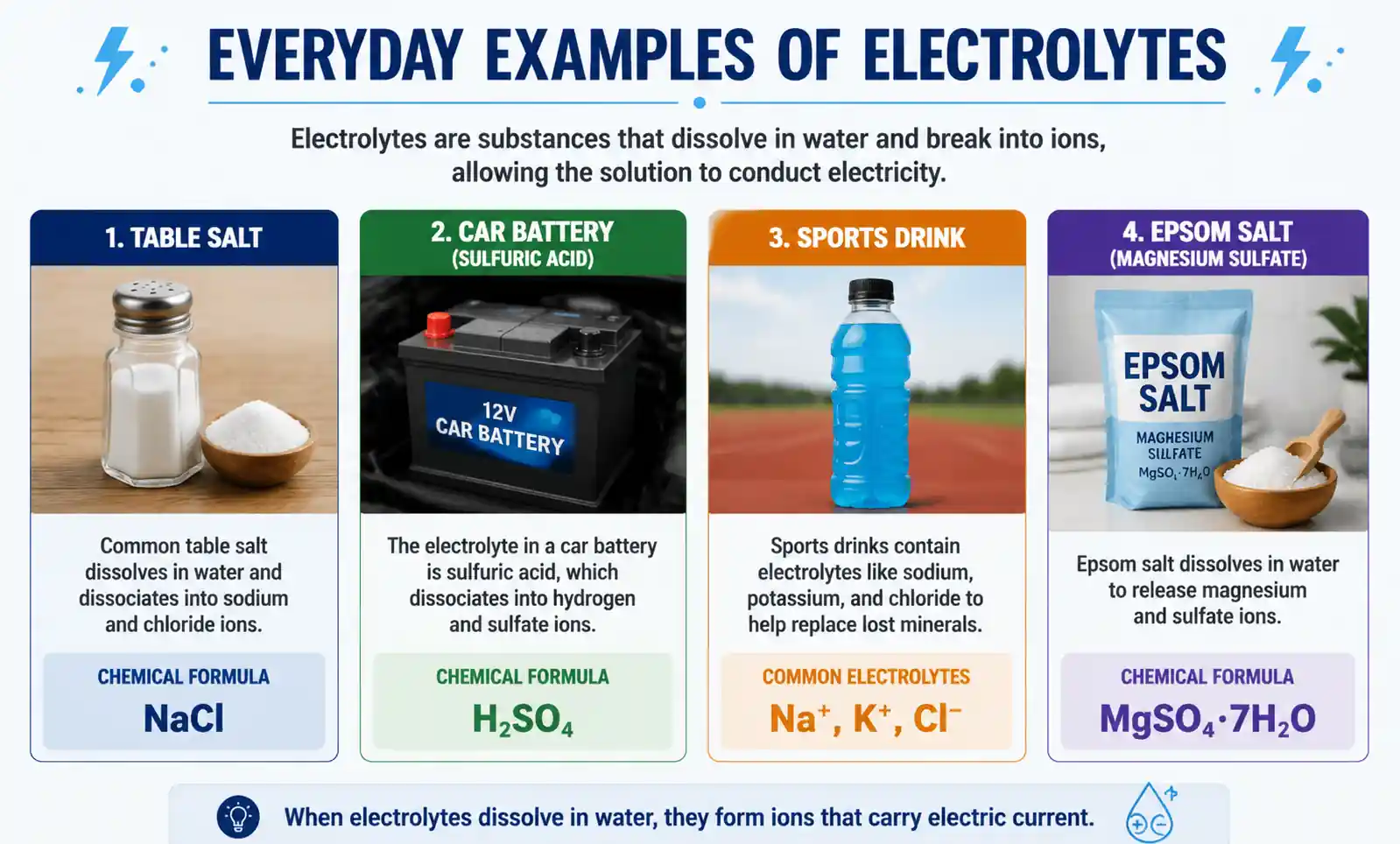
- Hydrochloric acid (HCl) - stomach acid, industrial cleaning
- Sulfuric acid (H₂SO₄) - car batteries, fertilizer production
- Nitric acid (HNO₃) - fertilizers, explosives
Bases:
- Sodium hydroxide (NaOH) - drain cleaners, soap making
- Potassium hydroxide (KOH) - alkaline batteries, biodiesel production
- Calcium hydroxide (Ca(OH)₂) - cement, water treatment
Salts:
- Sodium chloride (NaCl) - table salt, food preservation
- Potassium chloride (KCl) - salt substitutes, medical IV fluids
- Magnesium sulfate (MgSO₄) - Epsom salt, agriculture
- Calcium chloride (CaCl₂) - de-icing roads, food additives
Weak Electrolyte Examples:
Acids:
- Acetic acid (CH₃COOH) - vinegar
- Carbonic acid (H₂CO₃) - carbonated beverages
- Phosphoric acid (H₃PO₄) - soft drinks, rust removal
Bases:
- Ammonia (NH₃) - cleaning products, fertilizers
- Methylamine (CH₃NH₂) - pharmaceuticals, pesticides
6. Common Examples of Nonelectrolytes
Nonelectrolytes are prevalent in biological systems and everyday products.
Organic Compounds:
Sugars:
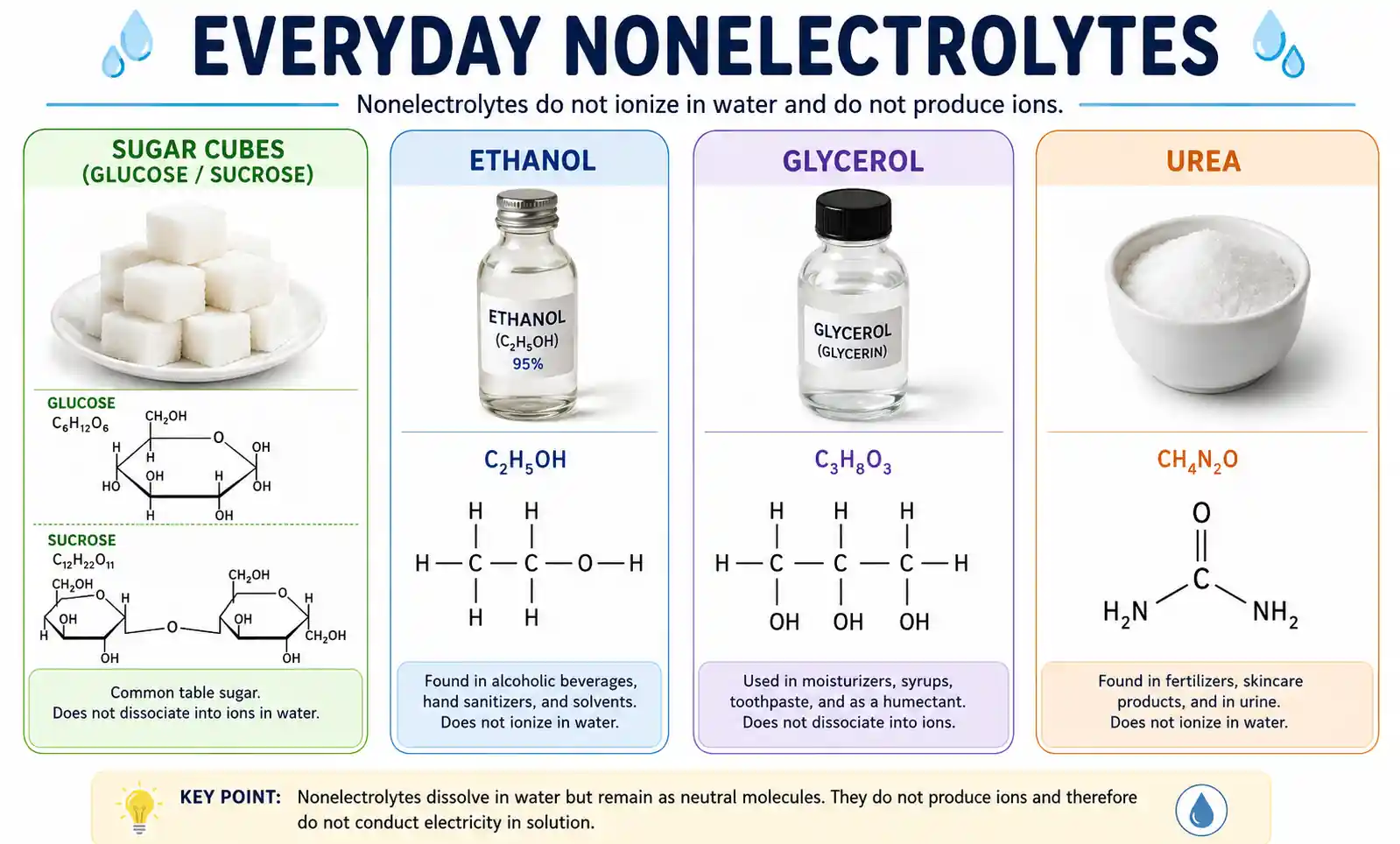
- Glucose (C₆H₁₂O₆) - blood sugar, energy source
- Sucrose (C₁₂H₂₂O₁₁) - table sugar
- Fructose (C₆H₁₂O₆) - fruit sugar
Alcohols:
- Ethanol (C₂H₅OH) - alcoholic beverages, disinfectants
- Methanol (CH₃OH) - fuel, solvent
- Glycerol (C₃H₈O₃) - moisturizers, food additive
Other Organic Compounds:
- Urea (CH₄N₂O) - fertilizers, cosmetics
- Acetone (C₃H₆O) - nail polish remover, solvent
- Benzene (C₆H₆) - industrial solvent
Inorganic Nonelectrolytes:
While less common, some inorganic compounds are also nonelectrolytes:
- Carbon dioxide (CO₂) - when dissolved without forming carbonic acid
- Oxygen (O₂) - dissolved in water
- Nitrogen (N₂) - dissolved in water
7. How to Test for Electrolytes
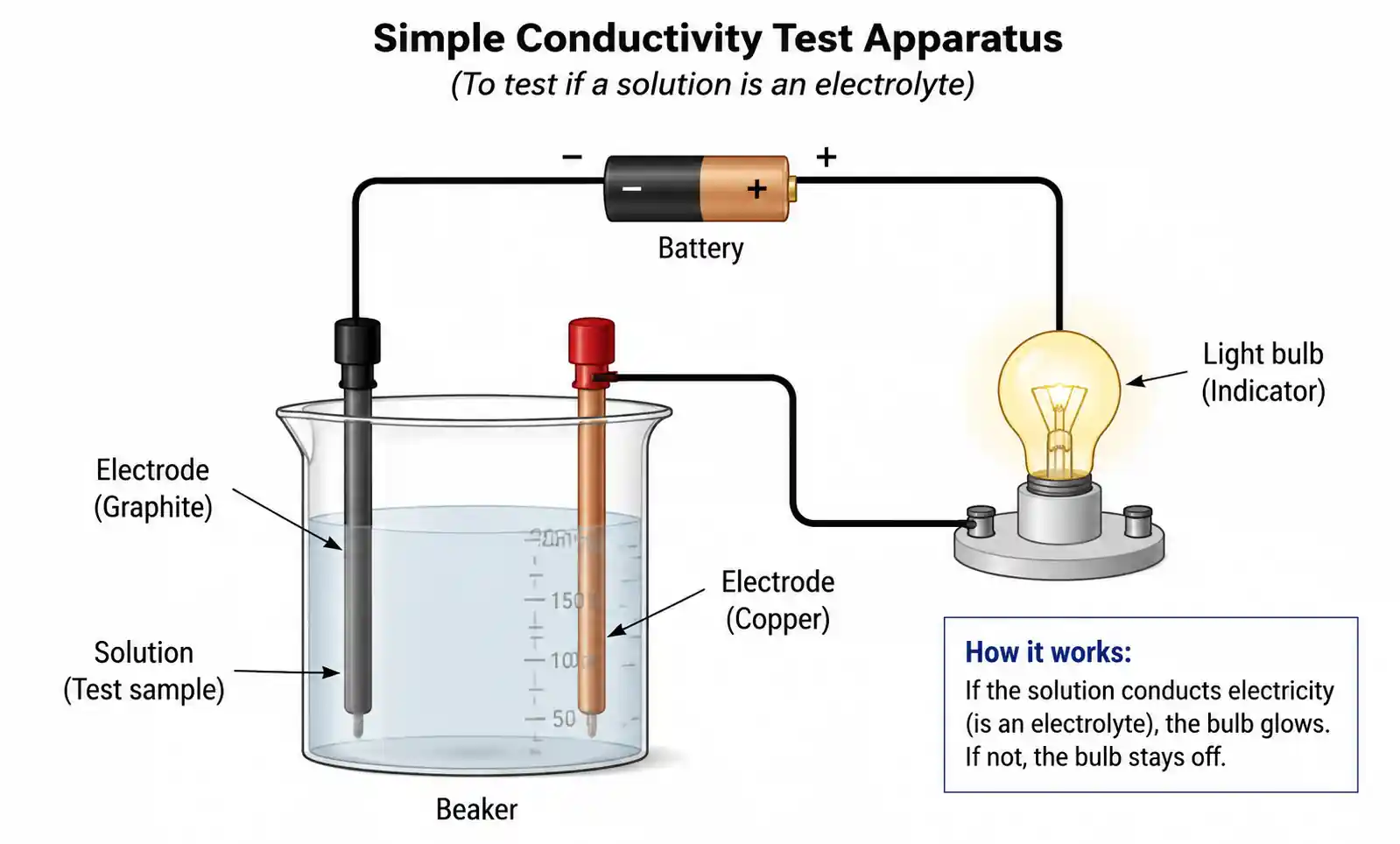
Identifying whether a substance is an electrolyte can be done through simple conductivity testing.
Conductivity Test Method:
Equipment needed:
- Conductivity meter or simple circuit with light bulb
- Battery or power source
- Two electrodes (metal rods)
- Beaker with the solution to test
Procedure:
- Dissolve the substance in distilled water
- Insert electrodes into the solution
- Connect to power source
- Observe the results
Interpreting Results:
- Bright light/high conductivity: Strong electrolyte
- Dim light/moderate conductivity: Weak electrolyte
- No light/no conductivity: Nonelectrolyte
Safety Considerations:
- Use low voltage (typically 6-12V) for safety
- Never test with household electrical outlets
- Wear safety goggles and gloves
- Work in a well-ventilated area
- Dispose of solutions properly
8. Real-World Applications and Importance
The distinction between electrolytes and nonelectrolytes has profound implications across multiple fields.
Biological Applications:
Human Body:
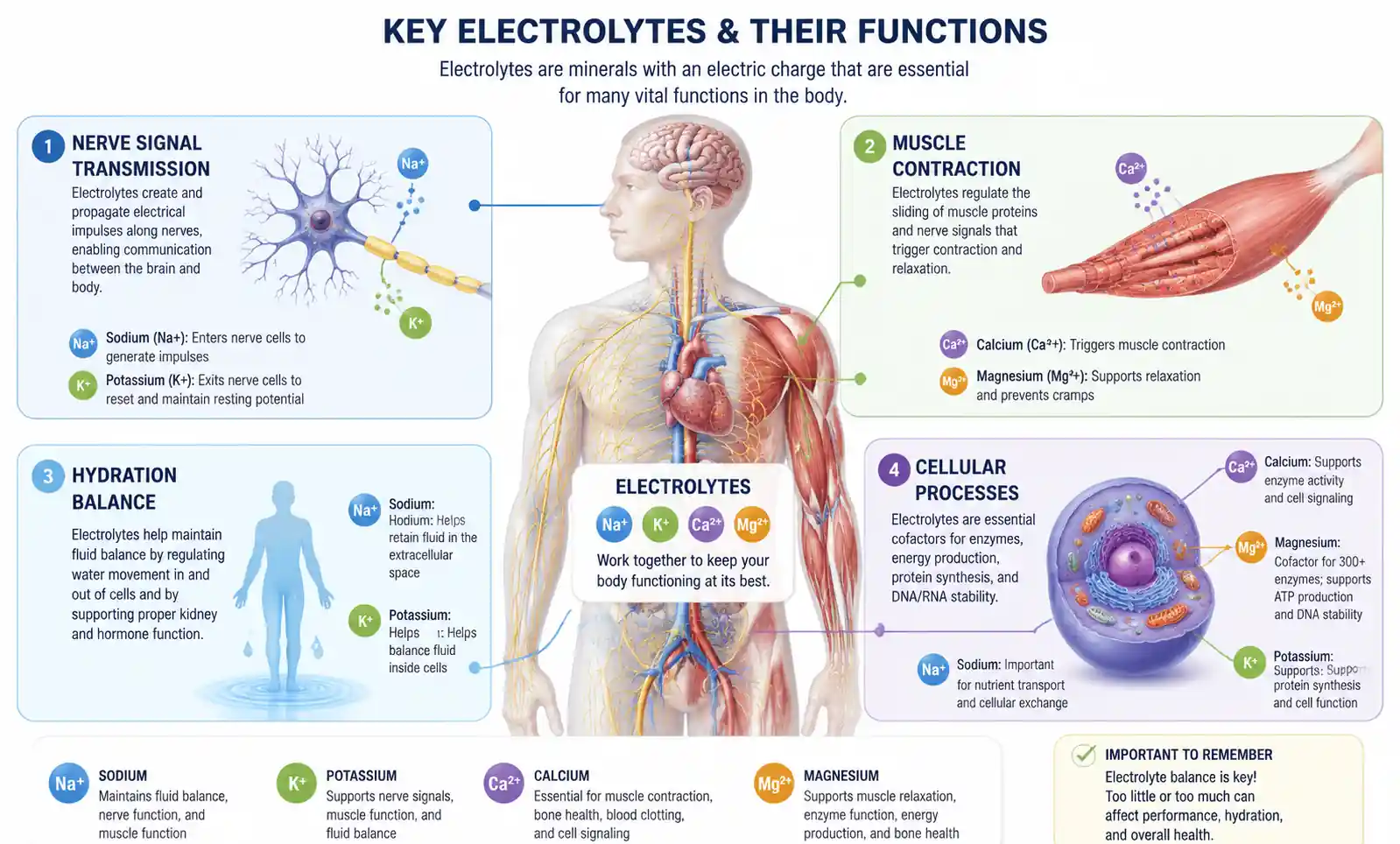
- Nerve function: Sodium and potassium ions transmit electrical signals
- Muscle contraction: Calcium ions trigger muscle movement
- Hydration: Electrolyte balance maintains proper fluid distribution
- pH regulation: Bicarbonate ions buffer blood pH
Medical Uses:
- IV fluids contain electrolytes to restore balance
- Oral rehydration solutions treat dehydration
- Sports drinks replenish electrolytes lost through sweat
- Dialysis solutions maintain electrolyte balance in kidney patients
Industrial Applications:
Energy Storage:
- Batteries use electrolyte solutions to conduct ions between electrodes
- Lithium-ion batteries power electric vehicles and electronics
- Lead-acid batteries start cars and provide backup power
Manufacturing:
- Electroplating uses electrolyte solutions to coat metals
- Chlor-alkali process produces chlorine and sodium hydroxide
- Aluminum production requires electrolytic refining
Water Treatment:
- Conductivity measurements assess water purity
- Electrolyte addition adjusts water chemistry
- Desalination removes electrolytes from seawater
Environmental Monitoring:
- Water quality testing measures electrolyte concentrations
- Soil analysis determines nutrient availability
- Pollution detection identifies contamination sources
9. Common Misconceptions About Electrolytes
Several myths and misunderstandings surround electrolytes and nonelectrolytes.
Misconception 1: "All dissolved substances conduct electricity"
Reality: Only substances that form ions conduct electricity. Many compounds dissolve without ionizing, remaining as neutral molecules.
Misconception 2: "Electrolytes only matter for athletes"
Reality: Every cell in your body depends on electrolytes for basic functions. While athletes need to replenish electrolytes lost through sweat, everyone requires proper electrolyte balance for health.
Misconception 3: "Pure water is a good conductor"
Reality: Pure water is actually a very poor conductor because it contains very few ions. The water we typically encounter conducts electricity due to dissolved electrolytes, not the water molecules themselves.
Misconception 4: "All acids and bases are strong electrolytes"
Reality: Many acids and bases are weak electrolytes that only partially ionize. For example, acetic acid (vinegar) is a weak acid and weak electrolyte.
Misconception 5: "Nonelectrolytes don't dissolve in water"
Reality: Many nonelectrolytes dissolve readily in water; they just don't break apart into ions. Sugar dissolves completely in water but remains as intact molecules.
10. Frequently Asked Questions
Q1: Can a substance be both an electrolyte and nonelectrolyte?
No, a substance is classified based on its behavior in solution. However, some substances can behave differently depending on conditions. For example, acetic acid is a weak electrolyte in water but a nonelectrolyte in nonpolar solvents.
Q2: Why do electrolytes conduct electricity?
Electrolytes conduct electricity because they produce mobile ions in solution. These charged particles move toward oppositely charged electrodes, carrying electrical current through the solution.
Q3: Are all ionic compounds electrolytes?
Most ionic compounds are electrolytes when dissolved in water, but solubility matters. Some ionic compounds are poorly soluble and don't produce enough ions to conduct electricity effectively.
Q4: How do electrolytes affect freezing and boiling points?
Electrolytes affect colligative properties more than nonelectrolytes because they produce multiple particles (ions) per formula unit. This causes greater freezing point depression and boiling point elevation.
Q5: Can nonelectrolytes become electrolytes?
Under certain conditions, some nonelectrolytes can react to form electrolytes. For example, carbon dioxide reacts with water to form carbonic acid, a weak electrolyte.
Q6: Why is electrolyte balance important for health?
Electrolytes regulate fluid balance, nerve signals, muscle contractions, and pH levels. Imbalances can cause serious health problems including irregular heartbeat, muscle weakness, and confusion.
Q7: How do sports drinks differ from water?
Sports drinks contain electrolytes (sodium, potassium) and carbohydrates to replace what's lost during intense exercise. Plain water doesn't replace electrolytes, which can lead to hyponatremia during prolonged activity.
Q8: What's the difference between electrolytes in chemistry and nutrition?
In chemistry, "electrolyte" refers to any substance that conducts electricity in solution. In nutrition, it specifically refers to essential minerals (sodium, potassium, calcium, magnesium, chloride) that carry electrical charges in body fluids.
Conclusion
Understanding electrolytes and nonelectrolytes is essential for grasping fundamental chemistry concepts and their practical applications. Electrolytes dissociate into ions and conduct electricity, while nonelectrolytes remain as intact molecules and don't conduct current. This distinction impacts everything from biological processes to industrial applications.
Whether you're studying chemistry, working in healthcare, or simply trying to understand why sports drinks contain electrolytes, recognizing how substances behave in solution provides valuable insight into the molecular world around us.
The key takeaways:
- Electrolytes form ions in solution and conduct electricity
- Nonelectrolytes remain as molecules and don't conduct electricity
- Strong electrolytes completely dissociate; weak electrolytes partially dissociate
- Both types play crucial roles in biological, industrial, and environmental systems
- Understanding these concepts helps predict chemical behavior and solve practical problems
By mastering these concepts, you'll have a solid foundation for understanding solution chemistry and its countless applications in science, medicine, and everyday life.