



Complete Guide to PCB Component Procurement for Manufacturing
Table of Contents
PCB component procurement accounts for 60-70% of total PCB assembly costs. In today's supply chain environment, lead times for critical components like microcontrollers extend from 12 weeks to 52+ weeks during allocation periods. This guide covers procurement strategies proven across high-volume electronics manufacturing, including techniques that reduce component costs by 25-35% while maintaining quality.
Understanding PCB Component Procurement
PCB component procurement is the systematic process of sourcing, qualifying, and purchasing electronic components required for PCB assembly based on engineering BOMs. Effective procurement requires balancing component availability, quality assurance, and total cost of ownership.
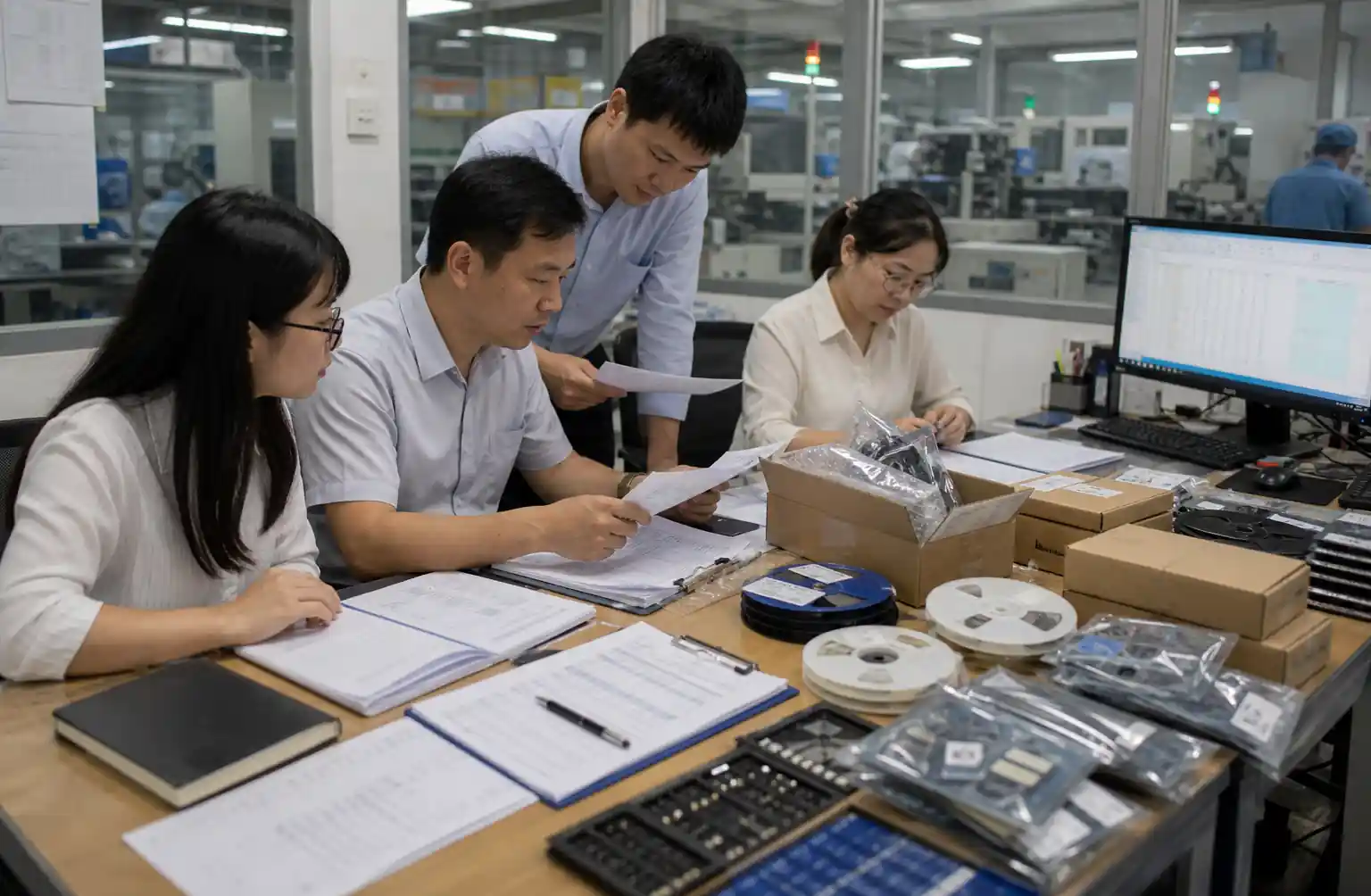 PCB component procurement process showing BOM analysis and supplier coordination
The procurement landscape has shifted dramatically. Standard passives now require 8-12 weeks, while specialized ICs face 20-52 week lead times. This demands proactive procurement planning rather than reactive purchasing.
BOM Preparation and Optimization
A well-structured BOM includes manufacturer part numbers (MPN), approved vendor list (AVL) alternatives, quantity per assembly, reference designators, and packaging requirements. Standardize formats using consistent part numbering systems.
Design for Procurement: Work with engineering to select components with multiple qualified sources. Qualify at least two manufacturers per critical component category. Specify standard values and packages that maintain broad availability.
Component Lifecycle Management: Monitor Product Change Notifications (PCN) and End-of-Life (EOL) announcements. When components enter EOL, initiate redesign projects 12-18 months before last-time-buy deadlines.
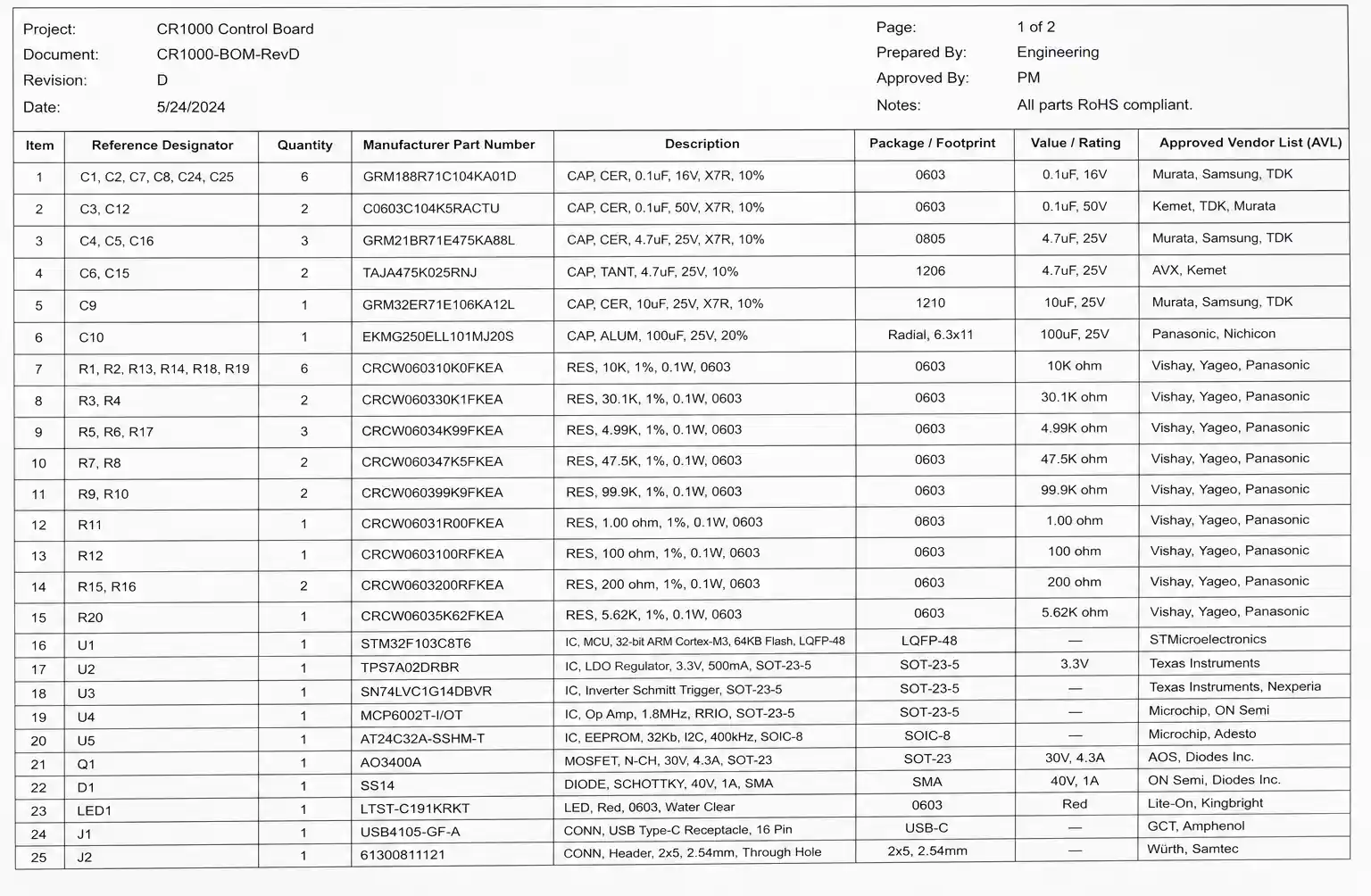 Bill of Materials (BOM) structure with component specifications and part numbers
Component Sourcing Strategies
| Channel Type | Authenticity Risk | Price Premium | Lead Time | Best Use Case |
|---|---|---|---|---|
| Authorized Distributor | Very Low | Baseline | 8-16 weeks | Production, critical components |
| Manufacturer Direct | Very Low | -5% to +10% | 12-20 weeks | High-volume contracts |
| Broker/Independent | Medium-High | -20% to +50% | Variable | Hard-to-find, obsolete components |
| Gray Market | High | -15% to -30% | 2-8 weeks | Emergency only (with testing) |
Multi-Source Strategy: Never rely on a single supplier. Establish relationships with at least two authorized distributors per component category. For high-volume production (10,000+ units/year), negotiate directly with manufacturers.
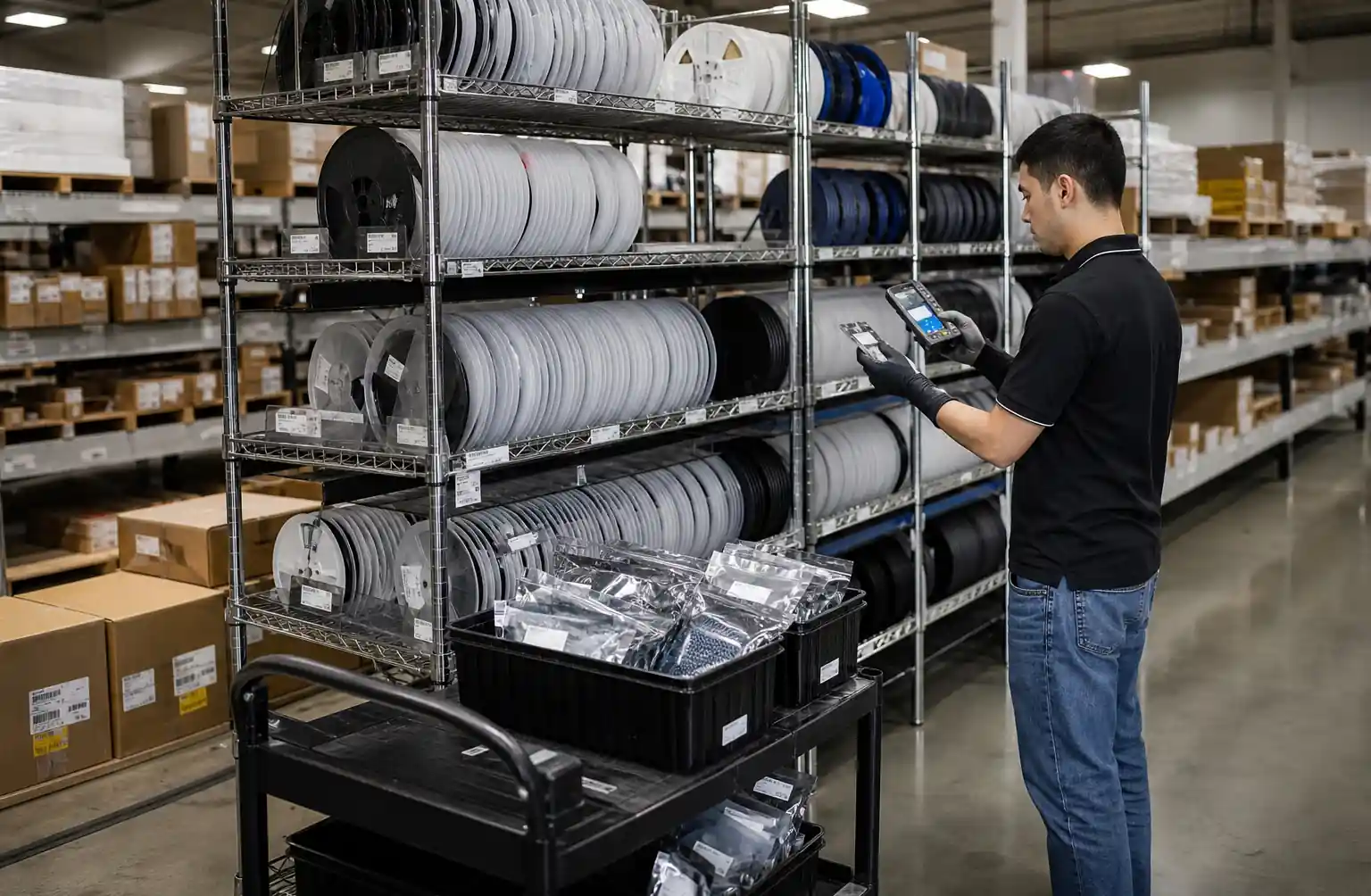 Authorized electronic component distributor warehouse with organized inventory
Strategic Inventory: Maintain buffer stock for long-lead-time components. For 20+ week lead times, hold 12-16 weeks of safety stock. Safety Stock = (Max Daily Usage × Max Lead Time) - (Avg Daily Usage × Avg Lead Time).
Supplier Selection and Qualification
| Criteria | Weight | Key Metrics | Verification Method |
|---|---|---|---|
| Authorization Status | 30% | Franchised agreements, manufacturer authorization | Request authorization letters |
| Quality Systems | 25% | ISO 9001, AS9100, IATF 16949 | Audit documentation |
| Delivery Performance | 20% | On-time delivery >95% | Review 6-month records |
| Technical Support | 15% | Engineering support, PCN alerts | Test responsiveness |
| Financial Stability | 10% | D&B rating, years in business | Review financial statements |
Authorization Verification: Confirm supplier status directly with manufacturers. Major semiconductor companies publish authorized distributor lists for independent verification.
Quality System Assessment: ISO 9001 demonstrates documented processes; AS9100 adds aerospace traceability; IATF 16949 ensures automotive compliance.
Quality Verification and Counterfeit Prevention
Counterfeit components represent 3-8% of the global electronics supply chain. Implement verification processes to protect supply chain integrity.
Incoming Inspection: Documented procedures for all incoming components including visual examination, packaging verification, and documentation review. Add electrical testing for high-risk purchases.
Visual Inspection (40x magnification): Check marking consistency, package condition, and quality indicators. Authentic components display sharp laser markings, consistent fonts, proper date codes. Counterfeits show blurry printing, misaligned text, sanding marks.
Electrical Testing: Verify critical parameters match datasheet specifications. Test sample units from each lot for voltage, current, resistance, and functional performance.
Advanced Methods:
- XRF Analysis: Verifies internal die structure and composition ($75-200 per type)
- Decapsulation: Destructive testing for definitive authentication
- Acetone Testing: Checks for blacktopping (remarking original components)
 Electronic component quality inspection using microscope for counterfeit detection
Lead Time Management
Lead Time Forecasting: Track historical lead times by component category and supplier. Develop buffers based on supplier performance variability.
Rolling Forecast Implementation: Share 6-12 month demand forecasts with key suppliers. Update monthly with firm orders (0-8 weeks) and forecast visibility (8+ weeks).
Allocation Management: Prioritize supplier relationships during allocation. Suppliers allocate to customers providing accurate forecasts and consistent order patterns.
Cost Optimization Techniques
| Strategy | Typical Savings | Implementation | Risk |
|---|---|---|---|
| Supplier Consolidation | 20-30% | Medium | Low |
| Volume Negotiations | 15-25% | Low | Low |
| Alternative Components | 10-40% | High | Medium |
| Direct Manufacturing | 25-35% | High | Medium |
| Inventory Optimization | 5-15% | Medium | Low |
Volume Consolidation: Consolidate purchases across product lines for volume pricing. 5,000+ unit quantities typically qualify for 15-25% discounts.
Alternative Component Qualification: Qualify alternatives from multiple manufacturers for critical parts. Focus on high-value (>$5/unit) and high-volume (>10,000/year) components.
Total Cost of Ownership (TCO): Evaluate suppliers on TCO including unit price, freight, inventory carrying costs, quality costs, and administrative costs. A 10% lower unit price with 2% defects may cost more than a premium supplier with <0.5% defects.
Payment Terms Optimization: Negotiate Net 30-90 day terms. Consider early payment discounts if cost of capital justifies it.
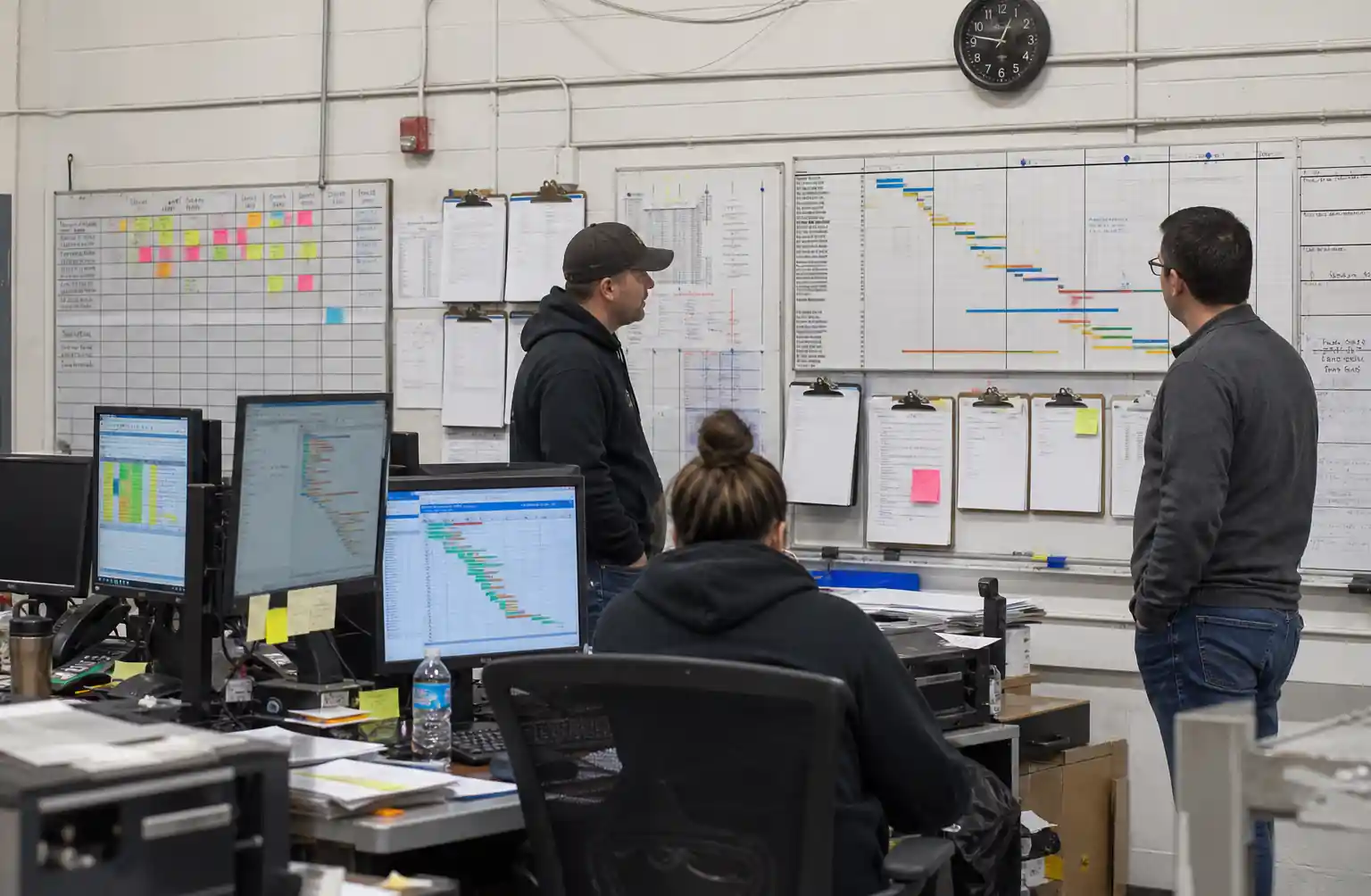 Production planning board showing component lead times and delivery schedules
FAQs
What is the typical lead time for PCB components in 2026?
Passive components: 8-12 weeks. Active components: 12-20 weeks standard, 30-52 weeks under allocation. Power management ICs and automotive-grade parts face the longest lead times. Plan procurement 16-20 weeks ahead of production.
How can I verify component authenticity from suppliers?
Confirm supplier authorization with manufacturers. Perform visual inspection under 40x magnification. Conduct electrical testing against datasheet specs. Request certificates of conformance with full traceability. For high-risk purchases, use XRF analysis or third-party authentication.
What is the difference between authorized distributors and brokers?
Authorized distributors have franchised agreements with manufacturers, provide full traceability and warranties. Brokers source from excess inventory and secondary markets. Authorized channels offer lower counterfeit risk; brokers provide access to hard-to-find components.
How much safety stock should I maintain?
Hold 25-50% of lead time as safety stock. For 20-week lead times, hold 5-10 weeks. High-value, low-volume components may justify lower safety stock (15-25% of lead time); critical, high-volume components warrant higher levels (50-75%).
What certifications should I look for?
ISO 9001 (quality), AS9100 (aerospace), IATF 16949 (automotive), ISO 13485 (medical). Verify counterfeit prevention programs aligned with AS5553 or AS6496. For specific industries: ITAR for defense, REACH/RoHS for Europe, AEC-Q for automotive.
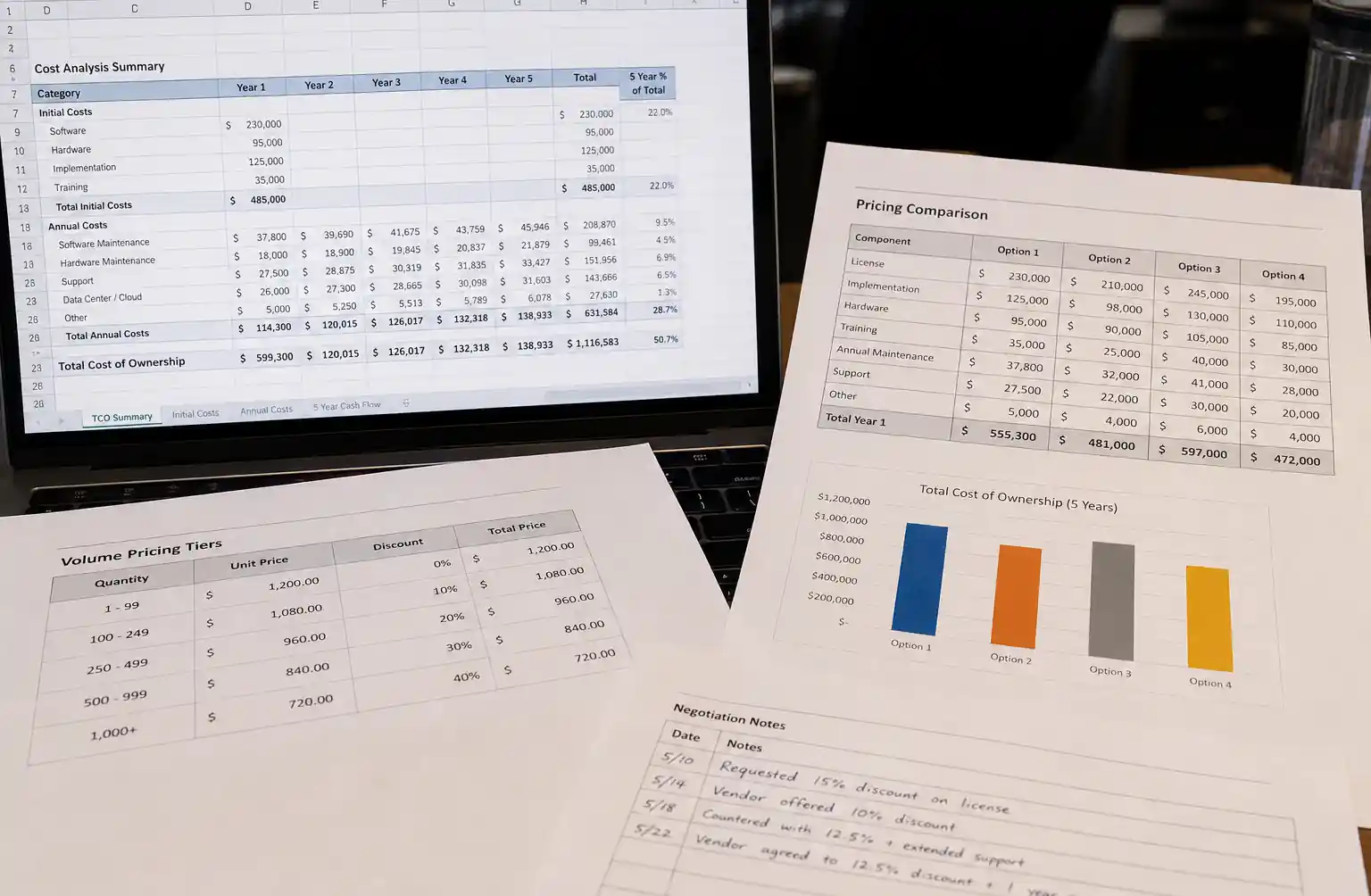 Component cost analysis and volume pricing comparison spreadsheet
Conclusion
Effective PCB component procurement requires systematic processes spanning BOM optimization, supplier qualification, quality verification, and strategic sourcing. Multi-source planning, authorized distribution channels, rigorous quality verification, and total cost analysis provide the foundation for resilient procurement operations. Organizations implementing structured processes report 25-35% cost reductions, improved on-time delivery, and reduced quality incidents.
If you need reliable electronic component sourcing with global supply chain expertise, Hitop Tech offers comprehensive procurement services across Asia, Europe, North America, and Africa. Contact us today for PCB component sourcing, BOM analysis, and supply chain optimization services.