



How to Build a Resilient Electronic Component Supply Chain: A Buyer's Guide
The phrase "line-down" is arguably the most terrifying term in hardware manufacturing. When a single $0.50 microchip is out of stock, an entire $50,000 assembly line grinds to a halt. In an era where geopolitical shifts and unpredictable demand cycles constantly disrupt legacy nodes, relying solely on a "just-in-time" procurement strategy is no longer a badge of efficiency—it is a massive liability.
If you are a procurement manager, hardware engineer, or EMS buyer, you already know that top-tier franchised distributors like Digi-Key or Mouser won't always have the inventory you need. You will eventually have to navigate the open market. But how do you vet independent distributors without exposing your company to counterfeit parts? What specific lab tests should you demand?
In this comprehensive guide, we will break down exactly how to secure your supply chain, manage End-of-Life (EOL) crises, and implement rigorous anti-counterfeit protocols that protect your bottom line.

Table of Contents
1. Understanding Electronic Component Supply Chains: The Basics
Why is building a resilient supply chain so critical right now? While standard component lead times have largely normalized since the historic shortages of 2021-2022, the reality on the ground is far more complex.
Many semiconductor giants are aggressively phasing out older, lower-margin legacy nodes to focus on high-margin AI chips and advanced silicon. For industries with long product lifecycles—such as automotive, aerospace, medical devices, and industrial automation—this creates a persistent crisis. Your product might be designed to last 15 years, but the chips powering it might be discontinued in five.
When a critical component faces allocation (rationing by the manufacturer) or sudden obsolescence, buyers are forced into the "grey market." This open market is a double-edged sword: it holds vast reserves of legacy inventory, but it is also riddled with sophisticated counterfeiters who can easily fool a standard visual inspection.
To survive and thrive, modern procurement teams must shift from reactive purchasing to proactive risk mitigation. This means designing boards with alternatives in mind, mastering the art of Electronic Components Sourcing through vetted independent channels, and understanding the exact scientific testing required to guarantee authenticity.
2. Core Concepts Simplified
Before diving into the exact steps for securing your supply chain, it is essential to understand the terminology that separates amateur buyers from seasoned procurement veterans. Let's demystify the jargon.
- Form, Fit, and Function (FFF) Alternative: Think of this like buying tires for your car. If the original Michelin tires are sold out, you can buy Goodyear tires as long as they are the exact same size (Form), bolt onto the wheel hub the same way (Fit), and safely grip the road (Function). In electronics, an FFF alternative is a chip from a different brand that can be dropped onto your circuit board without requiring any software rewrites or board redesigns.
- Decapsulation (Decap) Testing: Imagine checking if a designer jacket is fake by cutting it open to inspect the hidden stitching inside. Decapsulation uses strong acids to melt away the black plastic epoxy casing of a microchip. This exposes the actual silicon die inside, allowing lab technicians to use high-powered microscopes to verify if the manufacturer's microscopic logo on the silicon matches the brand printed on the outside.
- AS6081 Certification: This is the gold standard for counterfeit avoidance. Originally created for the aerospace and defense industries, AS6081 is essentially a top-tier security clearance for distributors. If a supplier holds this certification, it means they follow the strictest possible protocols for inspecting, handling, and testing parts.
- PCN (Product Change Notification) / EOL (End of Life): A PCN is an official memo from a manufacturer stating they are changing how a chip is made. An EOL notice means they are killing the product entirely. Missing these notices is the equivalent of ignoring a hurricane warning.
Industry Supply Channels Comparison Table
To make informed decisions, you must understand the different tiers of suppliers available to you.
| Supplier Type | Definition | Risk Level | Best Used For |
|---|---|---|---|
| Franchised Distributors | Authorized directly by the manufacturer (e.g., Digi-Key, Arrow). | Lowest | New designs, standard production runs, full traceability. |
| Independent Stocking Distributors | Hold their own inventory but are not tied to one manufacturer. Often buy excess stock. | Medium-Low (If vetted) | Finding obsolete parts, overcoming allocation, cost reduction. |
| Unvetted Brokers | Middlemen who do not hold physical stock. They buy and sell on demand. | High | Absolute emergencies (requires extreme vetting and 3rd party testing). |
3. Step-by-Step Guide: Securing Your Supply Chain
Building a stable supply chain is not about finding one magic supplier; it is about building a system of redundancies. Here is the actionable, step-by-step playbook.
3.1 Scenario A: Proactive BOM Scrubbing & Multi-Sourcing
The biggest mistake hardware engineers make is designing a PCB around a single, highly specialized component with no alternatives. This is known as a single-source trap.
To prevent this, procurement and engineering teams must collaborate on BOM Scrubbing—a process of analyzing your Bill of Materials line by line to identify supply chain risks before mass production begins. By identifying high-risk parts early, you can implement BOM Cost Reduction strategies and ensure continuous production.
Actionable Steps:
- Identify Single-Source ICs: Look for proprietary microcontrollers (MCUs) or power management ICs (PMICs) that only one company makes.
- Design for Alternatives: Instruct your hardware engineers to design the PCB with dual footprints. If Chip A (a QFN package) goes out of stock, the board should already have copper pads ready to accept Chip B (an SOIC package) without redesigning the whole board.
- Approve FFF Replacements: Ensure every critical line item on your BOM has at least two (preferably three) approved vendor options.
BOM Risk Assessment Data Matrix
Use a matrix like this to evaluate your current Bill of Materials:
| Component Category | Lifecycle Status | Approved Vendors | Lead Time | Risk Score (1-10) | Action Required |
|---|---|---|---|---|---|
| Standard Resistors | Active | 5+ (Yageo, Vishay, etc.) | 2 weeks | 1 (Low) | None |
| Legacy 8-bit MCU | NRND (Not Recommended for New Design) | 1 (NXP only) | 40 weeks | 9 (Critical) | Find FFF Alternative / Secure EOL Stock |
| Specialized PMIC | Active | 1 (Texas Instruments) | 26 weeks | 7 (High) | Design secondary footprint for alternative |
3.2 Scenario B: Managing EOL and Obsolescence
When a manufacturer issues an EOL notice, the clock starts ticking. You usually have 6 to 12 months to place a Last Time Buy (LTB). But what if you miss the window, or your product needs to be manufactured for another five years?
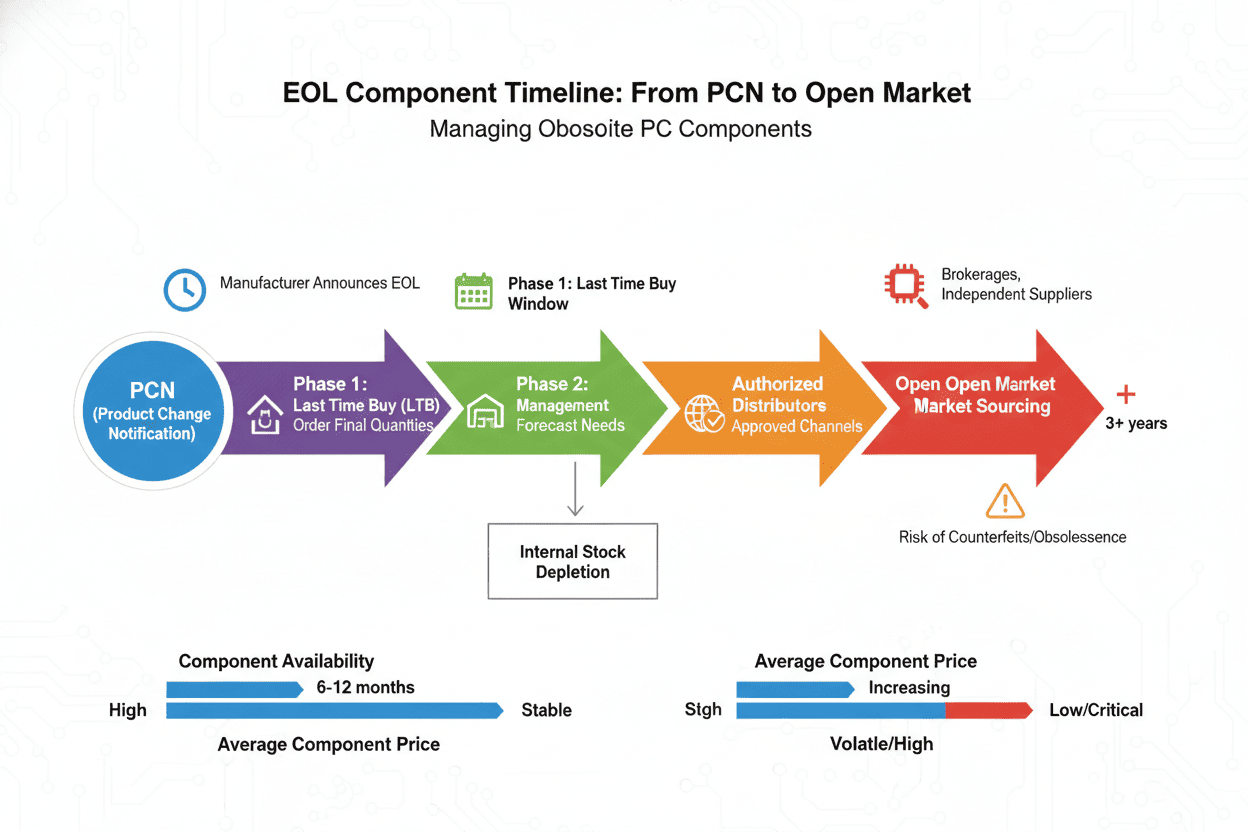
How to handle an EOL crisis:
- Subscribe to PCN Alerts: Use lifecycle management software (like SiliconExpert or IHS Markit) to automatically track your BOM and alert you the moment a PCN is issued.
- Partner for Legacy Stock: Build relationships with independent distributors who specialize in Obsolete Parts Inventory. These distributors purchase large volumes of excess stock from EMS companies and hold them in climate-controlled warehouses for situations exactly like this.
- Avoid Panic Buying: When an EOL is announced, the grey market floods with counterfeiters trying to capitalize on desperate buyers. Never skip your vetting process just because you are in a rush.
3.3 Scenario C: Vetting Independent Distributors (The Red Flag Checklist)
When you are forced to buy outside the franchised channel, you must treat every new supplier as guilty until proven innocent. Do not rely on their website's marketing copy. Use this direct email template to demand proof of competence:
The Red Flag Checklist:
- 🚩 Red Flag: They demand 100% Wire Transfer (T/T) in advance for a first-time order. (Legitimate distributors will offer Escrow or Net terms once credit is established).
- 🚩 Red Flag: They claim to have "millions" of parts in stock but cannot provide a date code or a simple photo of the reels with a piece of paper showing today's date.
- 🚩 Red Flag: They refuse to use third-party testing labs or claim that "visual inspection" is enough.
4. Expert Tips & Common Pitfalls to Avoid
If you spend time on hardware engineering forums like Reddit's r/AskElectronics or r/supplychain, you will see countless horror stories of buyers receiving empty tape-and-reels, or worse, chips that have been sanded down and laser-etched with fake part numbers.
The Pitfall of "Blacktopping"
One of the most common scams is "blacktopping." Counterfeiters take cheap, scrap electronic components, sand off the original markings, coat them in a thin layer of black polymer (blacktopping), and laser-etch the logo of an expensive, highly sought-after chip. To the naked eye, it looks perfect.
The Solution: Scientific Counterfeit Component Detection.
Visual inspection is dead. You cannot trust your eyes. You must demand scientific validation.
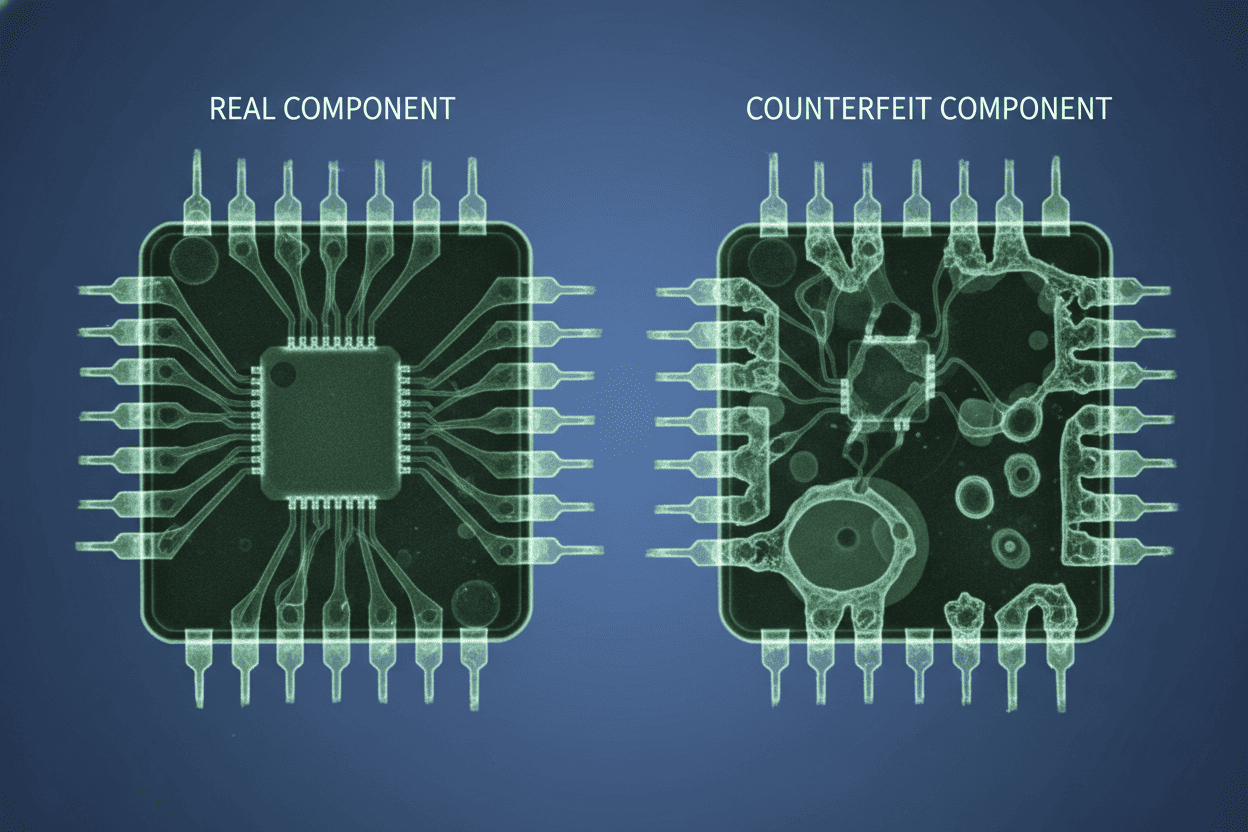
When working with an independent distributor, insist on a comprehensive testing report that includes:
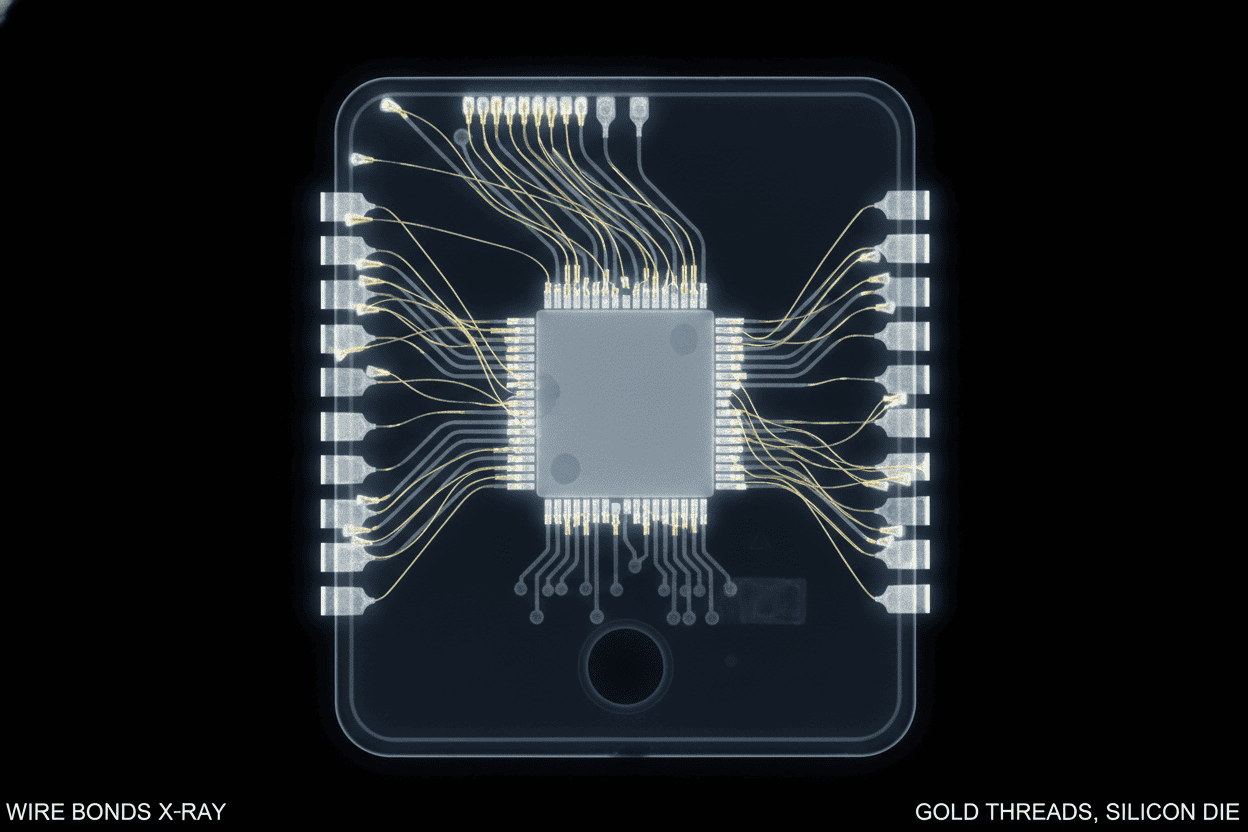
- X-Ray Inspection (Looking at the Bones): X-ray machines look inside the black plastic to examine the "wire bonds" (the microscopic gold wires connecting the silicon die to the external pins). If you buy a batch of 1,000 chips and the X-ray shows three completely different internal wire layouts, you have a mixed batch of fake or refurbished parts.
- Decapsulation (Looking at the Heart): As explained earlier, melting the casing with acid is the only way to read the actual manufacturer's die mark. If the outside says "Texas Instruments" but the inside silicon says "Generic Brand X," you caught a fake.
- Solderability Testing: Counterfeiters often pull used chips off old circuit boards, clean them up, and sell them as "New." Solderability testing checks if the pins will actually adhere to your PCB during the reflow oven process. Used pins often fail this test due to oxidation.
5. Conclusion & Final Thoughts
Building a stable electronic component supply chain in today's volatile market requires a blend of engineering foresight and procurement paranoia. By designing your BOMs for flexibility, actively monitoring EOL notices, and ruthlessly vetting your independent distributors through scientific lab testing, you can eliminate the fear of the "line-down."
Remember, the cheapest chip on the grey market is often the most expensive one if it halts your production line or causes a product recall. Always prioritize traceability, demand AS6081-level compliance, and never compromise on X-ray and decapsulation testing.
Quick Summary Checklist
| Action Item | Why It Matters | Frequency |
|---|---|---|
| BOM Scrubbing | Identifies single-source risks and EOL components before production. | Every new design phase & annually. |
| Identify FFF Alternatives | Ensures you have backup options if primary parts face allocation. | Continuous (Log in ERP system). |
| Verify Distributor Certs | Filters out high-risk brokers; ensures AS6081/ISO 9001 compliance. | Before onboarding any new vendor. |
| Demand Lab Testing | X-ray and Decap testing are the only ways to guarantee authenticity. | Every open-market/grey-market order. |
Are you struggling with obsolete parts or long lead times? Don't risk your production on unvetted brokers. Ensure your supply chain is bulletproof by partnering with experts who prioritize rigorous lab testing and quality assurance.
6. Frequently Asked Questions
Q1: What is the difference between franchised and independent distributors? A: Franchised distributors are authorized by manufacturers (lowest risk). Independent distributors hold their own inventory but require vetting for counterfeit risks.
Q2: What is BOM scrubbing and why does it matter? A: BOM scrubbing analyzes every line item to identify single-source risks and EOL components before they halt your production line.
Q3: What is AS6081 certification? A: It is the aerospace and defense industry gold standard for counterfeit avoidance, ensuring strict inspection and testing protocols.
Q4: How do I detect counterfeit electronic components? A: Demand scientific testing: X-ray inspection checks internal wire bonds, decapsulation verifies the silicon die mark, and solderability testing confirms pin integrity.
Q5: What should I do when a critical component goes End-of-Life (EOL)? A: Subscribe to PCN alerts, secure Last Time Buy (LTB) inventory, and partner with vetted independent distributors specializing in obsolete parts.