



How Core EV Electronic Components Work: A Deep Dive into SiC, BMS, and Domain Controllers
If you have been following the electric vehicle (EV) industry over the past few years, you have likely noticed two recurring themes: relentless "range anxiety" from consumers and crippling semiconductor shortages from manufacturers. But what actually drives an EV’s efficiency, safety, and cost? The secret doesn't just lie in the battery chemistry; it lies in the silicon that controls it.
In this comprehensive guide, we will tear down the core electronic components of modern New Energy Vehicles (NEVs). Whether you are an automotive electronics engineer designing the next-generation powertrain, a B2B procurement manager navigating the fragile supply chain, or a tech investor analyzing the shift from legacy automakers to EV pioneers like Tesla and BYD, this article is for you. You will learn exactly how Silicon Carbide (SiC) extends driving range, why the Battery Management System (BMS) is the ultimate safeguard against fires, and how modern Domain Controllers are revolutionizing vehicle architecture.
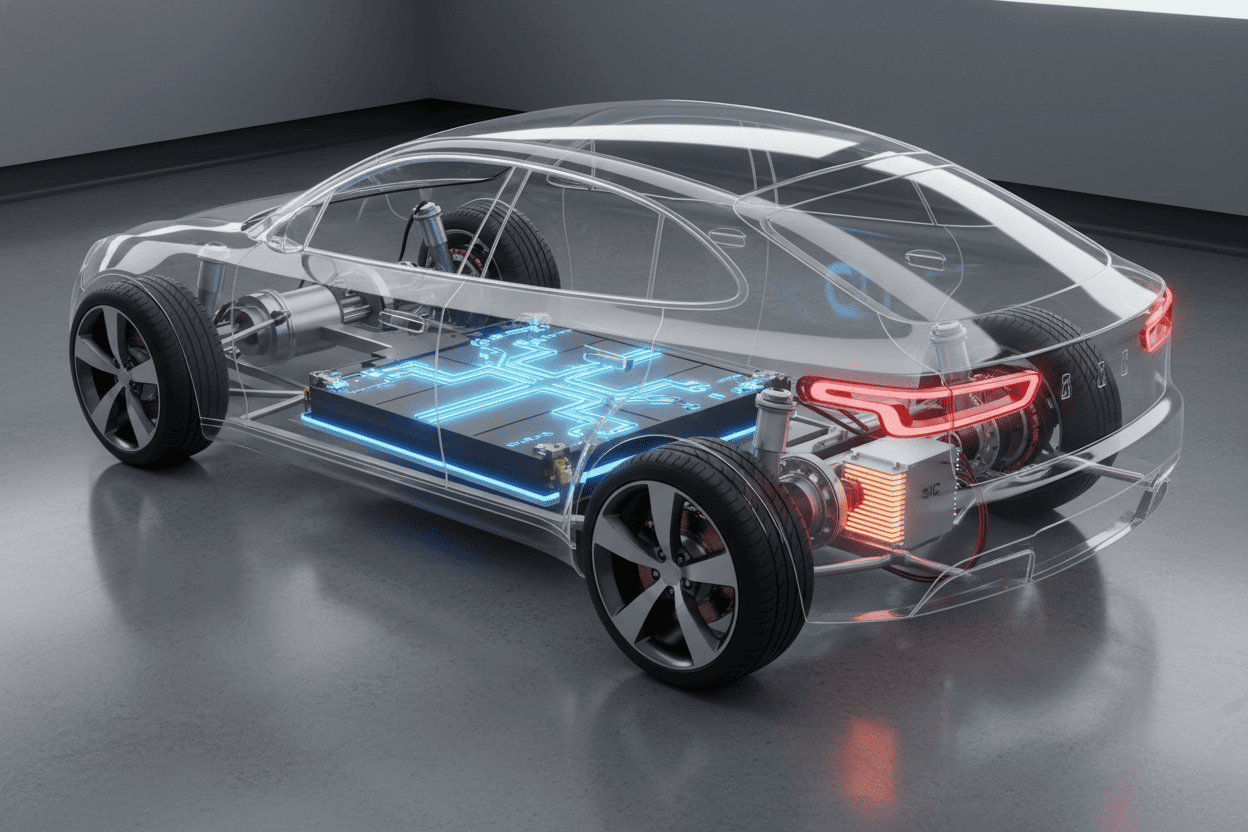
Table of Contents
1. Understanding EV Core Electronics: The Basics
The transition from Internal Combustion Engine (ICE) vehicles to Electric Vehicles is not just a change in the propulsion system; it is a fundamental paradigm shift in electronic architecture. In a traditional gas-powered car, electronics play a supporting role—managing the radio, power windows, and basic engine timing. In an EV, electronics are the powertrain.
For B2B buyers and engineers in North America and Europe, understanding these components is no longer optional. The global semiconductor shortage taught the automotive industry a harsh lesson: relying on legacy chips and outdated supply chains can halt production lines for months. Today, the focus has shifted toward high-efficiency, highly integrated systems.
Why is this topic dominating discussions on platforms like r/ECE and r/electricvehicles? Because every ounce of efficiency squeezed out of a power inverter or a battery pack directly translates to real-world driving range. In an era where consumers demand 300+ miles per charge and governments enforce strict energy consumption regulations, the components we are about to explore are the true battleground for EV supremacy.
2. Core Concepts Simplified: The "Organs" of an EV
To make informed engineering or procurement decisions, we must first demystify the jargon. Let’s break down the three most critical electronic systems in an EV using plain English and relatable analogies.
Power Electronics: The Heart Valves (IGBT vs. SiC)
The inverter is responsible for taking the Direct Current (DC) power from the battery and converting it into the Alternating Current (AC) power needed to spin the electric motor. Think of the inverter as the "heart valves" of the car, controlling the massive flow of energy.
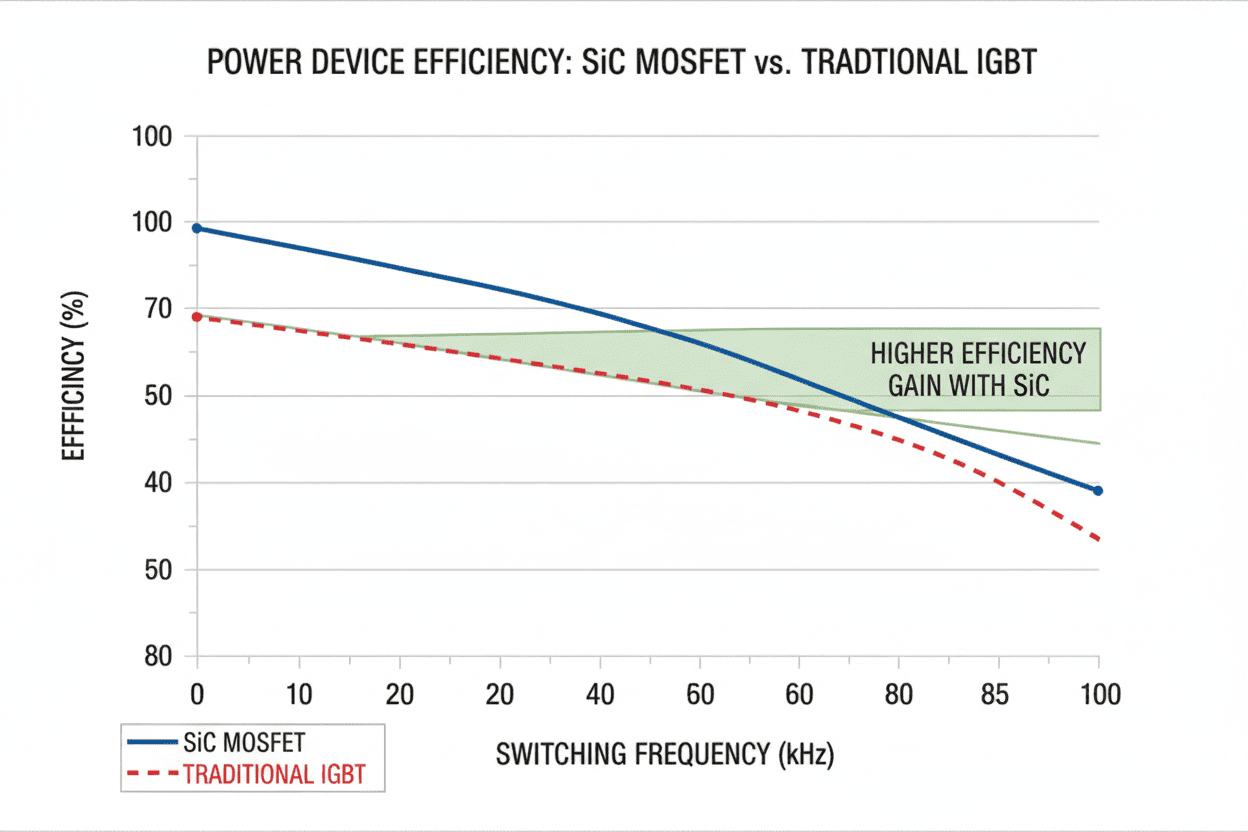
- IGBT (Insulated Gate Bipolar Transistor): This is the traditional technology. Imagine a heavy, reliable iron door. It does a great job of opening and closing to let energy through, but because it is heavy, it takes time and effort to move. This "effort" results in energy wasted as heat. It is cost-effective but less efficient.
- SiC MOSFET (Silicon Carbide): This is the next-generation switch. Imagine an ultra-lightweight, extremely fast titanium door. Because it is made of a unique blend of silicon and carbon, it can open and close at lightning speeds with almost no friction. This means significantly less energy is wasted as heat, allowing more power to go directly to the wheels. This upgrade alone can increase an EV's real-world range by 5% to 10%.
Battery Management System (BMS): The Orchestra Conductor
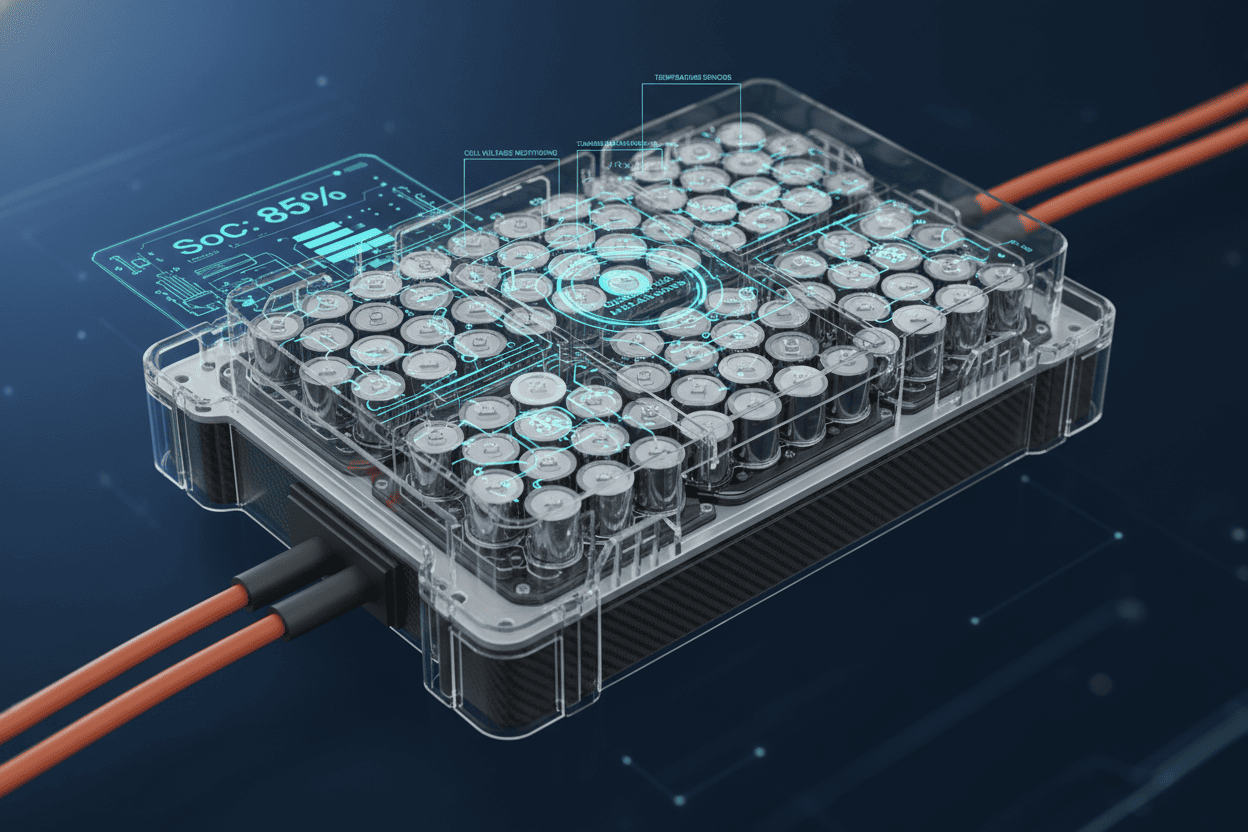
An EV battery isn't just one giant box of energy; it is made up of thousands of individual battery cells. If one cell gets too hot or charges too fast, it can cause a catastrophic failure (thermal runaway, or fire). The BMS is the "orchestra conductor." It monitors the voltage, temperature, and health of every single cell (the musicians). If one cell is working too hard, the BMS dynamically adjusts the load, ensuring the entire pack works in perfect harmony. It protects the battery, maximizes its lifespan, and provides the exact state of charge to the dashboard.
MCUs and Domain Controllers: From Flip Phones to Smartphones
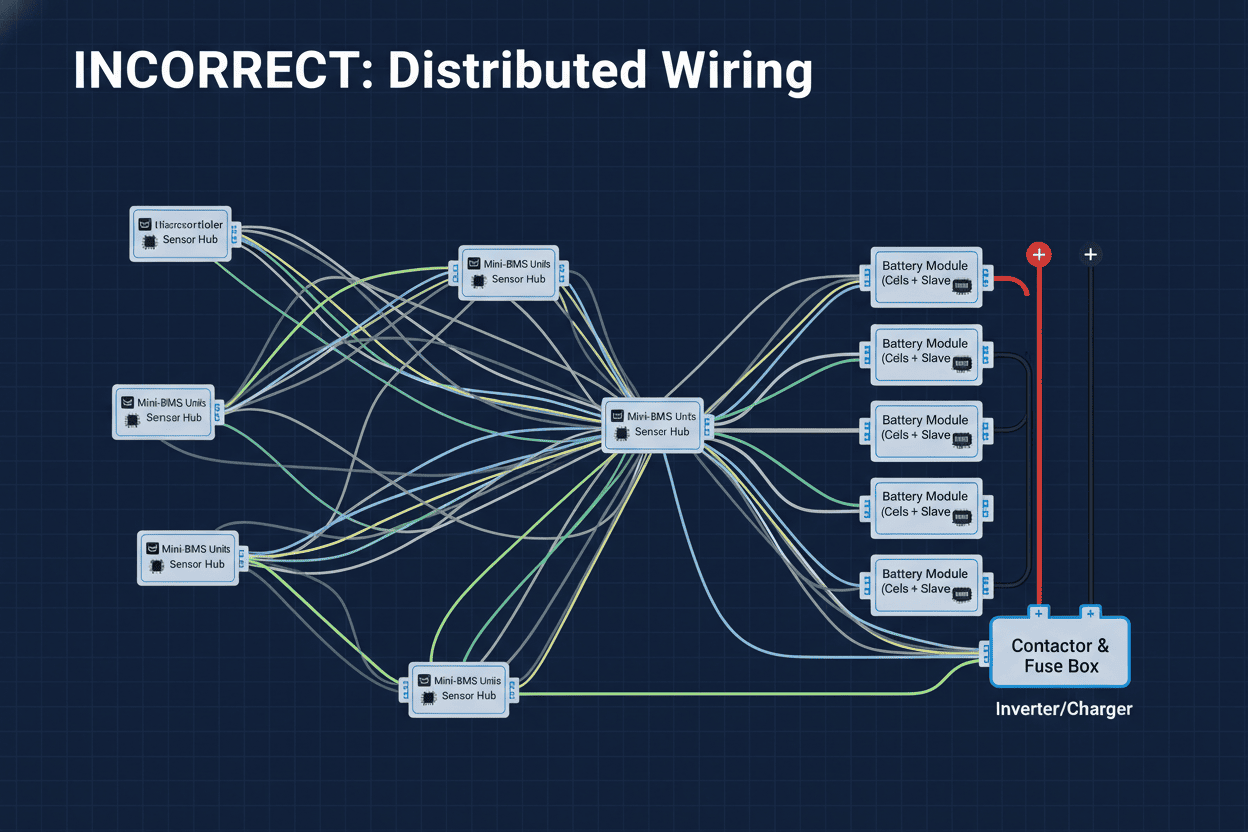
Traditional cars use a distributed architecture. Every feature (wipers, brakes, windows) has its own small computer, known as an Electronic Control Unit (ECU). This is like having 100 different flip phones, each doing only one specific task. It requires miles of heavy copper wiring to connect them all. Modern EVs utilize Domain Controllers. Instead of 100 flip phones, the car has three or four powerful smartphones (centralized computers) that control entire "domains" (e.g., one for infotainment, one for autonomous driving, one for powertrain). This drastically reduces the weight of the wiring harness and allows for Over-The-Air (OTA) software updates.
📊 Core Component Concept Comparison Table
| Component Category | Technical Term | The Plain English Analogy | Primary Benefit in EVs |
|---|---|---|---|
| Power Switch (Legacy) | IGBT | Heavy Iron Door | Cost-effective, proven reliability for 400V systems. |
| Power Switch (Next-Gen) | SiC MOSFET | Lightweight Titanium Door | Handles 800V+, reduces heat loss, adds 5-10% range. |
| Battery Brain | BMS | Orchestra Conductor | Prevents fires, balances cell degradation, extends lifespan. |
| Vehicle Architecture | Domain Controller | Modern Smartphone | Reduces wiring weight, enables seamless OTA updates. |
3. Step-by-Step Guide / Case Studies: Making the Right Procurement Decision
When you are sourcing components or designing a new EV platform, the choice between legacy tech and next-gen silicon dictates the vehicle's market positioning. Let's look at how to evaluate these components in real-world scenarios.
3.1 Scenario A: Upgrading to an 800V Architecture with SiC
Legacy EVs operate on 400-volt systems using IGBTs. However, to achieve ultra-fast charging (e.g., 10% to 80% in 18 minutes), manufacturers like Porsche and Hyundai have moved to 800-volt architectures. At 800V, traditional silicon IGBTs generate too much heat and suffer from severe switching losses. This is where Silicon Carbide (SiC) integration becomes mandatory.
How to evaluate the switch to SiC:
- Analyze the Thermal Budget: SiC operates cooler. Calculate how much you can save on the cooling system (smaller radiators, less coolant) to offset the higher upfront cost of SiC chips.
- Calculate Battery Downsizing: If SiC increases drivetrain efficiency by 8%, you can theoretically reduce the battery pack size by 8% while maintaining the same range. This is a massive cost saving.
- Secure the Supply Chain: SiC wafers are notoriously difficult to manufacture. Ensure your suppliers (like Infineon or Texas Instruments) have long-term capacity.
📈 Component Specification & Cost Teardown Table
| Specification / Metric | Traditional Silicon IGBT | Silicon Carbide (SiC) MOSFET | Impact on EV Design |
|---|---|---|---|
| Operating Voltage | Optimal up to 400V | Optimal for 800V - 1200V | SiC enables ultra-fast DC charging. |
| Switching Frequency | Up to 20 kHz | Up to 100 kHz+ | SiC allows for smaller, lighter passive components. |
| Thermal Conductivity | ~1.5 W/cm·K | ~4.9 W/cm·K | SiC dissipates heat 3x better; requires less cooling. |
| Relative Chip Cost | Base (1x) | Premium (2.5x - 3x) | SiC is more expensive upfront, but saves battery cost. |
| System Level Cost | Standard | Lower overall | Battery downsizing offsets the premium chip cost. |
📝 B2B RFQ Template for SiC Inverters
When reaching out to suppliers, specificity is key. Use this template to ensure you get accurate quotes:
3.2 Scenario B: Designing a Fail-Safe BMS
A frequent topic on engineering forums is how to prevent thermal runaway. A high-quality BMS doesn't just measure voltage; it actively manages it. When selecting a BMS architecture, you must choose between Passive Balancing (bleeding off excess energy from highly charged cells as heat) and Active Balancing (transferring energy from highly charged cells to weaker cells). For high-performance EVs, Active Balancing is highly recommended, despite the higher component count, because it maximizes usable capacity and minimizes heat generation.
4. Expert Tips & Common Pitfalls to Avoid
Drawing from real-world teardowns and discussions among automotive engineers on platforms like Reddit, here are the most common mistakes made in EV electronic design and procurement.
- Pitfall 1: Over-specifying SiC for Low-Voltage City Cars.
- The Trap: Assuming SiC is always better.
- The Reality: If you are designing a low-cost, 400V urban commuter car with a small battery, the efficiency gains of SiC will not offset the premium cost of the chips. Stick to highly optimized IGBTs for budget-friendly segments.
- Pitfall 2: Treating the BMS as a Hardware-Only Problem.
- The Trap: Buying the best voltage monitoring chips but neglecting the software algorithms.
- The Reality: The true magic of a modern BMS lies in its State of Charge (SoC) and State of Health (SoH) estimation algorithms. Poor software will leave 10% of your battery capacity locked away to prevent degradation, effectively stealing range from the driver. Invest heavily in BMS firmware development.
- Pitfall 3: Ignoring the "Wiring Harness Weight" in ECU Design.
- The Trap: Continuing to use a decentralized ECU architecture because "it's how we've always done it."
- The Reality: Legacy wiring harnesses can weigh up to 150 lbs (68 kg). By adopting centralized domain controllers, you not only save massive amounts of copper weight (increasing range) but also simplify the supply chain by reducing the number of microcontrollers (MCUs) you need to source.
5. Conclusion & Final Thoughts
The soul of a New Energy Vehicle is written in silicon. As the industry accelerates toward 800V architectures and software-defined vehicles, the reliance on advanced electronic components will only deepen.
For automakers and B2B suppliers, the mandate is clear: clinging to legacy IGBTs and decentralized ECUs will result in heavier, less efficient, and ultimately uncompetitive vehicles. Embracing Silicon Carbide (SiC) and intelligent Battery Management Systems is no longer just an engineering upgrade—it is a strategic necessity to survive in the hyper-competitive EV market.
6. Quick Summary: EV Electronics Decision Matrix
| Component / Tech | Best Used For | Primary Advantage | Main Drawback |
|---|---|---|---|
| IGBT Inverters | 400V systems, budget EVs, commercial buses. | Low cost, mature supply chain. | High switching losses, generates more heat. |
| SiC Inverters | 800V systems, performance EVs, luxury SUVs. | Unlocks ultra-fast charging, adds real-world range. | Expensive, complex manufacturing process. |
| Active BMS | High-capacity battery packs, premium EVs. | Maximizes usable range, actively redistributes power. | Higher component count, more complex software. |
| Domain Controllers | Software-defined vehicles, modern EV platforms. | Slashes wiring weight, enables whole-car OTA updates. | Requires massive software engineering investment. |
What’s your next step? If you are evaluating suppliers for your next EV platform, start by auditing your thermal management requirements to see if a switch to SiC can save you money at the system level.
If you found this deep dive helpful, be sure to bookmark this page for your next procurement cycle, and subscribe to our newsletter for more weekly teardowns of automotive supply chains and hardware engineering!
7.Frequently Asked Questions
Q1: What is the difference between SiC MOSFETs and traditional IGBTs in EVs? A: SiC MOSFETs switch faster with significantly less heat loss, enabling 800V architectures and adding 5–10% real-world range. IGBTs are lower cost but less efficient, suitable for 400V systems.
Q2: Why is the Battery Management System (BMS) critical in EVs? A: The BMS monitors every cell's voltage and temperature to prevent thermal runaway (fires), balances cell degradation, and maximizes usable battery capacity and lifespan.
Q3: When should I choose SiC over IGBT for my EV design? A: Choose SiC for 800V performance vehicles where efficiency gains offset chip costs. Stick with IGBT for 400V budget city cars where cost sensitivity outweighs efficiency gains.
Q4: What are Domain Controllers and why do modern EVs use them? A: Domain Controllers replace dozens of individual ECUs with centralized computers, reducing wiring harness weight by up to 150 lbs and enabling Over-The-Air software updates.
Q5: How do I secure a stable supply chain for SiC components? A: Verify your suppliers' long-term SiC wafer fabrication capacity, request AEC-Q101 automotive qualification, and secure multi-year contracts due to limited global SiC manufacturing capacity.