



How to Source Electronic Components for Industrial Automation: A Complete B2B Buyer's Guide
In the high-stakes world of modern manufacturing, a single machine failure can cost a company tens of thousands of dollars per minute in unplanned downtime. When a robotic arm halts on an assembly line or a conveyor belt system suddenly loses synchronization, the root cause rarely lies in the heavy steel machinery itself. More often than not, the culprit is a microscopic failure on a circuit board—a degraded optocoupler, a blown microcontroller, or a counterfeit integrated circuit (IC) that couldn't handle the thermal stress of a harsh factory environment.
.png)
For B2B procurement managers, automation electrical engineers, and system integrators, navigating the supply chain for these critical parts has never been more challenging. Between unpredictable global shortages, the constant threat of counterfeit chips entering the grey market, and the nightmare of sourcing End-of-Life (EOL) parts for legacy systems, purchasing decisions carry massive operational risks.
This comprehensive guide will walk you through the complexities of industrial component sourcing. You will learn how to decode the core architecture of automation systems, safely procure obsolete parts without risking factory uptime, and implement foolproof quality control strategies to keep your production lines running seamlessly.
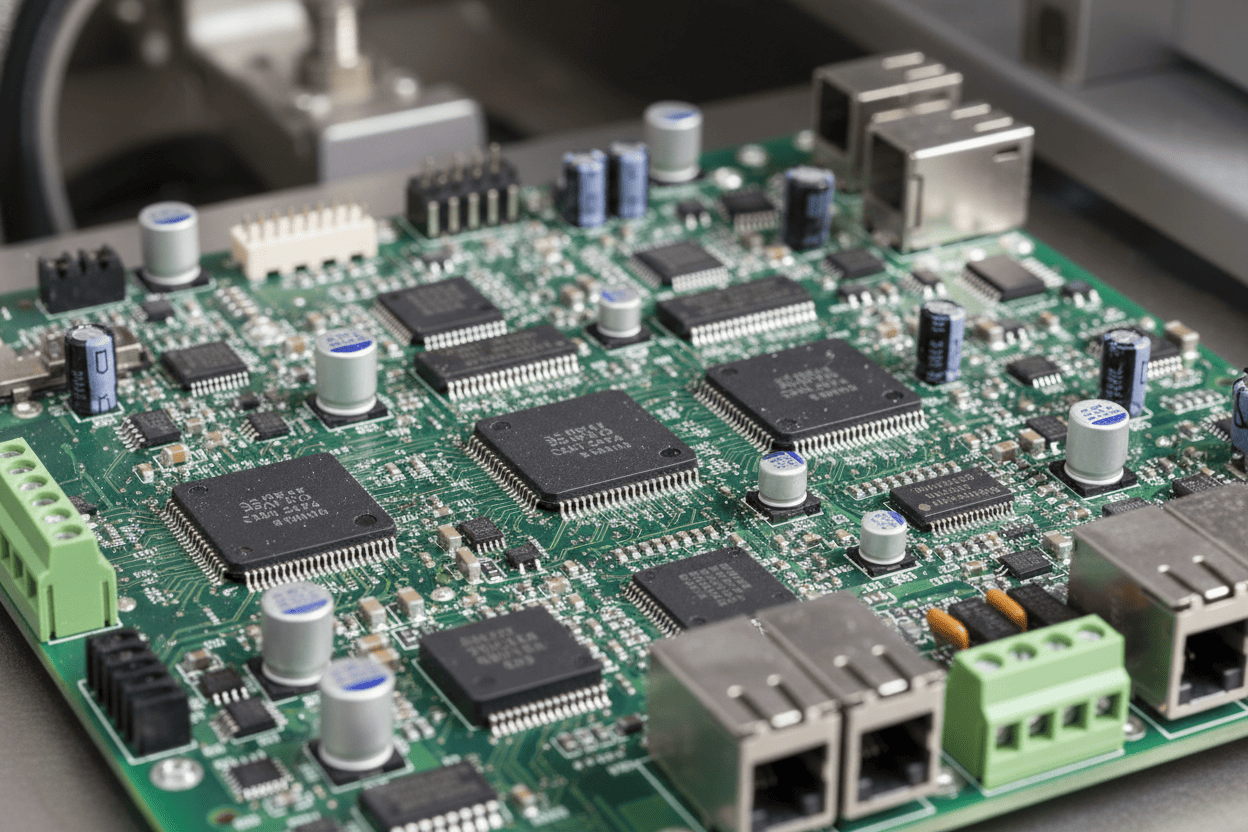
Table of Contents
1. Understanding Industrial Automation Systems: The Basics
Industrial automation is the backbone of the modern global economy. From automotive assembly plants in Germany to food processing facilities in the US and Canada, automation systems rely on an intricate web of electronic components to function.
Unlike consumer electronics, which are designed to operate in controlled, climate-managed environments for a few years, industrial electronics must survive in the harshest conditions imaginable. They are subjected to extreme temperature fluctuations, high humidity, constant mechanical vibration, and severe electromagnetic interference (EMI) from heavy machinery.
When you are procuring industrial electronic components, you are not just buying a piece of silicon; you are investing in supply chain stability and operational safety. A substandard component might pass initial testing, but it will inevitably fail under industrial stress, leading to catastrophic factory downtime.
To make informed purchasing decisions, especially when evaluating multiple distributors or trying to find alternatives for out-of-stock items, you must first understand the fundamental building blocks of these automation systems.
2. Core Concepts Simplified: The Brain and Neurons of the Factory
Navigating component datasheets and technical specifications can be overwhelming. Let's demystify the core concepts and terminology used in industrial automation electronics using plain English and relatable analogies.
The Programmable Logic Controller (PLC): The Factory's "Brain"
A Programmable Logic Controller (PLC) is essentially a highly specialized, ruggedized industrial computer. If the factory is a human body, the PLC is the brain. It receives data from sensors (the eyes and ears), processes that information, and sends commands to actuators, motors, and robotic arms (the muscles) to perform specific tasks. PLCs are designed to operate flawlessly for decades in environments that would destroy a standard laptop in minutes.
Integrated Circuits (ICs): The "Neurons"
If the PLC is the brain, the Integrated Circuits (ICs) housed within it are the neurons. These microscopic chips process logic, store memory, and manage power distribution. High-quality ICs ensure that the PLC executes commands with zero latency and absolute precision. A degraded IC is like a misfiring neuron—it causes the system to stutter, crash, or send incorrect signals, which can result in damaged products or safety hazards.
End-of-Life (EOL) Components: The "Extinct Species"
In the electronics world, technology moves rapidly. Eventually, original component manufacturers (OCMs) like Texas Instruments or Siemens will officially stop producing older chips to make way for new technology. These discontinued parts are classified as End-of-Life (EOL) or obsolete.
Automated Optical Inspection (AOI): The "Security Scanner"
AOI is a quality control process that uses high-resolution cameras and artificial intelligence to scan a circuit board or an individual chip. Think of it as a highly advanced airport security scanner. It automatically detects physical defects, bent pins, or fake manufacturer markings that the human eye would miss.
Concept Comparison: Consumer vs. Industrial Grade
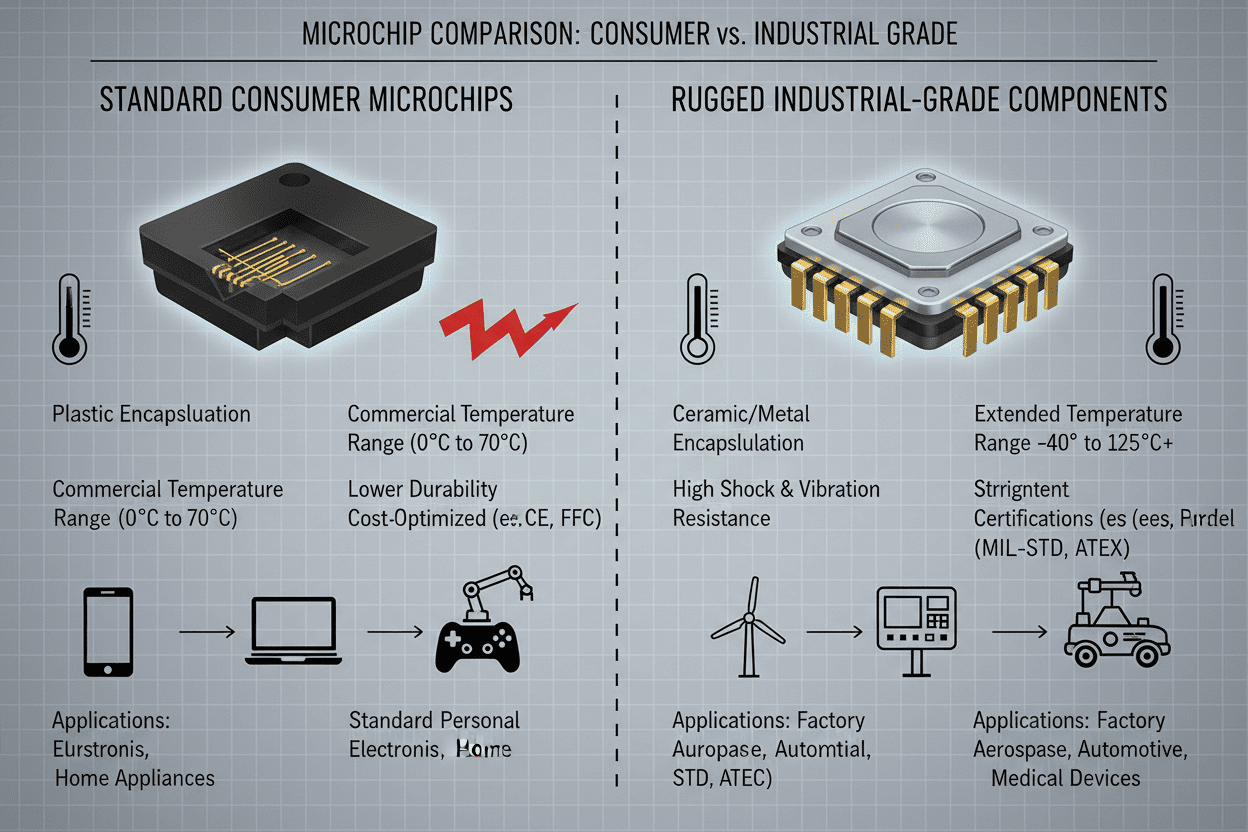
To further clarify why sourcing the right components is critical, here is a breakdown of how industrial-grade components differ from standard commercial parts.
| Feature / Specification | Commercial Grade (Consumer) | Industrial Grade (Automation) | Why It Matters for B2B Buyers |
|---|---|---|---|
| Operating Temperature | 0°C to 70°C | -40°C to 85°C (or up to 125°C) | Factory floors experience extreme heat and freezing conditions. |
| Lifespan Expectancy | 2 to 5 years | 10 to 15+ years | Industrial machines are massive capital investments meant to last decades. |
| Vibration Tolerance | Low | Very High | Constant shaking from motors and conveyors will dislodge weak solder joints. |
| EMI Shielding | Minimal | Robust | Heavy machinery generates electrical noise that can corrupt data signals. |
3. Step-by-Step Guide: Navigating Component Obsolescence (EOL)
One of the most persistent headaches for automation engineers and procurement teams is dealing with legacy systems. Imagine a multi-million-dollar packaging machine that runs perfectly, except its core PLC uses a microcontroller that was discontinued five years ago. Upgrading the entire machine to a modern system could cost hundreds of thousands of dollars and weeks of downtime.
The alternative? Keeping the old machines running like new without relying on the original manufacturer. This requires mastering the art of safe EOL sourcing.
The Challenge of EOL Sourcing
When a part goes obsolete, the authorized supply chain dries up. Buyers are forced to turn to the open market or independent distributors. This is where the risk of encountering counterfeit parts skyrockets. Knowing how to source obsolete PLC components safely is what separates successful procurement managers from those facing catastrophic system failures.
3.1 Scenario A: Upgrading and Maintaining Legacy PLC Systems
If you are tasked with finding a replacement for an obsolete part, follow this strict, foolproof workflow:
Step 1: Identify the Exact Part Number and Date Code Never guess. A single letter difference in a part number can indicate a different voltage rating or packaging type. Check the original Bill of Materials (BOM) and physically inspect the failed component if possible.
Step 2: Check for Drop-in Replacements (Cross-References) Sometimes, another manufacturer produces a chip with the exact same pinout and functionality. Consult component databases to see if an authorized "drop-in replacement" exists.
Step 3: Partner with a Certified Independent Distributor If no replacement exists, you must source the original EOL part. Do not buy from unverified sellers on generic B2B marketplaces. You must use a distributor with a proven track record in sourcing obsolete ICs. Look for distributors holding ISO 9001 and AS9120 certifications.
Step 4: Demand Testing Reports Before issuing a Purchase Order, request visual inspection reports and guarantee that the parts will undergo rigorous testing before shipment.
3.2 Scenario B: Evaluating Automation Component Categories
When sourcing, you will encounter various types of components, each with its own specific challenges. Below is a data table outlining common automation components, their applications, and the typical hurdles buyers face.
| Component Type | Automation Application | Common Sourcing Challenge |
|---|---|---|
| Microcontrollers (MCUs) | Motor control, sensor data processing in PLCs | Severe global supply chain shortages and long lead times. |
| Optocouplers | Signal isolation, protecting low-voltage logic from high-voltage spikes | LED degradation over time; difficult to find exact legacy matches. |
| Field-Programmable Gate Arrays (FPGAs) | High-speed, custom logic processing for machine vision systems | High cost and high risk of sophisticated counterfeiting. |
| Power Management ICs (PMICs) | Regulating voltage across the industrial control board | Thermal stress failures; requiring exact EOL replacements. |
Email Template for Requesting EOL Parts Safely
When reaching out to a new distributor, setting expectations immediately is crucial. Use this template to weed out unreliable suppliers:
4. Expert Tips & Common Pitfalls: Preventing Counterfeit Components
If you spend any time on engineering forums like Reddit's r/PLC or r/ElectricalEngineering, you will quickly encounter horror stories about counterfeit chips. A common scenario: a procurement manager buys a batch of hard-to-find ICs from an unvetted broker. The chips arrive looking brand new. They are soldered onto the boards, the machines are turned on, and instantly, logic controllers fry, causing a massive short circuit.
Upon closer inspection, an engineer wipes the top of the chip with acetone, and the manufacturer's logo simply washes off. The chips were cheap, consumer-grade parts sanded down and relabeled to look like expensive industrial ICs.
Counterfeit IC prevention in industrial automation is not just about avoiding financial loss; it is about preventing factory fires and protecting human lives. To ensure authenticity, you must rely on strict quality control testing.
Demystifying Quality Control Testing Methods
How do top-tier distributors guarantee a part is real? They don't just look at it; they look inside it.
- Automated Optical Inspection (AOI) As mentioned earlier, AOI uses AI-driven cameras to inspect the exterior of the chip. It checks for:
- Blacktopping: A process where counterfeiters coat the top of a chip to hide old markings before printing new ones. AOI can detect the minute texture differences of blacktopping.
- Pin Coplanarity: Ensuring all pins are perfectly aligned. Bent or scratched pins indicate a part was salvaged from old electronic waste (e-waste) rather than being new-in-box.
-
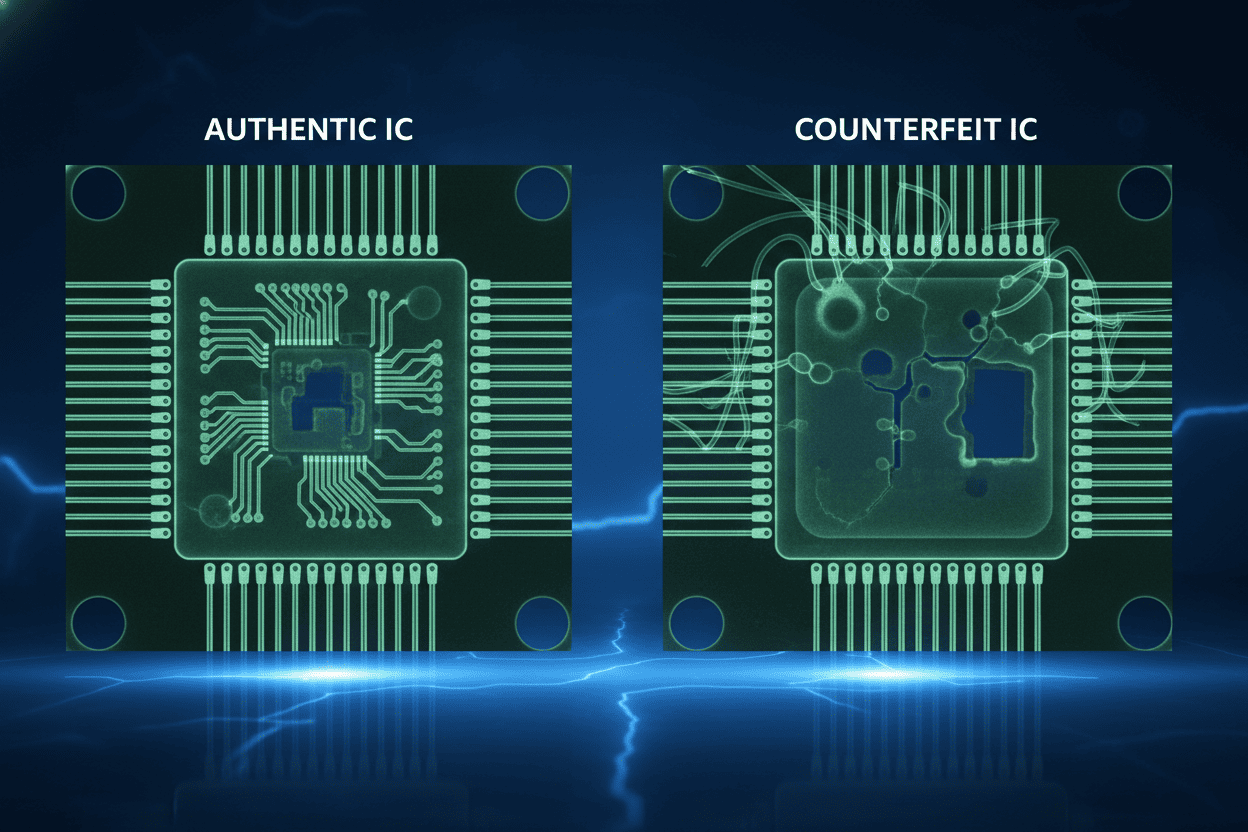
X-Ray Inspection (The Medical X-Ray for Chips) Counterfeiters have become sophisticated. Sometimes the outside of a chip looks perfect, but the inside is empty, or contains the wrong silicon die. X-ray inspection allows engineers to see the internal wire bonding of the component. By comparing the X-ray of the sourced chip to an authentic blueprint (a known good part), they can instantly verify if the internal structure matches. If the wire bonds are missing or routed incorrectly, the part is fake.
-
Decapsulation (Destructive Testing) In high-risk scenarios, a distributor will take one chip from a batch and use acid to dissolve the plastic casing. This exposes the raw silicon die inside. Under a high-powered microscope, engineers can read the microscopic manufacturer logos and serial numbers etched directly onto the silicon, providing 100% undeniable proof of authenticity.
Common Pitfalls to Avoid (Lessons from the Field)
- Pitfall 1: Buying based on price alone. If a broker is offering an obsolete FPGA at 50% below the historical market price, it is almost certainly counterfeit or salvaged e-waste.
- Pitfall 2: Accepting "No Warranty" terms. Legitimate independent distributors stand by their testing. If a supplier refuses to offer a guarantee on EOL parts, walk away.
- Pitfall 3: Ignoring traceability. Always ask for the component's chain of custody. While full traceability to the original factory is hard for 10-year-old EOL parts, a reputable distributor will be transparent about their sourcing channels and testing validation.
5. Conclusion & Final Thoughts
Sourcing electronic components for industrial automation is a high-wire act. The pressure to minimize downtime, overcome supply chain disruptions, and safely acquire obsolete parts requires a strategic, data-driven approach.
By understanding the critical role of PLCs and ICs, mastering the EOL sourcing checklist, and refusing to compromise on rigorous anti-counterfeit testing like X-ray and AOI, you can protect your manufacturing infrastructure from costly failures.
6. Quick Summary: Your Sourcing Action Plan
| Objective | Key Action | Why It Matters |
|---|---|---|
| Ensure Compatibility | Verify exact part numbers, date codes, and industrial-grade specs. | Prevents thermal or vibration-induced failures in harsh environments. |
| Secure EOL Parts | Use cross-referencing and authorized independent distributors. | Keeps legacy machinery running without million-dollar system overhauls. |
| Prevent Counterfeits | Demand AOI, X-ray, and decapsulation testing reports. | Protects against catastrophic system shorts and factory downtime. |
Don't leave your factory's uptime to chance. When you are dealing with legacy systems or facing critical component shortages, partnering with a transparent, quality-obsessed distributor is your best defense. Ready to secure your supply chain? Reach out to our expert team and request a quote for automation parts today. We provide the testing, traceability, and reliability your industrial systems demand.
7. Frequently Asked Questions
Q1: What is the difference between commercial and industrial-grade electronic components? A: Industrial-grade components operate reliably from -40°C to 125°C, withstand heavy vibration, and last 10–15 years, whereas commercial parts are built for mild, short-lifecycle environments.
Q2: How do I safely source obsolete (EOL) components for legacy PLC systems? A: Verify the exact part number, check for drop-in replacements, partner with ISO-certified independent distributors, and always demand pre-shipment testing reports.
Q3: What is a PLC and why is it critical in automation? A: A Programmable Logic Controller is the ruggedized industrial computer that acts as the factory's brain, processing sensor data and commanding machinery in real time.
Q4: How can I tell if an integrated circuit is counterfeit? A: Rely on scientific testing: AOI detects exterior blacktopping, X-ray verifies internal wire bonding, and decapsulation confirms the authentic silicon die.
Q5: What should I do when a critical automation component faces a shortage? A: Scrub your BOM for FFF alternatives, monitor PCN/EOL alerts, and avoid panic-buying from unvetted brokers who skip lab testing.