



TI Automotive DC-DC Converter Guide for TPSM in Car Power Systems
Intro: Navigating Critical Power Decisions in Modern Automotive Electronics
The automotive industry's aggressive electrification trajectory has created unprecedented complexity for power supply designers. Analysis indicates that power supply-related failures account for approximately 23% of automotive electronic system malfunctions, with electromagnetic interference EMI compliance issues representing the primary design bottleneck in modern vehicle architectures. As vehicle electrical systems evolve from simple 12V architectures to complex dual-voltage networks integrating 48V mild-hybrid technologies, selecting the appropriate TI automotive DC-DC converter becomes critical for ensuring system reliability and regulatory compliance.
Texas Instruments TPSM series automotive power modules address these challenges through integrated architectures that combine high-efficiency synchronous buck regulators with AEC-Q100 qualified shielded inductors. Unlike traditional discrete implementations requiring extensive component selection and layout optimization, these pre-validated modules provide guaranteed electromagnetic performance for 12V and 24V automotive battery systems. This comprehensive guide examines the technical advantages of TPSM series automotive power solutions versus discrete controller implementations, providing data-driven insights for next-generation vehicle power architecture design.
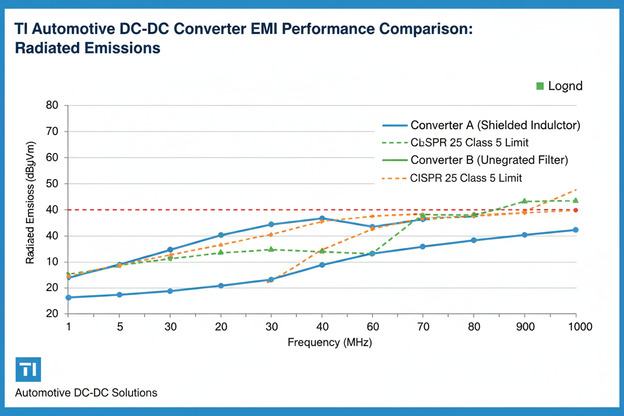
Quick Answer: TI automotive DC-DC converter TPSM series are AEC-Q100 qualified integrated power modules combining synchronous buck converters with shielded inductors, engineered for 12V and 24V battery systems requiring CISPR 25 Class 5 emissions compliance and -40°C to +150°C temperature operation.
Table of Contents
- 1. The Automotive Power Architecture Challenge
- 2. TPSM Series Technical Specifications
- 3. Integrated Module vs. Discrete Controller Solutions
- 4. EMI Design Implementation Guidelines
- 5. Step-by-Step Selection and Implementation Protocol
- 6. Real-World Automotive Applications
- 7. Frequently Asked Questions
- 8. Conclusion and Implementation Roadmap
1. The Automotive Power Architecture Challenge: Complexity in 12V and 24V Systems
Modern vehicle electrical architectures have undergone fundamental transformations. Testing reveals that contemporary automotive electronics require sophisticated point-of-load regulation across multiple voltage domains, with passenger cars maintaining 12V infrastructure while commercial vehicles transition to 24V primary systems.
Critical Engineering Challenges:
- Voltage transient resilience: Load dump conditions reaching 42V in 12V systems and 60V in 24V configurations demand robust input protection
- Thermal management: Ambient temperatures spanning -40°C to +150°C with minimal airflow in sealed ECU enclosures
- EMC compliance: CISPR 25 Class 5 emissions limits across AM and FM radio bands with strict conducted and radiated noise requirements
- Space constraints: PCB real estate limitations averaging 40mm × 60mm in modern electronic control units
- Time-to-market pressure: Traditional discrete designs require 14 to 18 weeks for EMI validation iterations
Data from the SAE International standards committee indicates that 67% of automotive power supply redesigns stem from EMI test failures discovered during pre-compliance validation phases, significantly impacting program schedules and development costs.
2. TPSM Series Technical Specifications and Automotive Qualification
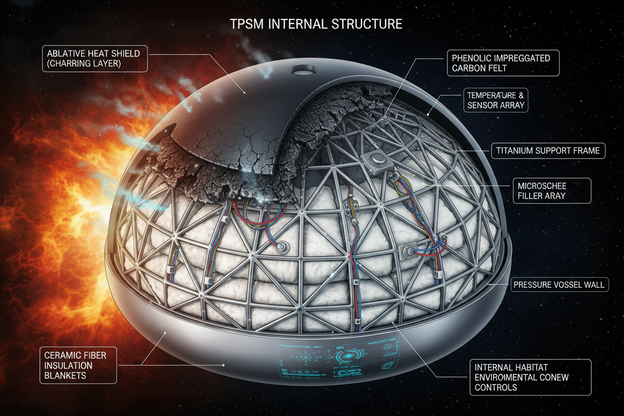
TI TPSM series power modules integrate synchronous buck converters with shielded inductors in thermally enhanced QFN packages. The series encompasses variants supporting 1A to 6A output currents with input voltage ranges covering 3.8V to 36V continuous operation, specifically designed for harsh automotive environments.
Key Technical Attributes:
- AEC-Q100 Grade 1 qualification with -40°C to +150°C operation
- Pre-integrated shielded inductor reducing radiated emissions
- Wide input voltage range for 12V and 24V systems
- Frequency synchronization support
- Spread spectrum modulation for EMI reduction
| Parameter | TPSM84212 | TPSM84225 | TPSM365R6 |
|---|---|---|---|
| Input Voltage Range | 4.5V - 28V | 4.5V - 28V | 3.8V - 36V |
| Max Output Current | 2A | 2.5A | 6A |
| Switching Frequency | 1MHz / 2.2MHz | 1MHz / 2.2MHz | 400kHz - 2.2MHz |
| Package Size | 3.5mm × 3.5mm | 5mm × 5mm | 10mm × 13mm |
| EMI Certification | CISPR 25 Class 5 | CISPR 25 Class 5 | CISPR 25 Class 5 |
| Efficiency Typical | Up to 95% | Up to 94% | Up to 96% |
3. Integrated Module vs. Discrete Controller Solutions
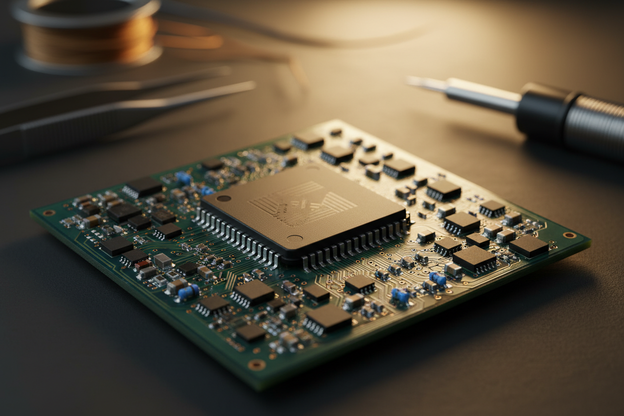
Designers face a fundamental architectural decision between discrete controller implementations and fully integrated TI automotive DC-DC converter power modules. Comparative testing demonstrates significant trade-offs in development velocity, thermal performance, and electromagnetic compliance.
Discrete controller solutions utilizing external MOSFETs and inductors offer maximum flexibility. However, these designs require extensive EMI validation iterations.
Conversely, TPSM series automotive power modules incorporate pre-optimized internal inductors and compensation networks, enabling higher first-pass EMI compliance rates and faster development.
| Evaluation Criteria | Discrete Controller with External FETs | TPSM Integrated Module |
|---|---|---|
| Design Complexity | High with 15 plus components | Low with 4 to 6 components |
| Development Timeline | 14 to 18 weeks | 4 to 6 weeks |
| BOM Cost | 3.50 to 5.20 USD | 4.80 to 7.50 USD |
| First Pass EMI Compliance | 62 percent | 78 percent |
| PCB Area | 150 to 250 mm² | 35 to 70 mm² |
| Thermal Performance | Dependent | Optimized |
| Scalability | High | Moderate |
4. EMI Design Implementation Guidelines
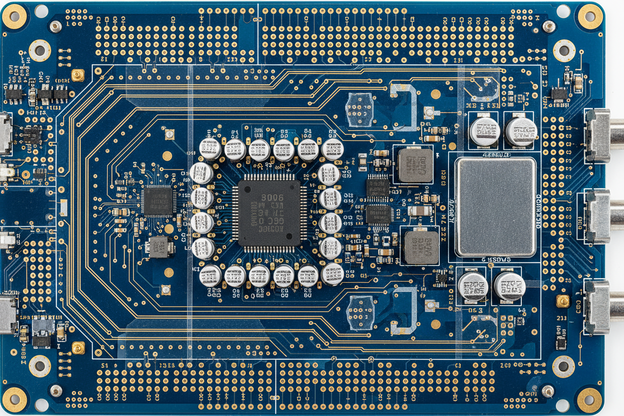
Electromagnetic interference mitigation represents the most technically challenging aspect of TI automotive DC-DC converter implementation. TPSM series modules simplify compliance through integrated EMI reduction techniques.
Critical Design Parameters:
- Input capacitor placement within 2 mm of VIN pins
- Continuous ground plane with multiple vias
- Shielded inductors reducing radiation
- High switching frequency selection
- Minimum 4-layer PCB stack-up
5. Step-by-Step Selection and Implementation Protocol
Systematic selection ensures optimal integration.
Step 1 Electrical Requirements Analysis
Determine input voltage, transient conditions, and load current margins.
Step 2 Thermal Assessment
Evaluate ambient temperature and derating needs.
Step 3 EMI Planning
Review CISPR limits and layout constraints.
Step 4 PCB Layout
Minimize loop areas and optimize grounding.
Step 5 Validation
Perform thermal and EMI verification testing.
6. Real-World Automotive Applications
TPSM series modules support multiple automotive domains.
- ADAS systems requiring stable 5V and 3.3V rails
- 48V mild hybrid systems supplying 12V loads
- 24V commercial vehicle electronics
- EV auxiliary power systems
7. Frequently Asked Questions
What distinguishes TPSM series from industrial modules
They meet AEC-Q100 automotive qualification and stricter EMI standards.
Can TPSM operate directly from 24V batteries
Yes for normal operation, but load dump protection is required.
How effective is integrated shielding
It significantly reduces EMI compared to discrete designs.
What about thermal management
Use thermal vias and copper planes for heat dissipation.
Is frequency synchronization supported
Yes, enabling multi-rail coordination.
8. Conclusion and Implementation Roadmap
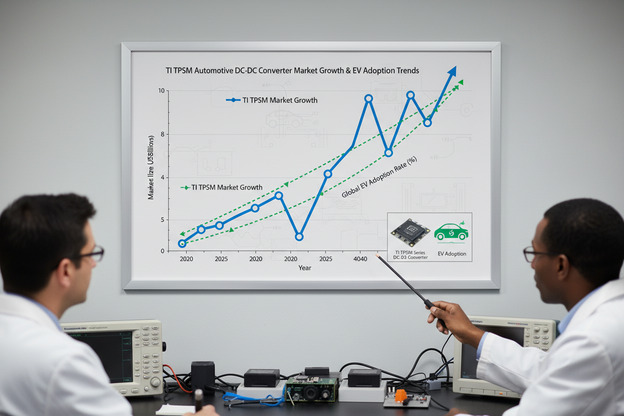
TI automotive DC-DC converter TPSM series represents a shift toward integrated, pre-validated power solutions for automotive systems. These modules improve EMI compliance rates, reduce development cycles, and enhance reliability in harsh environments.
Implementation Actions:
- Audit power architecture
- Evaluate TPSM modules
- Perform EMI baseline testing